Robust Audio Watermarking Against the D/A and A/D conversions
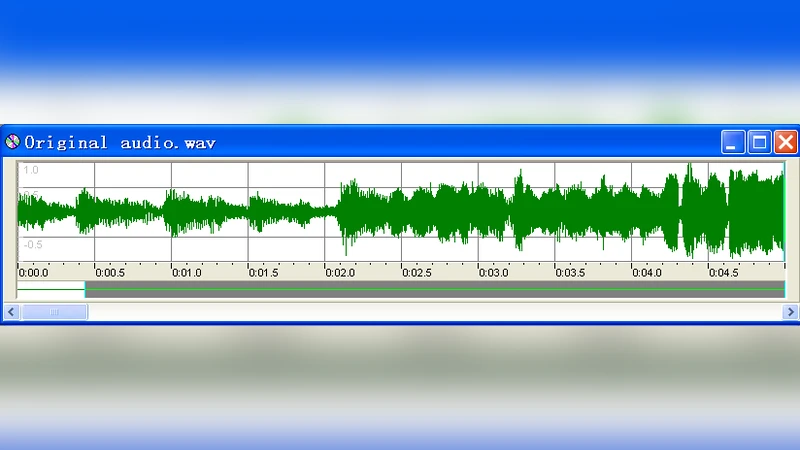
Audio watermarking has played an important role in multimedia security. In many applications using audio watermarking, D/A and A/D conversions (denoted by DA/AD in this paper) are often involved. In previous works, however, the robustness issue of audio watermarking against the DA/AD conversions has not drawn sufficient attention yet. In our extensive investigation, it has been found that the degradation of a watermarked audio signal caused by the DA/AD conversions manifests itself mainly in terms of wave magnitude distortion and linear temporal scaling, making the watermark extraction failed. Accordingly, a DWT-based audio watermarking algorithm robust against the DA/AD conversions is proposed in this paper. To resist the magnitude distortion, the relative energy relationships among different groups of the DWT coefficients in the low-frequency sub-band are utilized in watermark embedding by adaptively controlling the embedding strength. Furthermore, the resynchronization is designed to cope with the linear temporal scaling. The time-frequency localization characteristics of DWT are exploited to save the computational load in the resynchronization. Consequently, the proposed audio watermarking algorithm is robust against the DA/AD conversions, other common audio processing manipulations, and the attacks in StirMark Benchmark for Audio, which has been verified by experiments.
💡 Research Summary
The paper addresses a critical gap in audio watermarking research: robustness against digital‑to‑analog (D/A) and analog‑to‑digital (A/D) conversions, which are common in many real‑world applications such as telephone transmission, speaker‑based piracy detection, and live‑concert monitoring. Through extensive laboratory experiments involving four 16‑bit mono WAV files (music and dialog) sampled at rates from 8 kHz to 128 kHz and a variety of consumer and professional sound cards, the authors identify two dominant degradations introduced by the DA/AD process: (1) wave‑magnitude distortion, manifested as an amplitude scaling factor λ and additive noise η, and (2) linear temporal scaling, represented by a scaling factor α (typically in the range 0–0.005). They model the transformed sample as f′(i)=λ·f(α·i)+η, and demonstrate that both distortions can severely impair watermark extraction if not explicitly mitigated.
To counter these effects, the authors propose a discrete wavelet transform (DWT)‑based watermarking scheme. The audio is segmented; each segment undergoes a one‑level DWT, and the low‑frequency (LF) sub‑band coefficients are grouped. Watermark bits are embedded by adjusting the relative energy relationships among these groups, rather than absolute coefficient values. This relative‑energy approach inherently resists amplitude scaling because the ratios remain approximately constant under λ. Embedding strength is adaptively controlled using the Objective Difference Grade (ODG) from the PEAQ model, computed directly in the DWT domain to avoid costly inverse transforms. The ODG is kept within the perceptual threshold of
Comments & Academic Discussion
Loading comments...
Leave a Comment