Quantitative structural and textural assessment of laminar pyrocarbons through Raman spectroscopy, electron diffraction and few other techniques
In pyrocarbon materials, the width of the Raman D band (FWHMD) is very sensitive to low energy structural defects (e.g., disorientations of the graphene layers). The correlation between the two parameters, FWHMD and OA (as derived from selected area electron diffraction: SAED), has allowed to differentiate various pyrocarbons unambiguously. Furthermore, the optical properties of pyrocarbons, i.e., the extinction angle, the optical phase shift and the ordinary and extraordinary reflectance, have been accurately determined at 550 nm by means of the extinction curves method. These results are completed by in-plane and out-of-plane dielectric constant measurements by angular resolved EELS. Moreover, the hybridization degree of the carbon atoms has been assessed by the same technique. About 80% of the carbon atoms of the pyrocarbons have a sp2 hybridization. The lack of pure sp2 carbon atoms, as compared to graphite, might be explained by the presence of sp3-like line defects.
💡 Research Summary
This paper presents a comprehensive quantitative assessment of laminar pyrocarbons by integrating Raman spectroscopy, selected‑area electron diffraction (SAED), optical extinction‑curve measurements, and angular‑resolved electron energy‑loss spectroscopy (EELS). The authors begin by highlighting the critical role of microstructural order—particularly the alignment of graphene‑like layers—in determining the mechanical, electrical, and optical performance of pyrocarbon‑based composites. Traditional studies have relied largely on qualitative microscopy or single‑technique spectroscopic analyses, leaving a gap in the ability to correlate structural disorder with functional properties across multiple scales.
Three representative laminar pyrocarbons, produced by chemical vapor deposition under varying temperature and gas‑flow conditions, are examined. Raman spectra recorded with a 514 nm laser reveal the D‑band (~1350 cm⁻¹) whose full width at half maximum (FWHM_D) serves as a sensitive probe of low‑energy defects such as layer misorientations. Simultaneously, SAED patterns are analyzed to extract an orientation angle (OA), defined as the average deviation of graphene planes from a common direction. A robust linear correlation between FWHM_D and OA is demonstrated, establishing FWHM_D as a rapid, non‑destructive surrogate for quantitative texture evaluation.
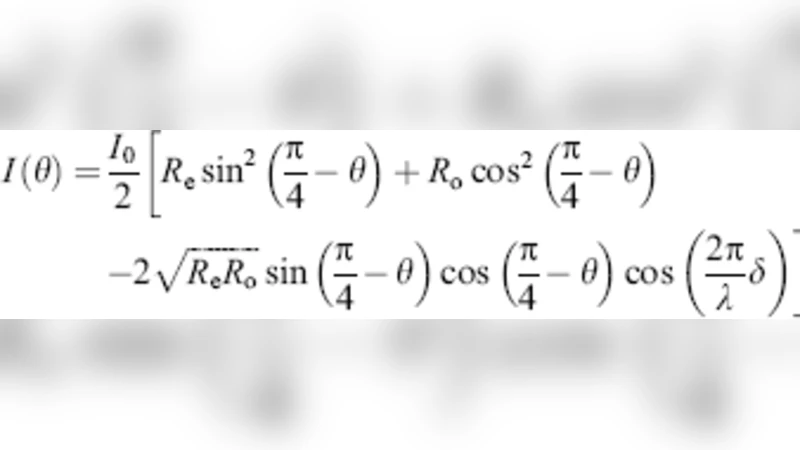
Optical anisotropy is characterized at 550 nm using the extinction‑curve method. By rotating the sample relative to incident polarized light, the extinction angle, phase shift (δ), and the ordinary (R‖) and extraordinary (R⊥) reflectances are precisely determined. The data show that samples with smaller OA (i.e., better‑aligned layers) exhibit narrower extinction angles and larger phase shifts, confirming that structural alignment directly governs optical birefringence.
Angular‑resolved EELS provides complementary insight into electronic structure and dielectric response. Measurements of the in‑plane (ε‖) and out‑of‑plane (ε⊥) dielectric constants, together with analysis of the π* and σ* loss‑peak intensities, enable quantification of the sp² hybridization fraction. Approximately 80 % of carbon atoms in the studied pyrocarbons are sp²‑bonded, while the remaining ~20 % are attributed to sp³‑like line defects. These sp³‑like defects are proposed to be the primary source of the observed D‑band broadening and to contribute to the residual optical anisotropy.
The authors discuss the implications of their multi‑modal approach. By linking Raman‑derived FWHM_D, SAED‑derived OA, optical extinction parameters, and EELS‑derived dielectric constants, they construct a unified framework that simultaneously captures structural, textural, and functional attributes of pyrocarbons. This framework facilitates the rational design of carbon‑based composites where precise control of layer orientation and defect density is required to tailor mechanical strength, thermal conductivity, and optical performance.
In conclusion, the study validates the use of Raman D‑band width as a rapid proxy for texture, demonstrates that optical extinction measurements can sensitively reflect microstructural alignment, and confirms that angular‑resolved EELS can accurately assess both dielectric anisotropy and hybridization state. The integrated methodology offers a powerful toolbox for researchers and engineers seeking to optimize laminar pyrocarbons for high‑performance aerospace, energy, and electronic applications.