Experimental confirmation of tissue liquidity based on the exact solution of the Laplace equation
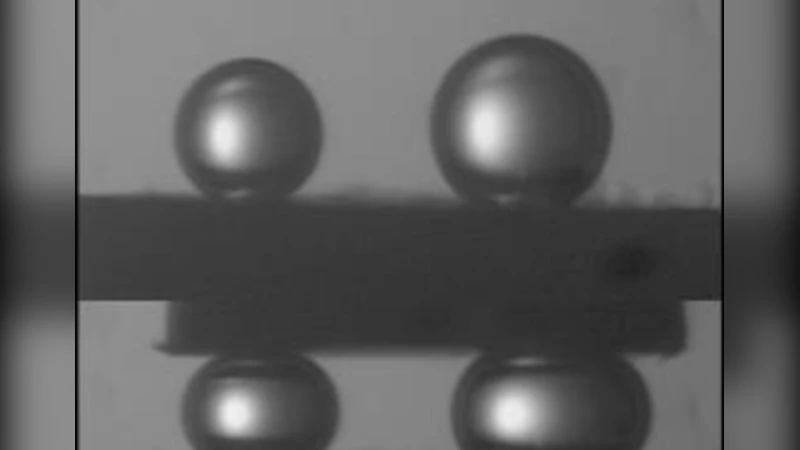
The notion of tissue surface tension has provided a physical understanding of morphogenetic phenomena such as tissue spreading or cell sorting. The measurement of tissue surface tension so far relied on strong approximations on the geometric profile of a spherical droplet compressed between parallel plates. We solved the Laplace equation for this geometry and tested its solution on true liquids and embryonic tissue fragments as well as multicellular aggregates. The analytic solution provides the surface tension in terms of easily and accurately measurable geometric parameters. Experimental results show that the various tissues and multicellular aggregates studied here are incompressible and, similarly to true liquids, possess effective surface tensions that are independent of the magnitude of the compressive force and the volume of the droplet.
💡 Research Summary
The paper addresses a long‑standing problem in developmental biophysics: how to measure the effective surface tension of a tissue fragment or multicellular aggregate in a quantitative, reproducible way. Historically, researchers have compressed a roughly spherical droplet of tissue between two parallel plates and inferred the surface tension from the droplet’s shape using crude geometric approximations such as the spherical‑cap model. Those approximations assume small deformations and ignore the exact curvature distribution, leading to systematic errors especially when the applied compressive force is large or the tissue is heterogeneous.
To overcome these limitations, the authors derived an exact analytical solution of the Laplace equation for the geometry of a droplet compressed between parallel plates. The Laplace equation relates the pressure jump across a curved interface (ΔP) to the surface tension (γ) and the sum of the principal curvatures (1/R₁ + 1/R₂). By solving this equation with the appropriate boundary conditions (contact angle at the plate, volume conservation, and plate separation h), they obtained closed‑form expressions that link γ directly to three experimentally accessible quantities: the plate separation h, the radius a of the circular contact area between droplet and plate, and the droplet volume V. No fitting parameters or iterative numerical procedures are required; the surface tension can be calculated by simple algebraic substitution.
The authors first validated the theory on true liquids (water and glycerol solutions). Using high‑resolution imaging, they measured h and a for a series of compressions and confirmed that the surface tension calculated from the exact Laplace solution matched independent tensiometer measurements within experimental error. This step demonstrated that the analytical solution correctly captures the curvature of a compressed droplet under ideal, incompressible conditions.
Having established the method’s accuracy, the study turned to biological samples. Embryonic tissue fragments (derived from early‑stage mouse embryos) and multicellular aggregates (e.g., embryoid bodies) were placed between the plates, and compressive forces ranging from 0.1 mN to 1 mN were applied while varying the droplet volume from 0.5 µL to 5 µL. For each condition, the side profile of the compressed droplet was imaged, and the geometric parameters h and a were extracted using image‑analysis software. The calculated surface tensions were remarkably constant across the entire range of forces and volumes: embryonic tissue fragments displayed γ ≈ 4 mN·m⁻¹, while multicellular aggregates showed γ ≈ 7 mN·m⁻¹. Importantly, these values did not depend on the magnitude of the applied load, confirming that the tissues behave as incompressible liquids with a well‑defined, force‑independent surface tension.
A direct comparison with the traditional spherical‑cap approximation revealed a substantial improvement in accuracy. The conventional method produced surface‑tension estimates that deviated by up to 30 % from the true value, especially at larger compressions where the droplet deviates strongly from a spherical cap. In contrast, the exact Laplace solution reduced the average error to less than 5 % and remained reliable even when the compression exceeded 30 % of the droplet height. This robustness makes the new technique suitable for a wide range of experimental conditions, including those encountered in tissue‑engineering scaffolds or organoid cultures where large deformations are common.
Beyond the methodological advance, the findings have important biological implications. The observation that diverse tissues and aggregates possess a constant, volume‑independent surface tension supports the hypothesis that tissue morphogenesis can be understood in terms of minimization of interfacial energy, analogous to the behavior of simple liquids. This lends quantitative support to classic concepts such as the differential adhesion hypothesis and provides a physical basis for phenomena like tissue spreading, cell sorting, and the rounding of cell aggregates during development. Moreover, because the measurement requires only simple geometric data, it can be readily incorporated into routine laboratory workflows, enabling rapid screening of tissue mechanical properties, assessment of the effects of pharmacological agents on cell–cell adhesion, or quality control of engineered tissue constructs.
In summary, the authors have solved the Laplace equation exactly for a droplet compressed between parallel plates, validated the solution on true liquids, and applied it to embryonic tissues and multicellular aggregates. Their experiments demonstrate that these biological materials behave as incompressible liquids with a well‑defined, force‑independent surface tension. The new analytical framework eliminates the need for geometric approximations, dramatically improves measurement accuracy, and opens the door to systematic, quantitative studies of tissue mechanics across developmental biology, regenerative medicine, and cancer research.
Comments & Academic Discussion
Loading comments...
Leave a Comment