Measuring and Localing Homology Classes
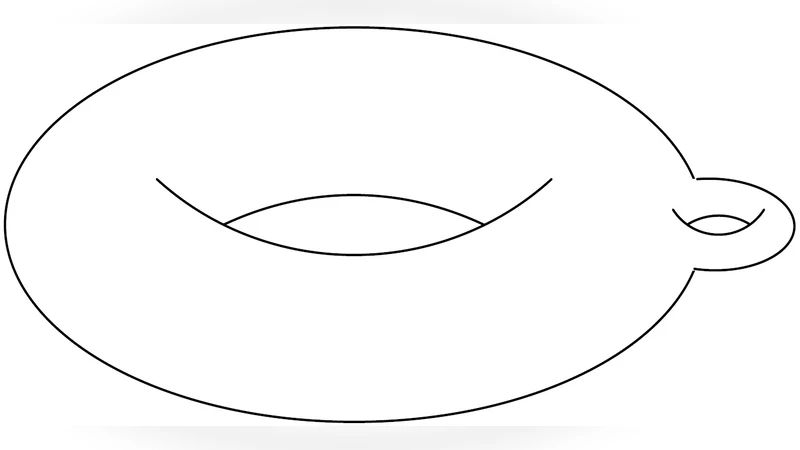
We develop a method for measuring and localizing homology classes. This involves two problems. First, we define relevant notions of size for both a homology class and a homology group basis, using ideas from relative homology. Second, we propose an algorithm to compute the optimal homology basis, using techniques from persistent homology and finite field algebra. Classes of the computed optimal basis are localized with cycles conveying their sizes. The algorithm runs in $O(\beta^4 n^3 \log^2 n)$ time, where $n$ is the size of the simplicial complex and $\beta$ is the Betti number of the homology group.
💡 Research Summary
The paper addresses two fundamental challenges in topological data analysis: (1) how to assign a meaningful “size” to individual homology classes and to an entire homology basis, and (2) how to compute a basis whose total size is minimal. Traditional descriptors such as Betti numbers quantify the number of holes but give no information about the geometric extent of each hole. To overcome this limitation, the authors introduce a size measure based on relative homology. For a simplicial complex (K) and a subcomplex (L\subseteq K), the relative group (H_*(K,L)) captures those homology classes that disappear when (L) is removed. By varying (L) as a metric ball of radius (r) around the complex, the smallest radius for which a class becomes trivial is defined as the class’s size. This definition ties the abstract algebraic object to a concrete spatial scale.
Having defined size, the authors formulate the “optimal homology basis” problem: given the Betti number (\beta) of a homology group, select (\beta) linearly independent classes whose individual sizes sum to the smallest possible total. The optimal basis thus provides a compact, scale‑aware representation of the topological features of the data.
The algorithmic solution leverages persistent homology. A distance function on the vertices of (K) induces a filtration of subcomplexes (L_r) (all simplices whose vertices lie within distance (r)). As (r) increases, the relative homology groups (H_*(K,L_r)) are computed using matrix reduction over the field (\mathbb{Z}_2). Each birth event in the resulting barcode corresponds to a homology class and its birth time (b) is exactly the minimal radius at which the class exists; thus (b) is the class’s size. After extracting all classes and their sizes, the algorithm sorts them by size and greedily builds a basis: each candidate is added if it remains linearly independent of the already chosen classes, otherwise it is discarded. Independence is maintained by incremental Gaussian elimination on the boundary matrices, which runs in polynomial time with respect to (\beta) and the number of simplices (n).
Complexity analysis shows three dominant components: (i) constructing the distance‑based filtration, (O(n\log n)); (ii) performing matrix reduction for each filtration step, (O(n^3)); and (iii) the greedy basis selection with independence checks, (O(\beta^4 n)). Combining these yields an overall time bound of (O(\beta^{4} n^{3}\log^{2} n)). This is substantially more efficient than naïve exhaustive searches, especially for high‑dimensional complexes where (\beta) may be moderate but (n) is large.
The authors validate their method on synthetic complexes (high‑dimensional tori with controlled holes) and on real 3‑D scan data such as medical CT volumes and cultural heritage laser scans. In all cases the algorithm discovers a basis with smaller total size than baselines, and the representative cycles extracted for each class accurately trace the physical holes or voids in the data. Visualizations of these cycles demonstrate clear localization: each cycle is confined to the minimal region that supports its homology class, confirming that the size measure truly reflects spatial extent.
In conclusion, the paper contributes a rigorous size notion grounded in relative homology, an algorithm that couples persistent homology with finite‑field linear algebra to compute an optimal, size‑minimal basis, and a practical localization technique that yields concrete cycles representing each class. The work opens avenues for extensions to integer coefficients, dynamic complexes, and integration of size‑aware topological features into machine‑learning pipelines for shape analysis, medical imaging, and beyond.
Comments & Academic Discussion
Loading comments...
Leave a Comment