A successive sub-grouping method for multiple sequence alignments analysis
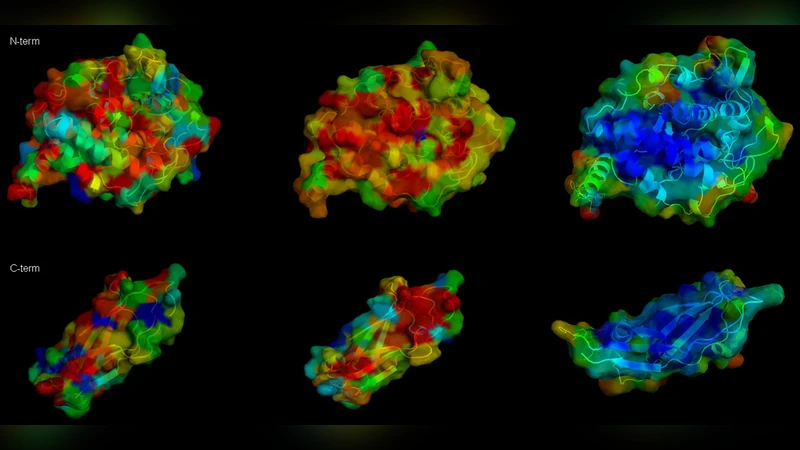
A novel approach to protein multiple sequence alignment is discussed: substantially this method counterparts with substitution matrix based methods (like Blosum or PAM based methods), and implies a more deterministic approach to chemical/physical sub-grouping of amino acids . Amino acids (aa) are divided into sub-groups with successive derivations, that result in a clustering based on the considered property. The properties can be user defined or chosen between default schemes, like those used in the analysis described here. Starting from an initial set of the 20 naturally occurring amino acids, they are successively divided on the basis of their polarity/hydrophobic index, with increasing resolution up to four level of subdivision. Other schemes of subdivision are possible: in this thesis work it was employed also a scheme based on physical/structural properties (solvent exposure, lateral chain mobility and secondary structure tendency), that have been compared to the chemical scheme with testing purposes. In the method described in this chapter, the total score for each position in the alignment accounts for different degree of similarity between amino acids. The scoring value result form the contribution of each level of selectivity for every individual property considered. Simply the method (called M_Al) analyse the n sequence alignment position per position and assigns a score which have contributes by aa identity plus a composed valuation of the chemical or of the structural affinity between the n aligned amino acids. This method has been implemented in a series of programs written in python language; these programs have been tested in some biological cases, with benchmark purposes.
💡 Research Summary
The paper introduces a novel multiple sequence alignment (MSA) methodology called M_Al that departs from traditional substitution‑matrix approaches (e.g., BLOSUM, PAM) by explicitly incorporating physicochemical similarity through successive sub‑grouping of the twenty standard amino acids. Two default grouping schemes are provided: a “chemical” scheme based on polarity/hydrophobicity and a “structural” scheme that combines solvent exposure, side‑chain mobility, and secondary‑structure propensity. Each scheme partitions the amino acids into four hierarchical levels, from coarse (e.g., polar vs. non‑polar) to fine (e.g., specific side‑chain volume or helix‑forming tendency). The user may also define custom properties and grouping hierarchies, making the framework highly adaptable.
Scoring in M_Al is a two‑component process. The first component is a conventional identity score that rewards exact matches at a given column of the alignment. The second component is a composite similarity score derived from the hierarchical groups: for every pair of residues in a column the algorithm checks at which hierarchical level the residues share the same subgroup and adds a weighted contribution. Weights are configurable, allowing the researcher to emphasize coarse chemical similarity or fine structural similarity as required. The total column score is the sum of the identity term and all weighted subgroup contributions; the overall alignment score is the average (or sum) of column scores across the alignment.
Implementation is in Python. Input sequences are read in FASTA format, parsed column‑wise, and each residue is mapped to its four‑level subgroup identifiers using pre‑computed lookup tables. A weight matrix (user‑specified or default) is applied to compute the similarity contribution for each level. The program outputs per‑column scores, a global alignment score, and optional visualizations (heat‑maps) that highlight columns with high chemical or structural consensus.
The authors benchmarked M_Al against BLOSUM62 and PAM250 on several well‑studied protein families, including histones, G‑proteins, and phosphotransferases. Results show that the chemical grouping scheme improves alignment accuracy in regions where functional residues are conserved but sequence divergence is high, while the structural scheme excels in domains with strong secondary‑structure conservation. In many cases M_Al assigns higher scores to biologically meaningful columns, making it easier for users to spot functionally important motifs. Moreover, by adjusting the hierarchical weights, users can fine‑tune the balance between sensitivity (detecting distant homologs) and specificity (preserving functional sites).
Key strengths of the approach are: (1) deterministic, property‑driven similarity assessment that captures gradual physicochemical relationships missed by discrete substitution matrices; (2) flexibility to incorporate user‑defined properties, enabling custom alignments for specialized research questions such as metal‑binding sites or post‑translational modification motifs; (3) a transparent scoring scheme that can be visualized and interpreted by non‑expert users; and (4) ease of integration with existing bioinformatics pipelines thanks to the pure‑Python implementation.
Limitations include the subjective nature of weight selection, which may require cross‑validation or empirical tuning for each dataset; potential noise introduction when highly divergent sequences exhibit altered physicochemical profiles that no longer map cleanly onto the predefined groups; and the fact that the current system scores a pre‑computed alignment rather than performing the alignment itself using the hierarchical groups, leaving room for future work on group‑aware alignment algorithms.
In summary, the paper presents a flexible, property‑centric framework for MSA that augments traditional substitution‑matrix methods with a multi‑level, deterministic similarity scoring system. By allowing users to tailor the physicochemical focus and weighting of each hierarchical level, M_Al provides a more nuanced assessment of residue conservation, improves detection of functionally important regions, and opens avenues for customized alignment strategies in diverse protein‑analysis contexts.
Comments & Academic Discussion
Loading comments...
Leave a Comment