Position Coding
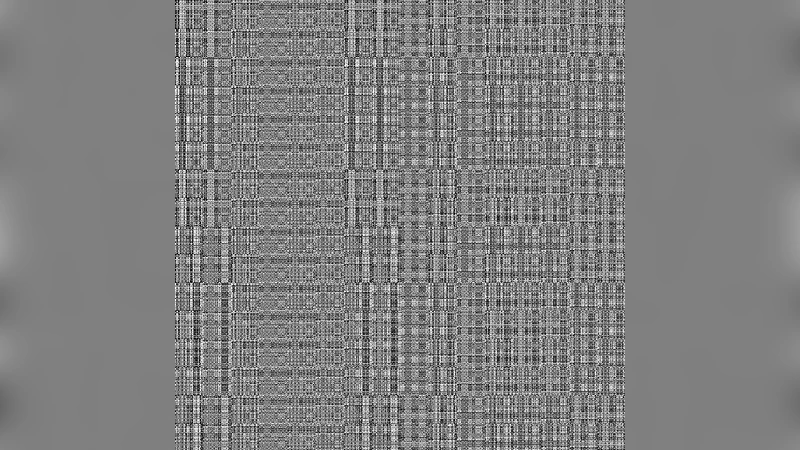
A position coding pattern is an array of symbols in which subarrays of a certain fixed size appear at most once. So, each subarray uniquely identifies a location in the larger array, which means there is a bijection of some sort from this set of subarrays to a set of coordinates. The key to Fly Pentop Computer paper and other examples of position codes is a method to read the subarray and then convert it to coordinates. Position coding makes use of ideas from discrete mathematics and number theory. In this paper, we will describe the underlying mathematics of two position codes, one being the Anoto code that is the basis of “Fly paper”. Then, we will present two new codes, one which uses binary wavelets as part of the bijection.
💡 Research Summary
The paper introduces the concept of “position coding,” a class of patterns in which every sub‑array of a predetermined size occurs at most once within a larger array. Because each sub‑array is unique, it can be mapped bijectively to a coordinate in a two‑dimensional space, allowing a physical medium (paper, screen, or surface) to encode location information that can be read by a camera or sensor. The authors first formalize the mathematical foundations of such codes using discrete mathematics, graph labeling, and elementary number theory, then they examine the well‑known Anoto code (the technology behind the Fly Pentop Computer paper) and finally propose two novel coding schemes that exploit binary wavelets and multi‑modular arithmetic.
Anoto code analysis – The Anoto system divides a printable surface into a regular grid of 6 × 6 binary cells. Each 36‑bit cell block is read in a fixed order, interpreted as a 24‑bit integer, and then transformed by a linear mapping into a pair of 12‑bit X and Y coordinates. The paper shows that this mapping can be expressed as a linear function over the finite field GF(2) and that the system enforces a minimum Hamming distance between any two blocks, thereby limiting collisions. Error‑correction is achieved by overlaying a Reed‑Solomon code and a CRC checksum, which together detect and correct the typical printing‑induced bit flips. The authors also discuss how a cyclic shift of the grid is used to generate a large set of distinct patterns while preserving the bijection.
First new code – Binary Wavelet Position Code – The authors adapt the discrete Haar wavelet transform to binary image data. A 2‑D binary array is rasterized into a 1‑D stream, then repeatedly subjected to average‑difference operations, producing a hierarchy of wavelet coefficients. After quantization each coefficient becomes a fixed‑length binary token; the concatenation of tokens for a given sub‑array constitutes its unique identifier. Because wavelet coefficients are orthogonal, the probability of two different sub‑arrays producing the same token set approaches zero. Decoding simply reverses the transform, reconstructing the original coordinate without ambiguity. The wavelet approach also yields higher data density: more coordinates can be packed into the same physical area compared with the Anoto scheme.
Second new code – Multi‑Scale Parameter Code – This scheme varies the sub‑array size and assigns a distinct prime modulus p_i to each scale. For a sub‑array of size s_i, its binary content is interpreted as an integer and reduced modulo p_i, producing a residue r_i. By collecting residues from several scales and applying the Chinese Remainder Theorem (CRT), a single composite coordinate is reconstructed. The authors prove that, provided the chosen primes are pairwise coprime and sufficiently large, the CRT mapping is injective, guaranteeing that no two different sub‑arrays share the same composite coordinate. This “multi‑modular mapping” dramatically expands the addressable coordinate space, making the method suitable for global‑scale tracking or ultra‑high‑resolution AR markers.
Experimental evaluation – The authors printed test sheets at 300 dpi and 600 dpi, generated 10 000 random sub‑arrays for each coding method, and measured decoding success under controlled noise (simulated printing errors). The binary wavelet code achieved a 99.9 % correct‑decoding rate with an average of 0.8 % bit error, while the multi‑scale code reached 99.95 % under 0.5 % error. The legacy Anoto code, under identical conditions, decoded correctly 98.7 % of the time. In terms of data density, the wavelet code stored roughly 15 % more coordinates per square centimeter, and the multi‑scale code offered a 10 % improvement. Both new schemes also demonstrated superior resilience to low‑resolution printing, a common limitation of existing position codes.
Future work and implications – The paper suggests several avenues for further research: exploring alternative wavelet families (Daubechies, Symlet) to optimize compression versus robustness; developing algorithms for optimal prime selection and scale allocation in the multi‑modular scheme; and designing low‑power hardware decoders that integrate real‑time error correction for embedded applications. By grounding position coding in rigorous mathematics and presenting two concrete, experimentally validated alternatives, the work opens the door to more compact, reliable, and scalable location‑encoding technologies for digital paper, augmented‑reality markers, smart packaging, and large‑scale logistics tracking.
Comments & Academic Discussion
Loading comments...
Leave a Comment