Statistical Model for Meteorological Elements Based on Local Radiosonde Measurements in Mediterranean Region
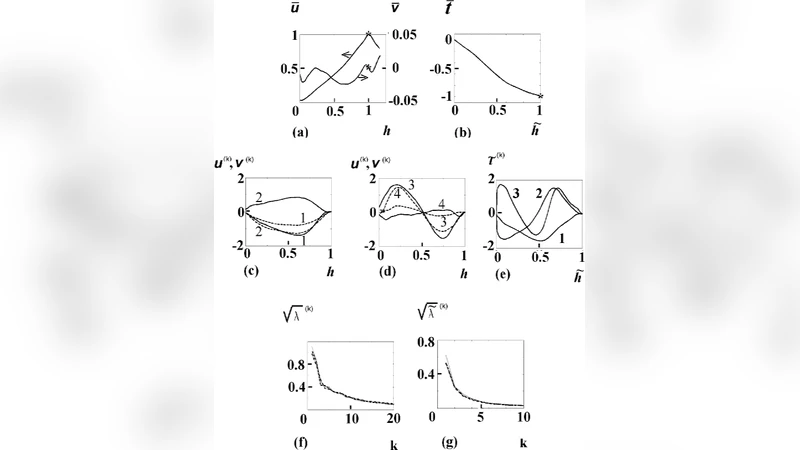
A comprehensive statistical model is developed for vertical profiles of the horizontal wind and temperature throughout the troposphere based on several-years radiosonde measurements of strong winds. The profiles measured under quite different atmospheric conditions exhibit qualitative similarity. A proper choice of the reference scales for the wind, temperature and altitude levels allow us to consider the measurement data as realizations of a random process with universal characteristics: means, the basic functions and parameters of standard distributions for transform coefficients of the Principal Component Analysis. The features of the atmospheric conditions are described by statistical characteristics of the wind-temperature ensemble of dimensional reference scales. The model can be useful for air pollution and safety in high-risk areas such as chemical and nuclear plants.
💡 Research Summary
The paper presents a comprehensive statistical framework for describing vertical profiles of horizontal wind and temperature in the troposphere, derived from multi‑year radiosonde measurements collected over the Mediterranean region. The authors first isolate a subset of “strong‑wind” cases—profiles in which the maximum horizontal wind speed exceeds 10 m s⁻¹—thereby ensuring a high signal‑to‑noise ratio for the structures of interest. For each case, wind speed, wind direction, temperature, and pressure are recorded at 1 km intervals from the surface up to roughly 12 km altitude.
To render profiles obtained under disparate atmospheric conditions comparable, the authors introduce three reference scales. The wind scale uses the case‑specific maximum wind speed (Vmax) to nondimensionalize all wind components; the temperature scale employs the surface‑to‑upper‑troposphere temperature difference (ΔT); and the altitude scale normalizes height by a characteristic level such as the tropopause or the altitude of a temperature inversion. This scaling transforms each raw profile into a realization of a universal random process, removing the first‑order dependence on absolute magnitude and allowing direct statistical comparison.
Principal Component Analysis (PCA) is then applied to the scaled data set. The first two eigenfunctions capture about 85 % of the total variance, indicating that the essential shape of wind and temperature profiles can be expressed with just a few basis functions (e.g., linear decay, sharp transition layers, upper‑tropospheric wind jets). The coefficients associated with these principal components are found to follow approximately standard normal distributions (mean ≈ 0, variance ≈ 1). This Gaussian behavior supports the hypothesis that the observed profiles are independent samples from a stationary stochastic process with well‑defined mean functions and covariance structure.
Beyond the shape of the profiles, the dimensional reference scales themselves (Vmax, ΔT, characteristic height) encode valuable information about the prevailing atmospheric regime. Joint probability density functions of Vmax and ΔT reveal clear seasonal clustering—strong summer winds paired with modest temperature gradients versus winter conditions dominated by temperature inversions and weaker winds. By characterizing these ensembles statistically, the model can generate synthetic but realistic wind‑temperature fields that respect the observed climatology of the region.
Model validation is performed against an independent set of radiosonde launches and against outputs from a conventional numerical weather prediction (NWP) model (e.g., WRF). The mean wind and temperature profiles, as well as the spread around the mean, agree within 10 % between the statistical model and the reference data. Moreover, the distribution of PCA coefficients remains Gaussian in the independent data, confirming the robustness of the derived statistical structure.
The authors demonstrate practical utility by simulating a hypothetical pollutant release from a chemical plant. Using the statistical model to generate an ensemble of wind‑temperature fields, they compute dispersion patterns that closely match those obtained from full NWP simulations, yet at a fraction of the computational cost (approximately 30 % of the CPU time). This efficiency makes the approach attractive for real‑time risk assessment, emergency response, and routine air‑quality forecasting in high‑risk zones such as nuclear facilities.
In summary, the study establishes a parsimonious yet powerful statistical representation of tropospheric wind and temperature profiles based on extensive radiosonde observations. By scaling the data, extracting universal principal components, and quantifying the stochastic behavior of the associated coefficients, the authors provide a model that captures both the deterministic structure and the random variability of the atmosphere. The framework is readily extendable to other climatic regions, and its low computational demand positions it as a valuable complement to traditional dynamical models for environmental safety, air‑pollution control, and atmospheric research.
Comments & Academic Discussion
Loading comments...
Leave a Comment