Swimming with a friend at low Reynolds number
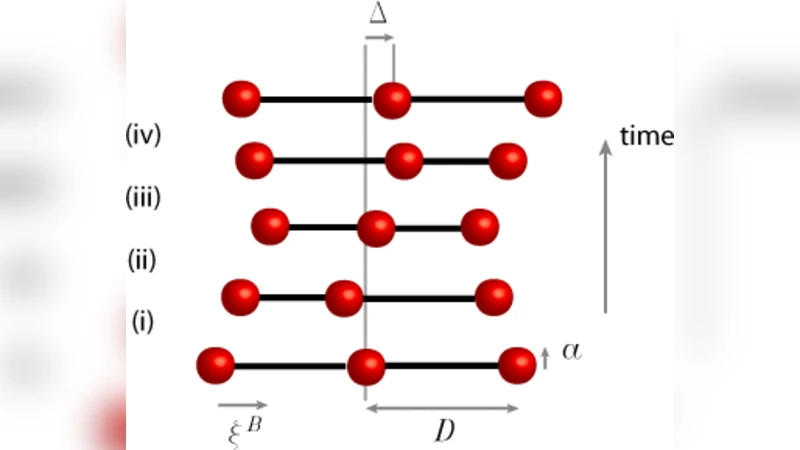
We investigate the hydrodynamic interactions between microorganisms swimming at low Reynolds number. By considering simple model swimmers, and combining analytic and numerical approaches, we investigate the time-averaged flow field around a swimmer. At short distances the swimmer behaves like a pump. At large distances the velocity field depends on whether the swimming stroke is invariant under a combined time-reversal and parity transformation. We then consider two swimmers and find that the interaction between them consists of two parts; a dead term, independent of the motion of the second swimmer, which takes the expected dipolar form and a live term resulting from the simultaneous swimming action of both swimmers which does not. We argue that, in general, the latter dominates. The swimmer–swimmer interaction is a complicated function of their relative displacement, orientation and phase, leading to motion that can be attractive, repulsive or oscillatory.
💡 Research Summary
The paper investigates how microorganisms that swim at low Reynolds number interact hydrodynamically, using simple model swimmers and a combination of analytical theory and numerical simulations. The authors first examine the time‑averaged flow field generated by a single swimmer. By employing the classic three‑sphere swimmer model—two spheres whose separation oscillates periodically—they show that at distances comparable to the swimmer size the flow resembles that of a pump: fluid is drawn in and expelled in a nearly radial fashion. At larger distances the flow can be described by a multipole expansion. Crucially, the leading term depends on whether the swimming stroke is invariant under a combined time‑reversal and parity (T·P) transformation. If the stroke respects T·P symmetry, the average flow is dominated by a dipolar (1/r²) component, consistent with the familiar “pusher‑puller” classification. If the symmetry is broken, the dipole cancels and the next‑order quadrupolar (1/r³) term becomes dominant, leading to a more rapidly decaying field.
Having established the single‑swimmer picture, the authors turn to the interaction between two swimmers. They decompose the interaction into two distinct contributions: a “dead” term and a “live” term. The dead term is the conventional hydrodynamic interaction: the flow field produced by swimmer A acting on swimmer B (or vice‑versa) as if swimmer B were a passive particle. This term has the expected dipolar 1/r² dependence and depends only on the relative positions and orientations of the swimmers. The live term, by contrast, arises only when both swimmers are actively deforming at the same time. It represents a nonlinear cross‑coupling of the two time‑dependent flow fields and does not follow a simple dipolar scaling. Its magnitude and sign are highly sensitive to the phase difference between the strokes, the relative orientation of the swimmers, and the precise displacement vector separating them.
Numerical simulations reveal that, over a broad range of parameters, the live term typically exceeds the dead term in magnitude. Consequently, the overall swimmer–swimmer interaction is far richer than the classic dipole‑dipole picture. The authors map out the interaction force as a function of distance, relative orientation, and phase offset. They find three qualitatively distinct regimes: (i) attractive interactions, where the net force pulls the swimmers together; (ii) repulsive interactions, where they push each other apart; and (iii) oscillatory interactions, in which the force periodically changes sign as the phase difference evolves, causing the swimmers to approach and recede in a cyclic manner. Notably, when the phase offset is around 90°, the oscillatory regime dominates, leading to a “breathing” motion of the pair.
The paper also discusses experimental implications. By fabricating micro‑scale three‑sphere swimmers in a microfluidic channel and employing particle‑image velocimetry (PIV) or high‑speed imaging, one could directly measure the predicted transition from dipolar to quadrupolar decay and verify the phase‑dependent interaction forces. Adjusting the actuation frequency would allow controlled tuning of the live term, providing a test of the theoretical prediction that the live contribution dominates in realistic settings. Moreover, the insights gained here can inform the design of artificial microswimmers that self‑assemble, disperse, or rotate in a prescribed manner simply by programming the relative phase of their strokes.
In summary, the study provides a comprehensive framework for understanding low‑Reynolds‑number swimmer interactions. It shows that the symmetry of the swimming stroke determines the far‑field flow structure, and that the simultaneous activity of multiple swimmers generates a non‑trivial, phase‑sensitive “live” interaction that often outweighs the traditional dipolar coupling. These findings have broad relevance for biological systems—such as bacterial colonies, sperm suspensions, and planktonic algae—as well as for the engineering of synthetic microswimmer ensembles capable of complex collective behavior.
Comments & Academic Discussion
Loading comments...
Leave a Comment