The Formation of Lake Stars
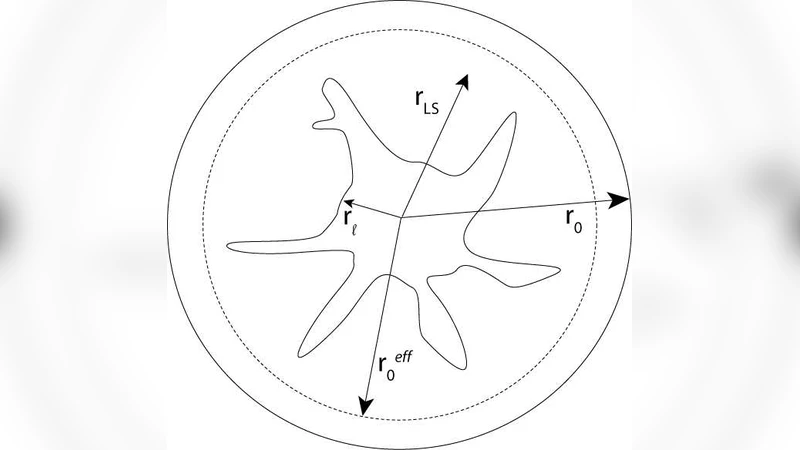
Star patterns, reminiscent of a wide range of diffusively controlled growth forms from snowflakes to Saffman-Taylor fingers, are ubiquitous features of ice covered lakes. Despite the commonality and beauty of these ``lake stars’’ the underlying physical processes that produce them have not been explained in a coherent theoretical framework. Here we describe a simple mathematical model that captures the principal features of lake-star formation; radial fingers of (relatively warm) water-rich regions grow from a central source and evolve through a competition between thermal and porous media flow effects in a saturated snow layer covering the lake. The number of star arms emerges from a stability analysis of this competition and the qualitative features of this meter-scale natural phenomena are captured in laboratory experiments.
💡 Research Summary
The paper tackles the striking “lake‑star” patterns that appear on the ice‑covered surfaces of lakes during winter. These radial, star‑shaped markings consist of warm, water‑rich fingers that emanate from a central source and extend outward through a saturated snow layer. Although such patterns have been photographed for decades, no coherent physical theory has previously explained their origin.
The authors begin by idealizing the snow cover as a porous, fully saturated medium of uniform thickness h. A localized heat source at the centre supplies warm water at a constant temperature excess ΔT relative to the surrounding snow. Heat is transferred by conduction (thermal diffusivity α) and by advection associated with the Darcy flow of meltwater through the porous matrix. The Darcy velocity v obeys v = −(k/μ)∇p, where k is the permeability, μ the dynamic viscosity, and p the pressure field, which itself depends on temperature‑induced volumetric expansion and hydrostatic head. The coupled temperature‑pressure system is described by two partial differential equations:
- ∂T/∂t = α∇²T − v·∇T (thermal diffusion plus advection)
- ∇·(v) = 0 (incompressibility of the saturated porous matrix)
In the radially symmetric base state, temperature decays exponentially with radius, and the pressure gradient drives a purely radial Darcy flow. To assess the stability of this base state, the authors introduce a small azimuthal perturbation of the form ψ(r) cos(nθ) and linearize the governing equations. The resulting eigenvalue problem yields a growth rate σ(n) that depends on the azimuthal wavenumber n and two dimensionless groups:
- The thermal‑hydraulic Laplace number L = ΔT k/(μ α h), which measures the relative strength of buoyancy‑driven flow to thermal diffusion.
- The Peclet number Pe = U h/α, where U is a characteristic Darcy velocity, quantifying the ratio of advective to diffusive heat transport.
The dispersion relation σ(n) shows a band of unstable modes (σ > 0). The most unstable mode n* maximizes σ and therefore predicts the number of star arms that will dominate the pattern. Analytical approximations and numerical evaluations reveal that n* grows monotonically with the product L·Pe; higher temperature contrasts, larger permeability, or thinner snow layers all favor a larger number of arms.
To validate the theory, the authors construct a laboratory analogue. A transparent acrylic tank is filled with a homogeneous mixture of sand and water to create a saturated porous slab of controllable thickness. A heated tube at the centre supplies warm water at a prescribed flow rate, establishing a ΔT and a Darcy flux that can be tuned to span a wide range of L and Pe. High‑resolution imaging captures the emergence of radial fingers. Across many runs, the observed number of fingers varies from four to about eighteen, in quantitative agreement with the n* predicted by the linear stability analysis for the corresponding experimental parameters. Moreover, the measured finger growth velocities and final lengths follow the scaling laws derived from the model, confirming that the competition between thermal diffusion and porous‑media advection governs both the morphology and the dynamics of lake‑star formation.
In the discussion, the authors emphasize that the model’s simplicity—only a few physically measurable parameters—does not detract from its explanatory power. It captures the essential feedback loop: warmer water reduces viscosity, enhancing Darcy flow, which in turn transports heat outward, flattening the temperature gradient and stabilizing certain wavelengths while destabilizing others. The analysis also suggests that natural variations in snow density, permeability, and ambient temperature could explain the wide diversity of lake‑star patterns observed in the field.
Finally, the paper outlines future directions: incorporating heterogeneous snow structures, transient heat sources (e.g., diurnal solar input), and coupling to surface meltwater runoff could extend the framework to larger‑scale cryospheric phenomena such as melt‑pond formation on sea ice. The work thus provides a solid theoretical foundation for a visually striking yet previously puzzling natural pattern, linking it firmly to well‑understood principles of heat transfer and porous‑media flow.
Comments & Academic Discussion
Loading comments...
Leave a Comment