The Galactic Center region viewed by H.E.S.S
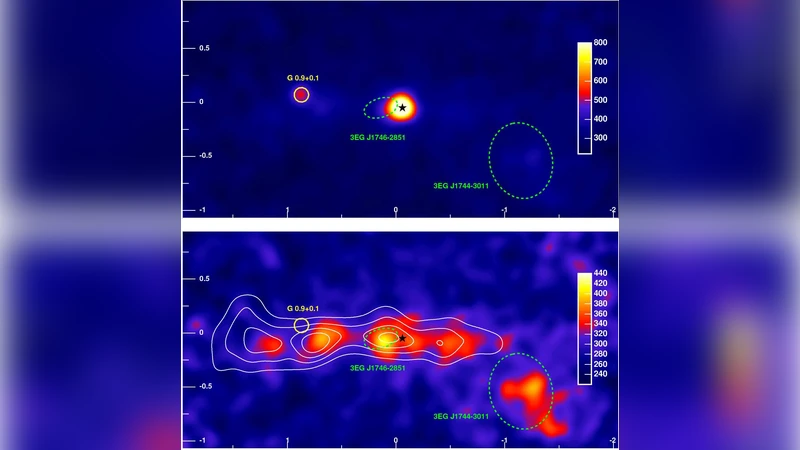
The Galactic center region is the most active region in the Milky Way harboring a wealth of photon sources at all wavelengths. H.E.S.S. observations of the Galactic Center (GC) region revealed for the first time in very high energy (VHE, E> 100 GeV) gamma-rays a detailed view of the innermost 100 pc of the Milky Way and provided a valuable probe for the acceleration processes and propagation of energetic particles near the GC. H.E.S.S. has taken more than 180 hours of good-quality observations toward the GC region since the experience started in 2003. A strong and steady gamma-ray source has been detected coincident in position with the supermassive black hole Sgr A*. Besides the central pointlike source, a diffuse emission extended along the Galactic Plane has been detected within about 1$^{\circ}$ around the GC. An accurate analysis of the Galactic center region suggests that the diffuse emission may dominate highest energy end of the overall GC source spectrum. I will review the current VHE view by H.E.S.S. of the GC region and briefly discuss the theoretical models which explain VHE gamma-ray emissions of the central source and the diffuse emission.
💡 Research Summary
The paper presents a comprehensive analysis of very‑high‑energy (VHE, E > 100 GeV) gamma‑ray observations of the Galactic Center (GC) region performed with the High Energy Stereoscopic System (H.E.S.S.). Since the start of the GC campaign in 2003, more than 180 hours of high‑quality data have been accumulated, allowing the authors to produce the first detailed VHE view of the innermost ~100 pc of the Milky Way.
The most striking result is the detection of a strong, steady point‑like source that is spatially coincident with the supermassive black hole Sagittarius A* (Sgr A*). The source exhibits a power‑law spectrum with an index of ≈2.3, extending from the detection threshold (~100 GeV) up to at least 10 TeV and showing a significant tail beyond 30 TeV. The lack of variability over the multi‑year observing period suggests a persistent acceleration process in the immediate vicinity of the black hole, most plausibly involving either proton or electron acceleration in the intense magnetic fields (∼ mG) and shock structures near Sgr A*.
In addition to the central point source, the authors identify a diffuse gamma‑ray component that stretches roughly 1° (≈150 pc) along the Galactic plane around the GC. This emission correlates spatially with dense molecular clouds such as Sgr B2 and Sgr C, and its spectrum is slightly softer (index ≈2.7) than that of the point source. Importantly, the diffuse component appears to dominate the highest‑energy part of the overall GC spectrum (E > 30 TeV), implying that the most energetic particles have escaped the immediate black‑hole environment and are interacting with the surrounding interstellar medium.
The paper evaluates three broad classes of theoretical models that could account for the observed phenomenology:
-
Black‑hole accelerator model – particles are accelerated directly in the vicinity of Sgr A* by strong magnetic turbulence and shocks. The point source represents the immediate gamma‑ray output, while the diffuse emission results from the propagation of these particles into nearby molecular clouds, where they undergo proton‑proton collisions and produce gamma rays.
-
Stellar‑explosion (supernova/pulsar) accelerator model – recent supernova remnants or pulsar wind nebulae in the central region inject high‑energy particles. Both the point‑like and diffuse components could be manifestations of the same population of particles injected by these sources, with the point source possibly being a compact pulsar wind nebula superimposed on Sgr A*.
-
Molecular‑cloud accelerator model – the dense clouds themselves host localized acceleration sites (e.g., cloud‑cloud collisions, turbulent reconnection). In this scenario, the diffuse emission is largely self‑generated, while the point source may be a separate accelerator coincident with the black hole.
Each model can reproduce certain aspects of the data (spectral indices, spatial correlation with gas, lack of variability), but none provides a uniquely satisfactory explanation given the current observational constraints.
The authors stress that forthcoming facilities such as the Cherenkov Telescope Array (CTA) will deliver an order‑of‑magnitude improvement in sensitivity and angular resolution. CTA will be able to disentangle the point‑like and diffuse components with unprecedented precision, resolve spectral features (e.g., cut‑offs, curvature) that could discriminate between hadronic and leptonic emission mechanisms, and map the gamma‑ray morphology relative to high‑resolution molecular‑gas surveys. Complementary multi‑wavelength observations (radio, infrared, X‑ray) will further constrain the magnetic field structure and particle energy densities.
In summary, the H.E.S.S. observations have revealed a complex VHE landscape in the Galactic Center: a steady, hard-spectrum point source anchored to Sgr A* and an extended, softer-spectrum diffuse glow that likely traces the interaction of escaped cosmic rays with the dense central molecular zone. These results provide a crucial laboratory for studying particle acceleration under extreme gravitational and magnetic conditions, and they set the stage for the next generation of gamma‑ray instruments to unravel the detailed physics of our Galaxy’s most energetic region.
Comments & Academic Discussion
Loading comments...
Leave a Comment