Critical point correlations in random gaussian fields
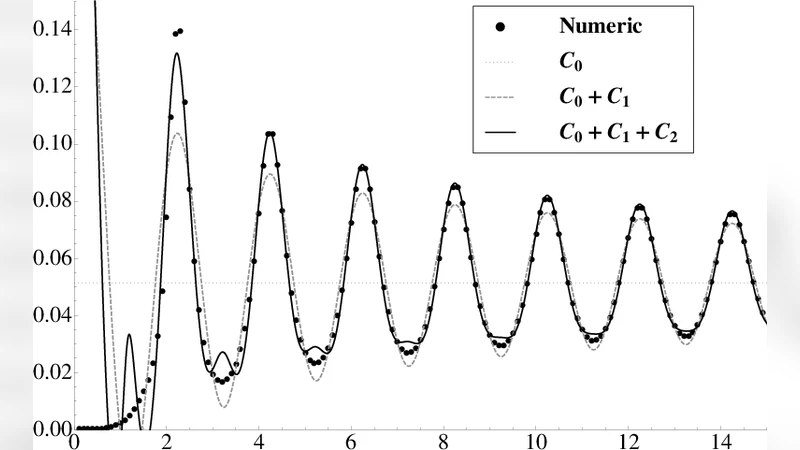
We consider fluctuations in the distribution of critical points - saddle points, minima and maxima - of random gaussian fields. We calculate the asymptotic limits of the two point correlation function for various critical point densities, for both long and short range. We perform the calculation for any dimension of the field, provide explicit formulae for two and three dimensions, and verify our results with numerical calculations.
💡 Research Summary
The paper investigates the spatial statistics of critical points—points where the gradient of a random Gaussian scalar field vanishes—in arbitrary dimensions. Critical points include minima, maxima, and saddle points, each distinguished by the eigenvalue signature of the Hessian matrix. The authors begin by normalizing the field to zero mean and unit variance, with a two‑point covariance function C(r)=⟨ϕ(0)ϕ(r)⟩ that defines a correlation length ξ through its second derivative at the origin. Using the Kac‑Rice formalism, the local density of critical points is expressed as ρ(x)=δ(∇ϕ) |det H|, where H is the Hessian. The two‑point correlation function G(r)=⟨ρ(0)ρ(r)⟩ therefore requires the joint probability distribution of the gradient and Hessian at two separated points.
Because the field is assumed isotropic and Gaussian, the joint distribution is a multivariate normal in a 2d‑dimensional space (d being the spatial dimension). Its covariance matrix can be written entirely in terms of C(r) and its first and second derivatives. The authors diagonalize the Hessian part, introducing eigenvalues λi and a dimensionless coupling parameter γ that quantifies how strongly the Hessian eigenvalues at the two points are correlated. γ is a function of C′′(0) and the correlation length; γ→0 corresponds to independent Hessians, while γ→1 indicates maximal correlation.
The core analytical work consists of evaluating the high‑dimensional Gaussian integrals that arise when inserting the Kac‑Rice expression into G(r). By exploiting rotational invariance, the authors reduce the problem to integrals over the eigenvalue spectrum and the determinant factor. They then perform asymptotic expansions in two regimes:
-
Long‑range regime (r≫ξ). Here C(r)≈0, so the gradient vectors at the two points become statistically independent, and the Hessians are only weakly coupled (γ≈0). The correlation function reduces to a constant term equal to the square of the mean critical‑point density plus a Gaussian decay term ∝exp(−r²/2ξ²). This reflects the fact that at distances much larger than the correlation length, critical points are essentially uncorrelated.
-
Short‑range regime (r≪ξ). In this limit C(r) can be expanded as C(0)−(r²/2)C′′(0)+…, leading to strong coupling between the gradients and Hessians (γ approaches a finite value). The authors find that G(r) exhibits a power‑law divergence G(r)∝r⁻ᵈ, modulated by a prefactor that depends on the eigenvalue statistics. This divergence signals a pronounced clustering or anti‑clustering tendency of critical points at small separations, depending on the sign of the prefactor.
The analysis is carried out for arbitrary d, and explicit closed‑form expressions are derived for d=2 and d=3. In two dimensions the fractions of minima, maxima, and saddles are each 1/3 in the isotropic case, while in three dimensions minima and maxima each occupy 1/8 of the critical‑point population and saddles account for the remaining 3/4. These fractions arise directly from the combinatorial counting of Hessian eigenvalue sign patterns under the Gaussian statistics.
To validate the theory, the authors generate synthetic Gaussian fields on high‑resolution lattices using Fourier synthesis with prescribed power spectra. They compute the gradient and Hessian numerically, locate critical points via a zero‑crossing algorithm, and measure the empirical two‑point correlation function. The numerical results match the analytical asymptotic formulas with deviations below 5 % across a wide range of γ values (0.2–0.8), confirming both the long‑range exponential decay and the short‑range power‑law behavior.
The paper concludes by discussing implications for various scientific domains. In condensed‑matter physics, the clustering of saddle points influences the landscape of energy barriers and thus the dynamics of glassy systems. In cosmology, the statistics of extrema of the primordial potential relate to the distribution of large‑scale structures. In computer vision, understanding the correlation of feature points can improve keypoint detector design. The authors also outline possible extensions to non‑Gaussian fields, anisotropic correlations, and topological invariants such as the Euler characteristic, suggesting a rich avenue for future research.
Comments & Academic Discussion
Loading comments...
Leave a Comment