The Swift/XRT Catalogue of GRBs
We present the preliminary analysis of the GRB light curves obtained by Swift/XRT between November 2004 and December 2010.
Astrophysics
All posts under category "Astrophysics / Astro-Ph.CO"
We present the preliminary analysis of the GRB light curves obtained by Swift/XRT between November 2004 and December 2010.
VERITAS, an array of imaging atmospheric-Cherenkov telescopes, studies blazars in the energy range between ~100 GeV and ~30 TeV. With its excellent sensitivity at these energies, and ever-deepening source exposures, VERITAS is in a position to probe distant blazars for clear absorption signatures in
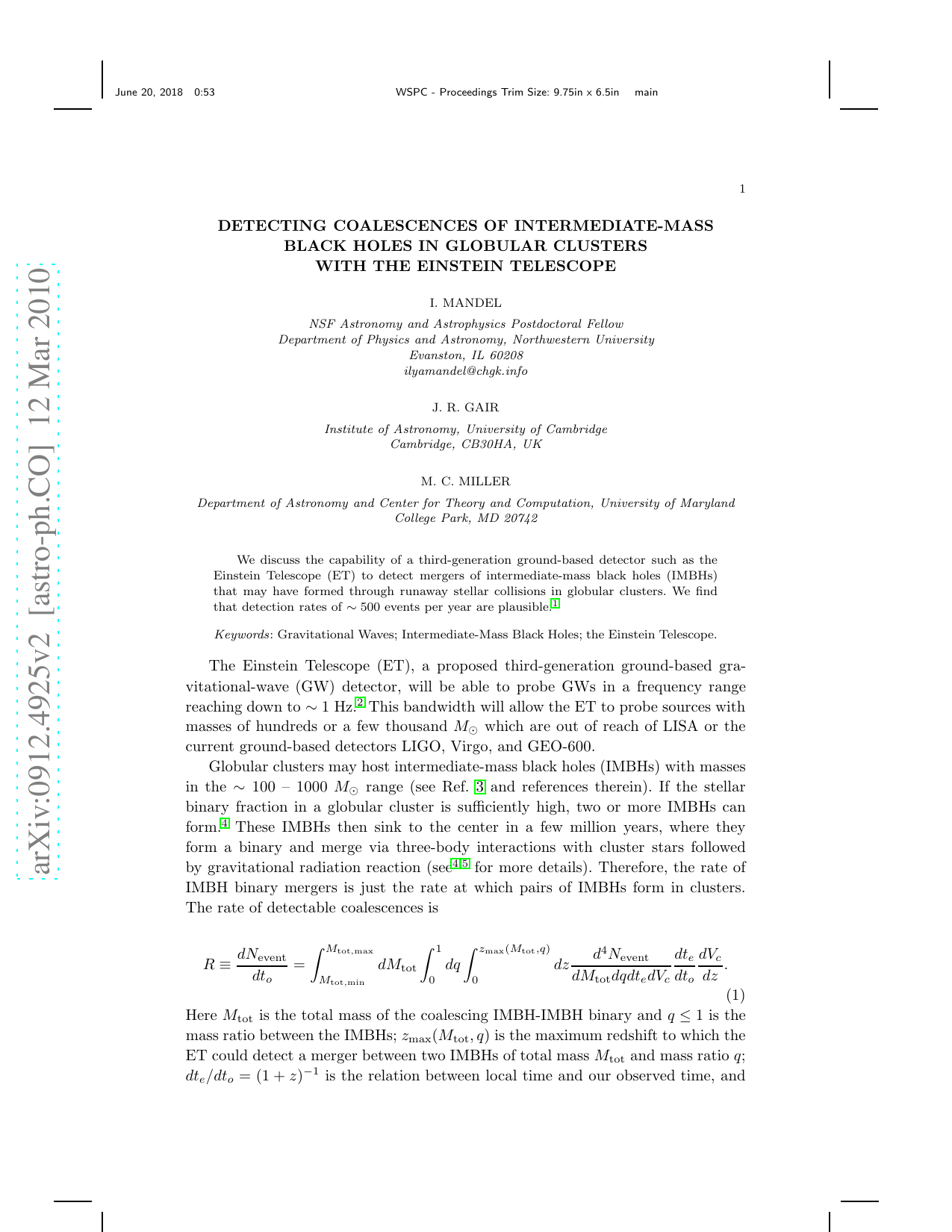
We discuss the capability of a third-generation ground-based detector such as the Einstein Telescope to detect mergers of intermediate-mass black holes that may have formed through runaway stellar collisions in globular clusters. We find that detection rates of 500 events per year are plausible.

We show that, if decaying gravitino dark matter is responsible for the PAMELA and ATIC/PPB-BETS anomalies in the cosmic-ray electron and positron fluxes, both a reheating temperature and a gluino mass are constrained from above. In particular, the gluino mass is likely within the reach of LHC, if th
A recent paper by T. Dauxois entitled 'Non-Gaussian distributions under scrutiny' is submitted to scrutiny. Several comments on its content are made, which constitute, at the same time, a brief state-of-the-art review of nonextensive statistical mechanics, a current generalization of the Boltzmann-G
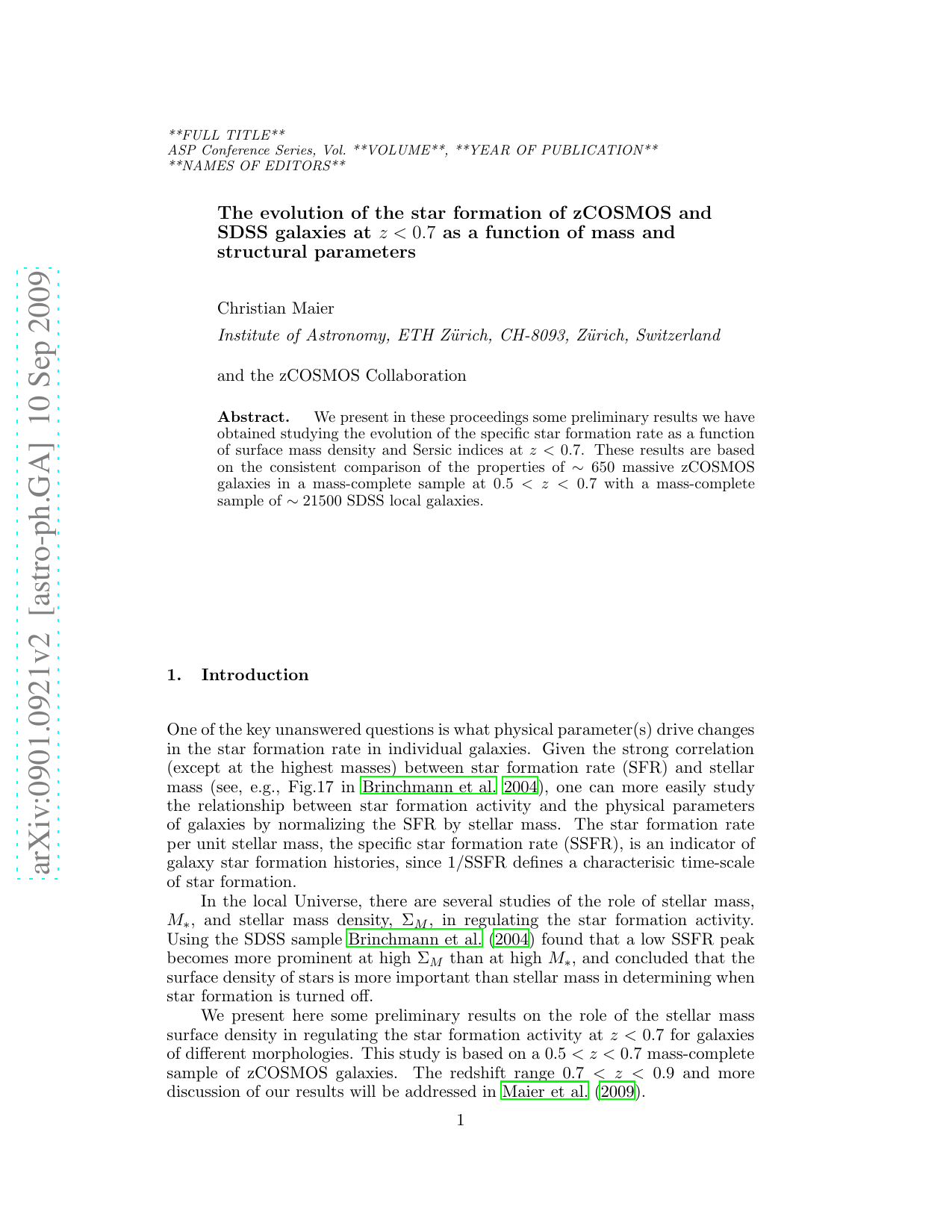
We present in these proceedings some preliminary results we have obtained studying the evolution of the specific star formation rate as a function of surface mass density and Sersic indices at z<0.7. These results are based on the consistent comparison of the properties of ~ 650 massive zCOSMOS gala
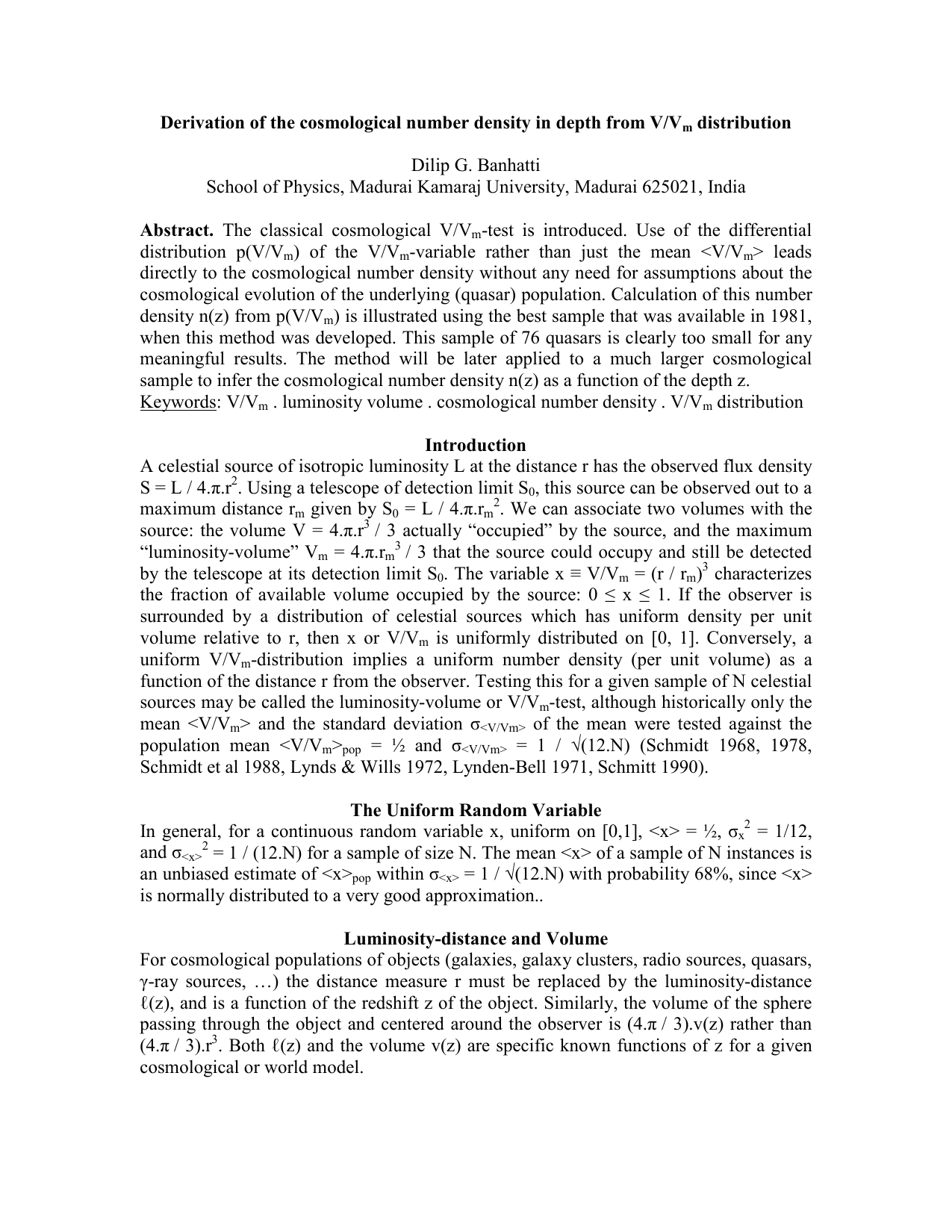
The classical cosmological V/Vm-test is introduced. Use of the differential distribution p(V/Vm) of the V/Vm-variable rather than just the mean <V/Vm> leads directly to the cosmological number density without any need for assumptions about the cosmological evolution of the underlying (quasar) popula
The growth rate of matter perturbation and the expansion rate of the Universe can be used to distinguish modified gravity and dark energy models in explaining cosmic acceleration. We explore here the inclusion of spatial curvature into the growth factor. We expand previous results using the approxim
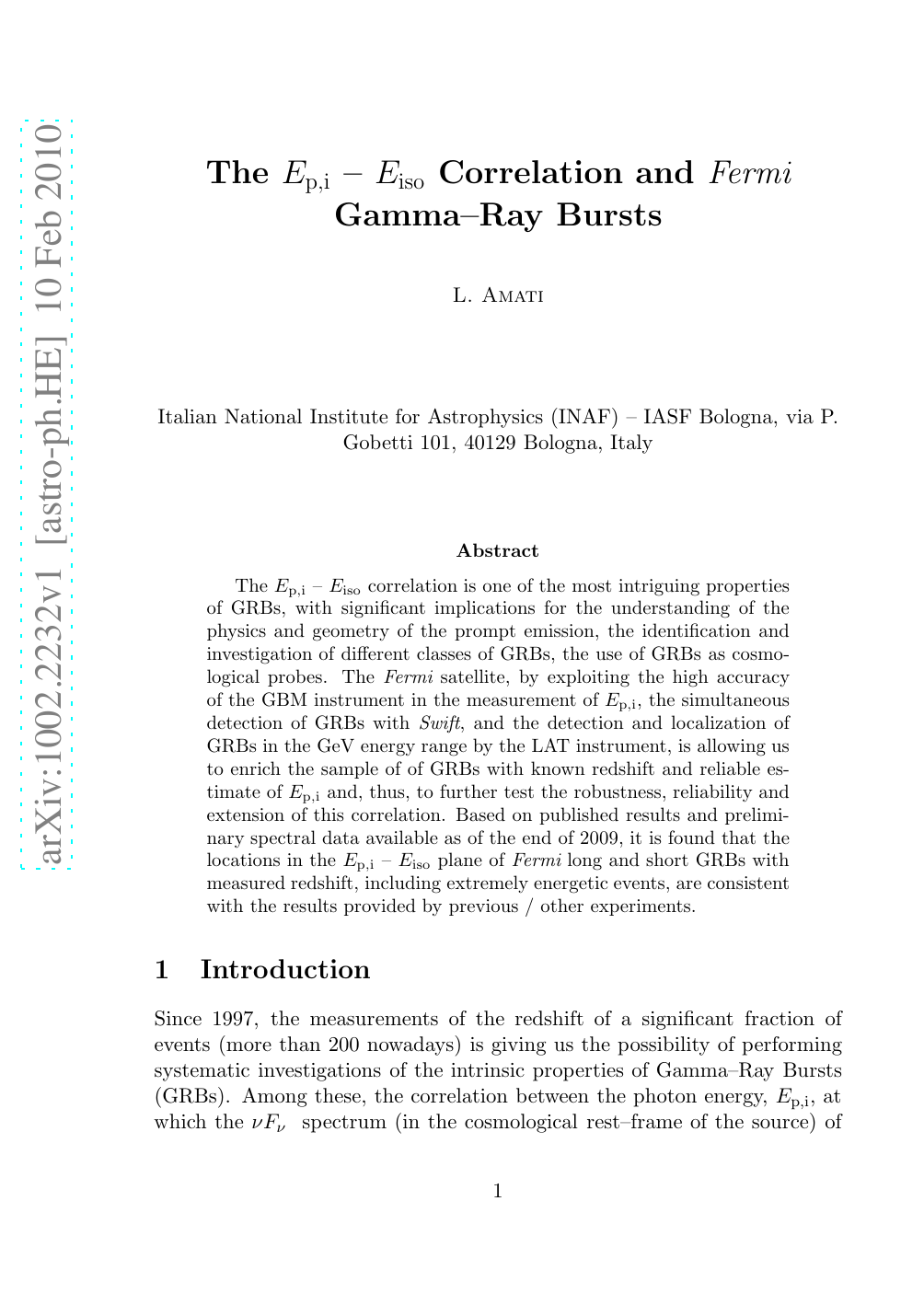
The Ep,i - Eiso correlation is one of the most intriguing properties of GRBs, with significant implications for the understanding of the physics and geometry of the prompt emission, the identification and investigation of different classes of GRBs, the use of GRBs as cosmological probes. The Fermi s
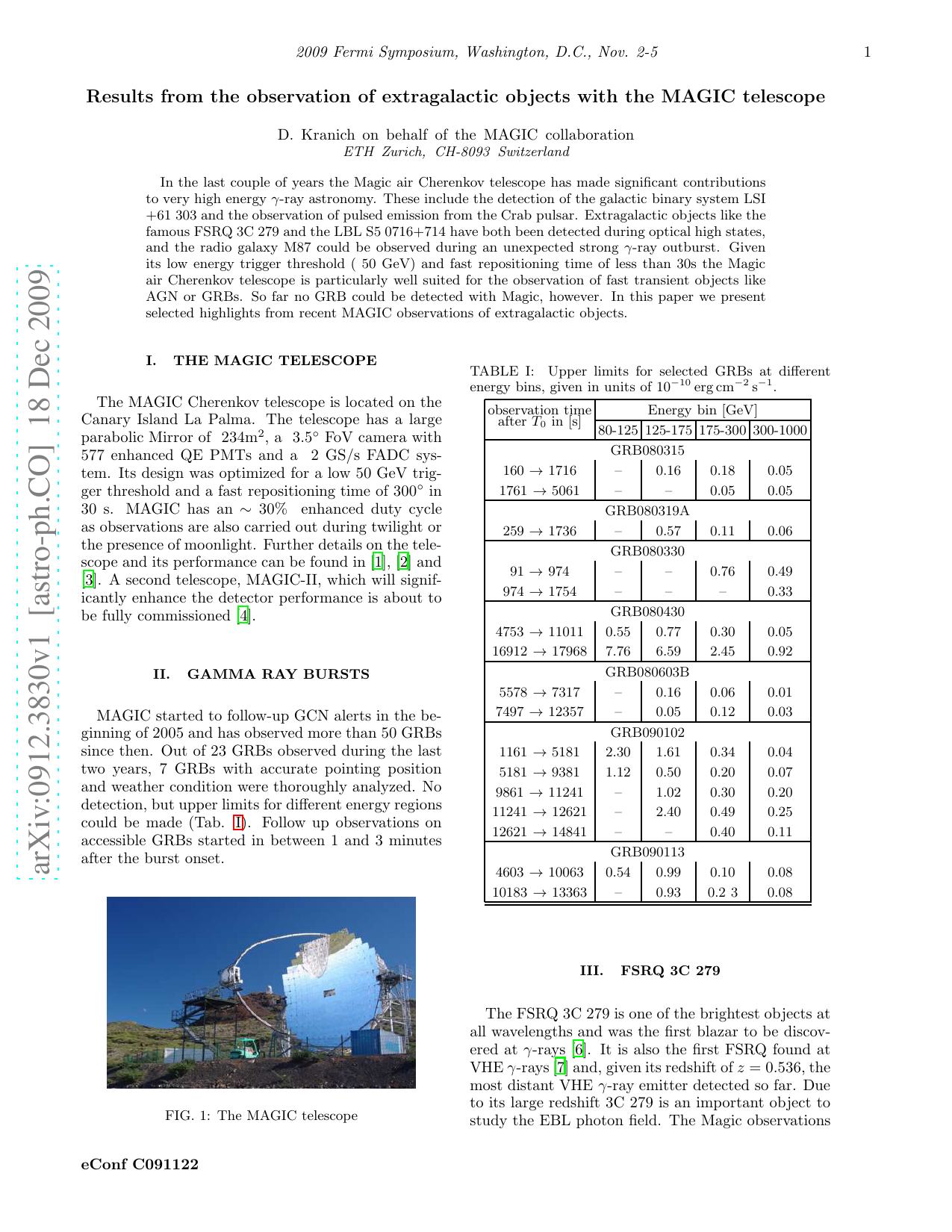
In the last couple of years the Magic air Cherenkov telescope has made significant contributions to very high energy $gamma$-ray astronomy. These include the detection of the galactic binary system LSI +61 303 and the observation of pulsed emission from the Crab pulsar. Extragalactic objects like th

We present the SINS survey with SINFONI of high redshift galaxies. With 80 objects observed and 63 detected, SINS is the largest survey of spatially resolved gas kinematics, morphologies, and physical properties of star-forming galaxies at z~1-3. We describe the selection of the targets, the observa
The two apparently distinct phenomena of dark energy (or late-time cosmic acceleration) and quantum gravity dominate physics on extremely low, and extremely high energies, but do not seem to have any apparent empirical connection. Nevertheless, the two have a theoretical connection, through the cosm
The neutral oxygen resonance 1302A line can, if the optical depth is sufficiently high, de-excite by an intercombination transition at 1641A to a metastable state. This has been noted in a number of previous studies but never systematically investigated as a diagnostic of the neutral red giant wind
Variability is one of the hallmarks of Active Galactic Nuclei. The Burst Alert Telescope onboard of Swift, with its homogeneous coverage of the sky is a formidable tool to study variability at hard X-rays. We present here the analysis of the 1-month binned Swift/BAT lightcurves of the 20 brightest A
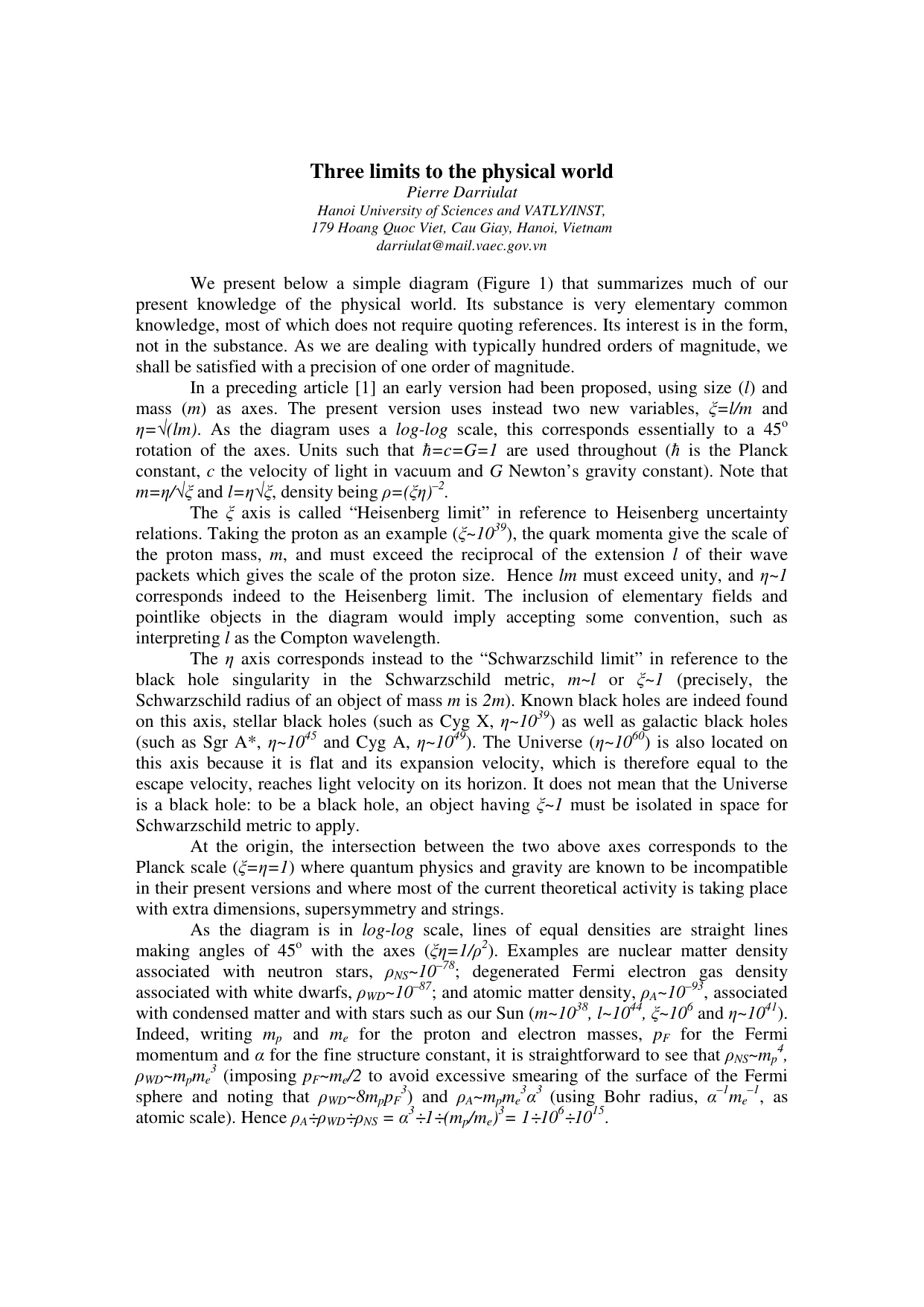
Three limits to the physical world (quantum physics, gravity and dark energy) are presented on a triangular diagram having as summits the Planck scale, the Universe and a neutrino-like object.
We report the discovery by the Large Area Telescope (LAT) onboard the Fermi Gamma-ray Space Telescope of high-energy gamma-ray emission from the peculiar quasar PMN J0948+0022 (z=0.585+/-0.001). Contrary to the expectations, the optical spectrum of this quasar shows only narrow lines [FWHM(Hbeta) ~
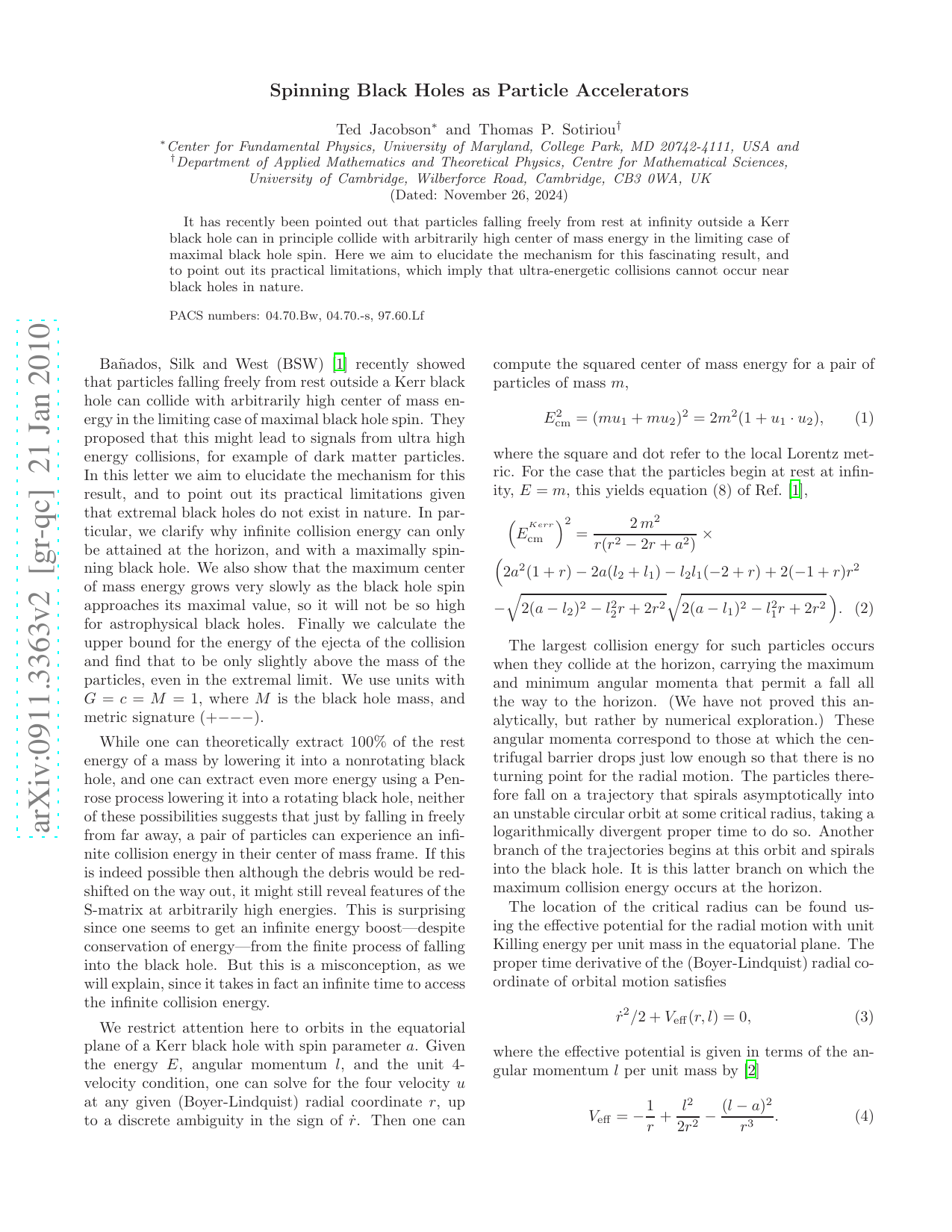
It has recently been pointed out that particles falling freely from rest at infinity outside a Kerr black hole can in principle collide with arbitrarily high center of mass energy in the limiting case of maximal black hole spin. Here we aim to elucidate the mechanism for this fascinating result, and
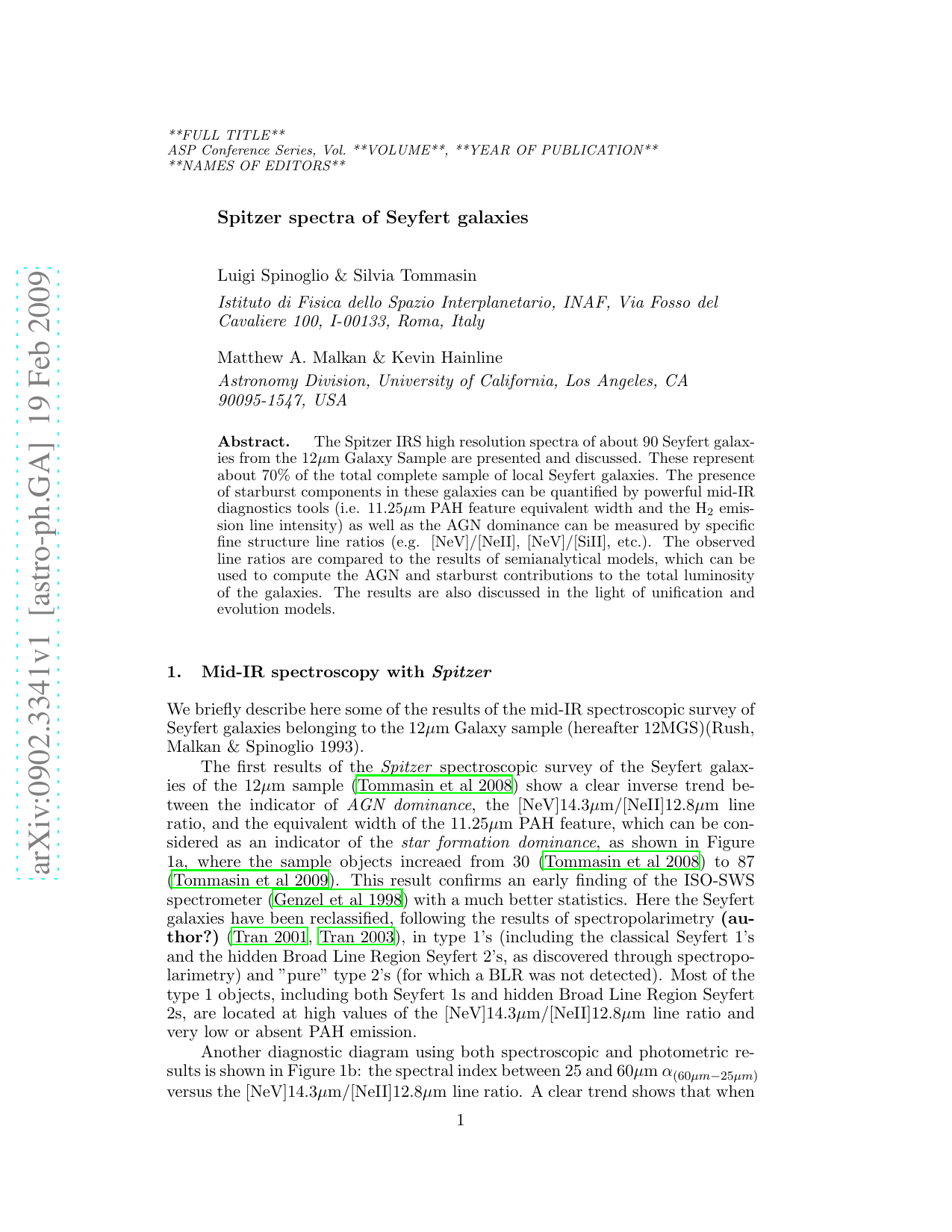
The Spitzer IRS high resolution spectra of about 90 Seyfert galaxies from the 12um Galaxy Sample are presented and discussed. These represent about 70% of the total complete sample of local Seyfert galaxies. The presence of starburst components in these galaxies can be quantified by powerful mid-IR

We point out that if quantum field renormalization is taken into account, and the counterterms are evaluated at the Hubble-radius crossing time or few e-foldings after it, the predictions of slow-roll inflation for both the scalar and tensorial power spectrum change significantly. This leads to a ch
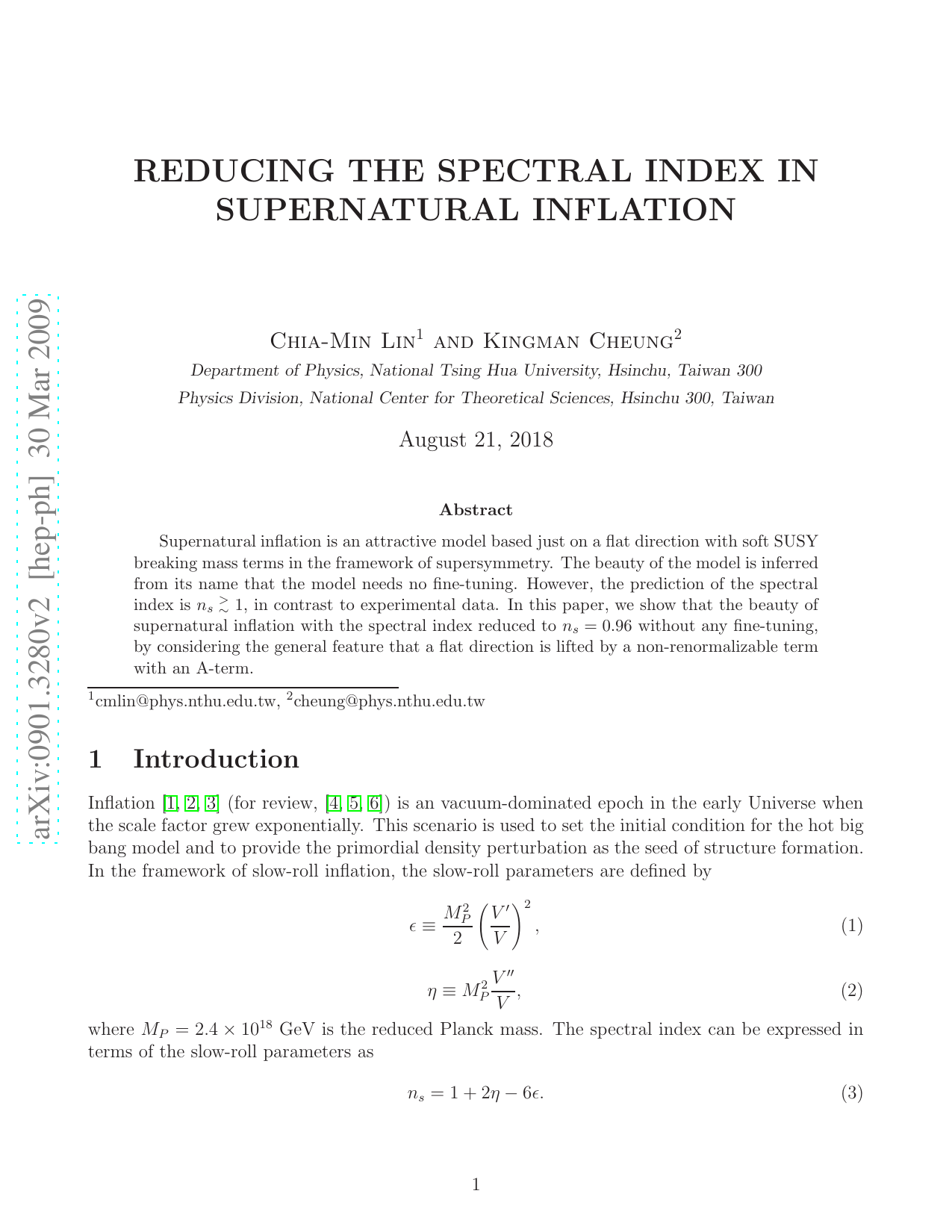
Supernatural inflation is an attractive model based just on a flat direction with soft SUSY breaking mass terms in the framework of supersymmetry. The beauty of the model is inferred from its name that the model needs no fine-tuning. However, the prediction of the spectral index is $n_s gae 1$, in c
Enter keywords to search articles