Reinforcement-guided generative protein language models enable de novo design of highly diverse AAV capsids
Adeno-associated viral (AAV) vectors are widely used delivery platforms in gene therapy, and the design of improved capsids is key to expanding their therapeutic potential. A central challenge in AAV bioengineering, as in protein design more broadly,…
Authors: Lucas Ferraz, Ana F. Rodrigues, Pedro Giesteira Cotovio
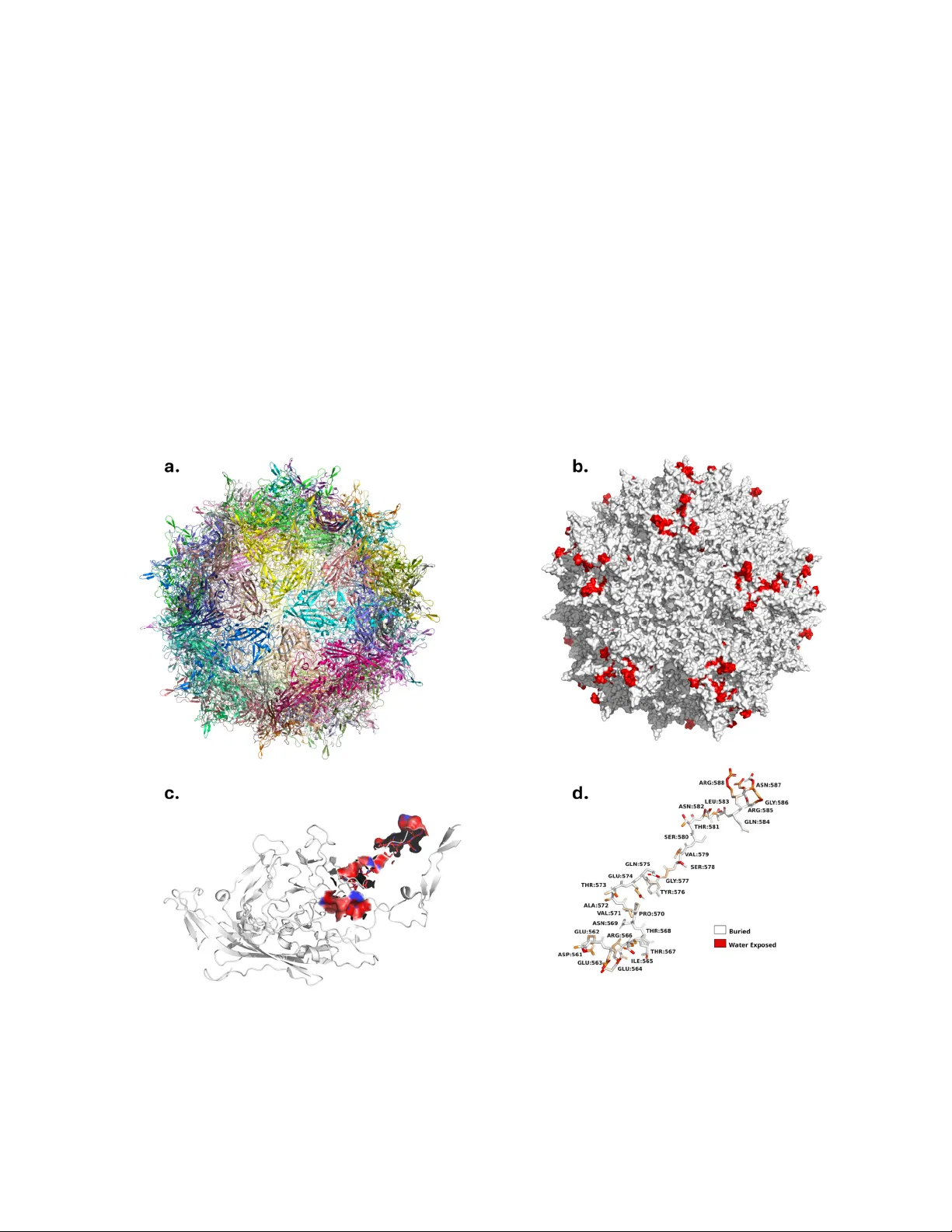
1 Reinforc ement-gu ided generative protein language models enable de n ovo design of highly diverse AA V capsids Lucas Ferra z 1,* , Ana F . R odrigues 1,*, , Pedro Giesteira Cotovio 1 , Mafa lda V entura 3 , Gabrie la Silva 3 , Ana Sofia Coroadinha 3 , Miguel Mac huqueiro 2 , Catia Pesquita 1 1 - LASIGE, Fac uldade de Ciências da Universidade de Lisboa, Lisboa, Portuga l 2 - BioISI, Faculdade de Ciências da Un iversida de de Lisboa , Lisboa, Portugal 3 - iBET – Instituto de Biologia Expe rimental e T e cnol ógica, Oeira s, Portugal * - Equal contribution - Correspondence should be addresse d to A. F . Rodr igues (afdr odrigues@f c.ul.pt) 2 Abstract Adeno-a ssociated viral (AA V) vectors are widely used delivery platfor ms in gene therapy , and the design of improved c apsids is ke y to e xpanding their thera peutic pot ential. A ce ntral c hallenge in AA V bioenginee ring, as in protein design more br oadly , is the va st se quence design space rela t ive to the sca l e of fea s ible exper i mental scr eening. Ma chine-guide d gene rative app roache s provide a powerful means of navigating t his landscape and proposing novel protein sequenc es that satisfy functional constraints. Here, we develop a gener ative design framework based on protein l angu age models and reinforce ment l ear ni ng to gener ate highly novel yet funct ionally plausible AA V capsids. A pretra i ned model was fine-tuned on experimenta l ly validated capsid s equenc es to lear n patterns associated with viability . Reinforc ement learning wa s then used to guide sequenc e generation, wit h a re ward function th at jointly promoted predic t ed viabili ty and seque nce novelty , ther eby enabling e xploration beyond regions re presented in the tr aining data. C ompar ative analyses showed t hat fine-tuning alone produces sequenc es with high predicted viability but remains biased toward the training d is tribution, wher eas reinforc ement learini ng-guided generation rea ches more distant re gi ons of sequenc e spa c e while m aintaining high pre dicted vi abili ty . Finally , we propose a c andidate selection strategy that integr ates predicted viability , s equenc e novelty , and biophysical properties to prioritize variants for downstrea m evalua tion. This work establishes a framework for the genera t ive exploration of protein sequenc e space a nd adva nc es the application of ge nerati ve pr ot ein langua ge models to AA V bioengineering. 3 1. Intr od uction Adeno-a ssociated viral (AA V) vectors are among the most widely used platforms for therape uti c car go delivery i n gene therapy . Their extensive clinical eval uation [1], sustained transgene expression [2], and design flexibility af forded by capsid [3] and genome engineering [4] have driven continued expansion int o new t hera peutic i ndications [5]. F irst-genera ti on AA V vec t ors yielded major clinical successes and enabled ear l y market-a pproved products, including Luxturna ® and Zolge nsm a® . However , acc um ulated clinical exper i ence has reve aled the need for next- generation vectors with reduc ed im m unogenicity , improved transduction effic i ency , or lower organ toxicity [6]. Ad ditionally , othe r properties remain active tar gets for optimization, i ncluding enhanc ed tissue spec ificity , improved manufac t urability , and better control of transgene expression. Addressing these challenges require s the abilit y to ef ficiently explore lar ge regions of capsid sequenc e s pace while preserving strict func t iona l constraints. Protein engineering is l imited by the vast size of possible sequence space relative t o the s cale of fea s ible experimental screening. Even for relatively well-cha racteriz ed proteins, only an infinitesimal fra ction of possible sequence variants can be exper i menta ll y evaluated. Therefor e, computational approa ches capa bl e of proposing novel, functionally plausible prote i n sequenc es have become i ncrea singl y important for gui ding experimental effor ts . In rec ent year s , m achine learning-guided protein design has emer ged as a powerf ul strategy for navigating sequence space and accelera t ing t he discovery of functional AA V variants [7–14]. Gene rative artific i al intelligence (AI) repr esents a parti cularly promising approac h for prote i n design . Gene rative models learn the underlying dist ribution of complex biological sequences and use this learne d repr esentation to produce new variants. Early work in genera ti ve protein m odeling explored arc hi tecture s such as gener ative adversar i al networks (GAN s ) [15], va riational autoencoders (V AEs) [16], and graph neura l networks (GNNs) [17] . More rece ntl y , advance s in lar ge-scale protein language models ( PLMs ) [18– 20], flow-base d [21], and di ffusion-ba sed m ode l s [22 ,23] have subst antially improved genera tive models’ ability to ca pt ure protein sequenc e patterns and structur al constraints. These developments have enabled the gener ation of diverse proteins that ma i ntain plausib le struc tural and evoluti onary char acteristics. In the context of AA V b i oengineer i ng, m ost generative studies have relied on V AEs [24–26], which learn a continuous latent representa tion of training sequenc es and enable the generation of new variants through samplin g or interpolatio n. However , V AE -generate d sequence s often r emain strongly bia s ed towa rd the training data, and these models are susce pt ible to la t ent space collapse (e.g. [27]), in whic h the learne d repr esentation fails to capture meaningful s equenc e variability . As a result, such approache s have l imited ability to explore di stant regions of sequence design spac e t hat could contain highly novel variants . Accessing more dis tant regions of sequence space is important because it increa s es t he l ike l ihood of discover i ng 4 variants with properties absent from existing capsids , enabling the identification of vectors wit h altered antigenicity , improved stability , or modified tissue t ropis m, thus expanding the functional reper t oire available for gene therapy applica t ions. Developing genera t ive strategies that can ef fectively explore such novelty while preser vi ng functional constra i nts rema ins a challenge . PLMs are leading approache s for modeling protein sequence distributions and generating new variants. Pretr ained on millions to billions of protein s e quences, PLMs ca pt ure rich statistica l patter ns, long- range sequence dependenc i es, and evolut ionary c onstraints encoded in natur al prote i ns [28]. This lar ge-scale pretra i ning provides a biologically informed prior t ha t enables t he genera ti on of pl ausible sequence s by meeting the pr otein grammar rules [29]. Addi t ionally , PLM-based approaches offer grea ter sc alability , e asier training, and broader coverage of sequenc e s pace com pared to other generative approac hes s uch as GANs , GNNs, or dif fusion-based models [30], making them attrac ti ve f or advanc i ng gene rative AA V c apsid de si gn. Howeve r , pretrained PLMs are i nhere nt ly gener al-purpo se models and do not explici t ly encode the functional require m ents of any particular bioengineer ing task. Conseque ntl y , the y cannot reliably generate sequenc es optimized for specific functional properties, such as, in the ca s e of AA Vs, viability , manufa cturability , or immune evasion. Addressing this limitation require s adapting the model to task-spec i fic data t hrough fine- tuning, a form of transfe r learning t hat ena bles it to reta i n knowledge acquired during la rge- scale pretraining while incorpora t ing func ti onal signals re levant to the bioengineer i ng obje ctive [31] . This a pproach i s particular l y e ffe ctive whe n exper im ental datasets exist or c an be gener ated that e xplicitly capture the functional proper t ies of interest, even if such datase ts ar e s mall, which is common in practice . After a model is fine-tuned to satisfy task-spe cific func t ional constra i nts, genera ti ng truly nove l sequenc es remains a challenge. Protein sequenc e space is vast, and most combinations of residues are non- functional, mea ni ng that naive sampling, even from a fine -tuned m odel, tends to produce sequence s that are close t o the training data. Ac hieving higher novelty requires actively guiding the model to explore regions of sequence space that are distant from known sequence s . Reinforce ment learning [32] provides a powerf ul fra mework for this goal by defining re ward functions tha t simultaneously capture func t ional constra i nts and sequenc e novelty . In t his work, we develop a gene rative prote i n design framewor k based on f i ne-tuned PLMs and reinfor cement lear ning to genera te highly nove l but f unctional pr ot eins. W e de m onstra te this a pproach in the context of AA V2 capsid enginee ring which, re presents a pionee r appl i cation of PLM-base d genera ti ve modeling for AA V design. W e f i rst fine-tune a pretraine d PLM on a la rge corpus of exper i mentally val idated AA V2 capsid sequenc es to capture sequence patterns associated with the functional constraint of capsid viability . W e then introduce a reinfor c ement learning-based training scheme guide genera tion toward variants predicte d to retain capsid v i ability while actively promoting sequenc e novelty beyond that found in training data. In contrast t o conventional fine-tuning approa ches that rely s olely on positive examples, t his st rategy 5 explicitly teaches t he model not only what constitutes viable sequences but also which regions of s equenc e design space to avoi d [33,34], thus increa si ng the gen eration of functional variants. F inally , we propo se a candida te selection strategy that integr ates predicted viability , se quence nove l ty , and coverage of bi ophysical proper ties to pr i oritize t he most pro misi ng va riants for downstrea m exper i mental eva luation. This combination of ge neration, reinforceme nt le arning-guided exploration , a nd candidate selection enable s systematic discovery of diverse, functionall y plausibl e protein sequenc es and es tablis hes a genera li zable workflow for PLM-base d genera t ive protein design that ca n be applied beyond AA V capsid design . 2. Results 2.1. T raini ng and se quence gener ation T o evaluate the potential of P LM fine-tuning for gener ative AA V capsid design, we used ProGe n [30 , 31], a generative PLM pre-tra i ned on hundreds of millions of diverse protein sequence s spanning a wide range of families and functions. While more rece nt PLMs such as ESM3[18] provide powerful capabilities for protein generation, their large -scale and m ultimoda l design makes itera t ive reinfor cement le arning optimization computational ly demanding . W e there fore employed the P roGen architecture as a tractable gener ative ba ckbone that enables direc t i nte gration of fi ne-tuning and sequenc e-level reinforc ement le arning. Because our goa l was not t o benchmark dif ferent PLMs but to e valuate how genera ti ve PLMs can be a dapted for functional AA V capsid design, ProGen provided a pra ctical balanc e between gener ative capability , computational tra ctabilit y , and flexibili ty for reinforc ement l ear ning–based op timization. The pre-trained model was fine-tuned using either a classical fine-tuning approa ch or fine-tuning followed by reinforce ment learning training, l evera ging the AA V2 capsid via bi lity da t aset f rom Brya nt et al. (2021) [1 1], with the model prior to any fine-tunin g or retraining, being eva l uated as a baseline ( Fig. 1a ). In the classical fine-tuning approac h, only sequence s la beled as vi able (positive sequence s) were us ed for training ( Fig. 1b ). This fine-tune d model then served as the initialization for the reinforc ement lear ni ng strategy ( Fig. 1c ). The reinforc ement learning architecture was designed to balance sequence novelty with functional constraints through two comple mentary branche s. The diversity branch uses embedding s from ESM2 mode l [37] which were kept froze n to provide gene ral-purpose sequence re pr esentations unbiased with respe ct to capsid v i ability s ignals. He re, novelty is quantified by comparing e ach ge nera t ed se quence to the ref erence sequenc e using the cos ine distance betw een embeddings. Because these embeddings capture the overall st ructura l and evolutionar y context of a protein, the cosine distance betwee n them refle cts how dif ferent a new sequenc e i s from t he refe rence sequence in a biologica lly i nformed latent space , rather than merely raw sequenc e i dentity . The distribution of cosine distance value s of sequence s in t he fi ne-tuned gener ated set is used t o express novelty scor es as pe rcentiles, sc aled such that a value of 1 corresponds to the 6 maximum novelty obser ved in t his se t . In the rewa rd functi on, novelty c ont ributes mul tiplicatively such t hat higher n ovelty leads to a lar ger reward contributi on. F or sequenc es excee din g the maxim um observed novelty , this contribution is fur t her amp l ified through power -law scaling, effe ctively cr eating a t ai l that incentivizes exploration beyond t he training distribution. The functiona l branch uses P rotBER T [38] with a classification head, fine-tuned on experimental data of AA V2 capsid viability . P rotBER T provides a sequence -lev el representation equivalent i n capability to ESM2, but using a separate m odel for t he functional branch ensure s that novelty and viability are treated inde pendently . Figur e 1 | Overview of training and sequenc e generation strategies . The pre-trained , ge ner a l-purpose ProG e n model was f irst used as a ba seline to g enerate ne w sequences withou t a dditiona l t raining (a) . N ext, ProGen w as fine -t uned using only positive (viable) sequences (b) . Thi s fine-tuned model ((+ )FT ProGen) was f ur ther t rained using a reinfor c ement learning (RL) sche m e that simu l taneously r ewards sequen ce novelty relative to t he reference s equence and penali z es exploration of the negative sequence design space (c) . This figure was c rea t ed using icons from The Noun Project, u s e d under the CC BY 3.0 license: l anguag e model by a ri su p riha ry ati, Embedding by V e c tors Point, and Neural Networ k by karyative. 7 W it h each of the t hree model variants (pre-tra i ned, fine -tuned, a nd fine -tuned pl us reinforce m ent learning) and using intermediate (0.8) or high (1.2) sampling temperature s, 1 00000 sequences were genera t ed ( Fig. 1, T ab l e 1 ). T able 1 | Intersec tion of unique sequence s acro ss str ategies and the training d ataset T rain set Pr e -tra ined Pr oGen (+) FT Pro G en (+) FT Pro G en & RL t = 0.8 t = 1.2 t = 0.8 t = 1.2 t = 0.8 t = 1.2 T rain set 293305 0 0 161 37 0 6 Pr e - trained Pr oGen t = 0.8 100000 (0% viable ) 2 0 0 0 0 t = 1.2 100000 (0% viable ) 0 0 0 0 (+) FT Pr oGen t = 0.8 82031 (98% viab le) 75 0 0 t = 1.2 72509 (91% viab le) 0 0 (+) FT & RL Pr oGen t = 0.8 330 (100 % viable ) 317 t = 1.2 9403 (99% viab le) Except for t he train set, the di agonal s hows t he number of u nique s e quenc e s ( out of the 100000) generated in each c ase. Percentages along the diag onal values indicate t he proport ion of unique sequences in each ca s e t hat were classif i ed as positive (vi a ble) by the cl a ssifier describ e d in Rodr i gues et al. (2026) [3 1]. The gener al-purpose pre-tra ined model produced exclusively unique sequence s within each batch, with only 2 seque nces shar ed between the 0.8 and 1. 2 temper ature conditions ( T able 1 ). None of the gener ated sequences overlappe d wit h the fine-tuning dataset, showing that the pre- t rained model captures gener al protein grammar but l acks funct i onal gu idance resulting i n all sequence s being classified as non- viable. Fi ne-tuned models also genera t ed a hi gh propor tion of unique sequenc es (82% at t=0.8 and 73% at t=1.2) w i th 75 seque nces shar ed betwee n the two tempe rature c ondi tions. A limited overlap w ith the training set wa s obser ved (161 a nd 37 sequenc es at temper atures 0.8 and 1. 2, respec tively), cons ist ent with a residual bias t oward the trainin g data ( T able 1 ). Nonethe l ess , the frac ti on of new and unique sequences remained very high. Among these u nique s equenc es, 98% (for t=0.8) and 91% (f or t=1.2) were classified as viable by an AA V2 viability classifier described previously [31]. By contrast, the fine-tuned reinforce ment learning model gene rated fewe r uni que sequence s, 330 (t=0.8 ) and 9403 (t=1.2), a mong the 1 00000 sequenc es gener ated per temperature, the majority c lassified as viable (100% f or t=0.8, a nd 99% for t=1.2). As with the classica l f i ne-tuning approa ch, some se quences were share d ac ross temperature s, a nd a small fraction 8 overlapped with the training set. This reduced number of unique sequences reflects the selective pressure imposed by th e rewar d, whi ch sim ultane ou sly promote s functional viability and sequence novelty while discouraging non-functional re gions o f sequence spac e. W e further ana l ysed the mutational landscapes of th e s equence s genera ted by each model and compare d them with those of the traini ng dataset, comp risi ng both positive and negative sequences ( Fig. 2 ) . Figur e 2 | Mutationa l lands cape ana l ysis . D i stribu t ion of mutation types (deletions, i nserti on s, a nd substitut ions) within the t a rge t ed re gion ( a mino acid posi ti ons 561-588) , shown as t he per c ent a ge of chang e r e lative t o the ref e renc e s e quenc e . Data are presented for posit i ve (viable) and negativ e (non-vi able) sequen c es for the training set, seque n ces gener ated by the pre-trained ProG e n model w i thout fine-tuning, sequ e nces generat ed by the ProG e n model fine-tuned on positiv e (viable) sequenc es and s equences generated by t he f ine -tu ne d ProGen model furt her opti mized with re infor c ement learning (RL) . Generated datasets include sequences produced with samp ling temperatur e s t = 0 . 8 a nd t = 1.2; onl y unique sequences are included within each group. The mutational l andscape of sequences generated by t he fine-tuned models closely resembled t hat of the positive training set, reca pi tulating a previously identi fied viability si gnature [31], whe re viable sequence s preferentially avoid mutations within t he reg ion spanning amino acids 567- 5 76. When mutations 9 occur in t his region, they are predominantly substitutions rather than inser t ions or deletions. This region corre spo nds to a segment of the protein t h at is more bur ied within the capsid str u cture and is therefo re l ikely critical for maintaining capsid in tegrity , providing a plausible struc tu ral basis for the obser ved mutation avoidance ( Fig. 3 ). Sequences genera ted by the reinforc ement-guided m odel not only preserve this viabi l ity signature but a l so exhibit highe r-intensity mutational tar geting in the permitt ed re gio ns outside the r estricted segment, revealing that this model actively drives exploration of novel sequence variants by concentra ti ng mutations in regions compa t ible wit h viability . On the other hand, seque nces generated by the general- purpose pr e-tra i ned model exhibited a markedly less str uctured mutational landsca p e, rese m bling ne ither the positive nor the negative sequences from the set used for fine-tuning. Instead, m utations were distributed broadly acr os s the 560-588 region, with high-intensity tar geting t hroughout. This, and espec i ally the disruption of the viability signature, likely led to the classification of all of these sequences as non-via ble. Figur e 3 | 3D st ructure of the adeno-assoc iate d v ir us 2 (AA V2). Cryo-EM str uc ture of the AA V2 rep-capsid packaging complex c onta i ning a 60-subun it icosahed ral protein shell structure (PDB ID: 8FYW [39]) ( a ). T he 561-58 8 region (colored in r ed) of the single-chain protein (735 aa) is partially exposed to solv ent ( b and c ). R e sidues in the 56 7- 576 range are among the most buri e d in the s t udied seg me nt ( d ). 10 2.2. Evaluation of sequence novelty Unique sequenc es from eac h design strate gy were analyze d using embedding-ba sed sequence repr esentations ( Fig. 4 ). Global s equenc e ESM2 embe ddings were used as a sequence repre sentation. The distribution of sequenc es in embedding space was visualized with t-distributed St ochastic Neighbor Embedding (t-SNE) and colored in three complementar y ways: i) by se quence source ( Fig. 4a ), ii ) by nove lt y score s ( Fig. 4b ), and iii) by pr edicted viability ( Fig. 4c ). The distribution of novelt y scores was also summarized using vio li n plots ( Fig. 4 d ). Sequence s genera ted by the pre-traine d genera l-purpos e model were found to occupy a region of the sequenc e s pace disti nct from both the training set and the fine- t uned sequenc es ( Fig. 4a ). However , this did not correspond to very high novelties ( Fig. 4b ) and, as see n before , none of these sequence s were predicted to be vi able ( Fig. 4c ). Then , training sequence s, fine- tuned ge nerated se quen ces, and reinforce m ent learning gener ated s equences laid i n diffe rent regions of sequence space , forming two m ain cluster s dis playing a gradient pattern ( Fig. 4a ): the upper -right re gi on is e nriched for training seque nces, t he central r egion contains a mix of fine-tuned and r einforcement l ear ning sequenc es, and the left-most region is dominated by reinfor cement lear ni ng sequenc es. While no cluster is entirely pure, the predominance of each genera t ion strategy along this gradient i s evident , ref l ecting how re i nforce ment learning systematic ally shifts sequence s toward previously unexplored regions of sequence space. This gradient also corre sponded t o an increase in sequenc e novelty , with t he h i ghest values observed among t he left-most reinfor cement learning-ge nerated sequenc es ( Fig. 4b ). Importantly , this explor ation of novel sequence re gi ons did not sacrifice predicted viability ( Fig . 4c ), show i ng that our reinforc ement lear ni ng strategy expands s equenc e di versity w hi le maintaining functional plausibility . Reinforce m ent lear ni ng-gene rated sequence s also achieved the hi ghest novelty scor es overall, exce eding both the maximum values observed in fine- tuned sequence s and the training set ( Fig. 4d ), demonst rati ng the ef fectiveness of our approac h in driving functiona l exploration beyond the limits of the original dataset . 1 1 Figur e 4 | Sequen c e e mbedd i ng-based ana l ysis of novelty and viability . Unique se quen c es from e a ch design strategy w e re embedded using E SM2 representations and projected into t wo dimensions w it h t-SNE. Pa n els show sequences c olore d by design strategy ( a ), nov e lty r elative to the r e ference sequence (cosine di stan c e, b ) , and predicted viability fro m an ESM2 -ba s ed classifier ( c ). Pan e l ( d ) summari z es the distr i bution of novelty sc ores w it h violi n plots. In all panels, a random sa m ple of 500 sequences is shown . 2.3. Evalu ation of biophysical pro perties Focusing on the reinforced- s ource s equence s, where hig her n ovelty was achieved, we sought a strategy to select candidates for experimental validation. Using predicted viability alone was insuf ficient b eca use, since most sequences generated by thi s model were predicted as vi able. T o further narrow the set and improve candidate selection f or labora to ry testing, we a n alyzed two biophysical properties known to influenc e protein stability and functional maintenance [40]: polarity and char ge ( Fig. 5a ). These p roperties serve as developability filter s , highlighting s equence s with favor able folding and solubility profiles and providing additional criteria for selecting candidates from the hig h-viabili ty , high-novelty set . T he analysis focused on 12 the 28-residue re gion window subjected to change corr esponding to positions 561-588 in the refere n ce sequenc e, which can extend to a 35-re si due window i n variants with insertions. Positive sequence s were found to display slightly highe r polarity than negative sequence s, indicating a modest enrichment of hydroph i lic residues and suggesting that higher polarity i n this region is associated with viability and developability . F ine-tuned and reinf orce d sequences acce ntuated this trend, shi fting the distribution toward increa sed polarity . For net char ge, nega t ive sequence s tended towar d neutrality , where as non-fine- t uned s equenc es were shifte d further toward positive values. P ositive (viable) , fine-tune d, and reinfor ced sequences, in contrast, were sl ightly biased toward anionicity , indicating that excessive positive char ge in t his region is detri mental. De spi te some identif i able tr ends, no drastic diff erence s betwe en positive and negative sequences were found that would allow defining strict cut-of fs for s equenc e selection. There for e, we adopted a grid-based samp ling st rategy along t he net polarity and net char ge axes ( Fig. 5b ). In this approac h, sequenc es were sampled ev enly across the 2D space defined by t hese two axes, while avoiding extre me values . T o a chieve th is, we restricted both axes to t he m iddle 90% of the positive sequence values, i. e., excluding the bottom and top 5% values. W it hin t hese boundarie s, lied more the more the 7000 reinfor ced -source sequences with p(viable)>0.5. This bounded 2D space was therefor e considere d a repr esentative landscape of diverse biophysica l para m eter combinations from which to sample novel sequenc es. T o systematically explore this space, it w as par titioned into d is cre t e regions (9 and 25 bin combinations), illustrating both coarse- and fine-grained sampling strategies. Each region corresponds to a distinct combination of net polarity and net c harge , ca pturing diff erent area s of bi ophysica l d i versity . Incr easing the number of regions enables a finer resol ut ion of this landscape and a more comprehensive exploration of viable seque nce spac e. W i thin e ach re gion, we s electe d the seque nce with the highest novelty score ( Figure 5 b and T able 2 ), ensuring that t he final selection not only maintains hi gh predicted viability but also maximize s biophysical and s equenc e novelty . 13 Figur e 5 | Pola r ity- an d charge-based ana lysis and strategy fo r c andida te sequences s election. T op panels show the distribut ion of hyd rophobic, hydr ophilic, and total po larit y , c alculated usin g th e Wi mley-White s core (s ee Methods), and bottom p anels show t he dist ri bution of cation ic, a nioni c, and total char ge ( a ) . Distr i butions are shown for the t raining sequen c es (positives and nega tives) and sequ ences generated by the non-fin e-tuned, fin e -tuned, and fine-tuned plus reinforce m ent l earning models. Rein f orced l earning-sourc e sequences classified a s positive with high confidence (P(positive)>0.5) are p l otted a cross t he to tal polarity and to tal char ge a xes, c ol ored b y thei r novelty s core ( b ). The sel e ction space w as d i vided i nto nine ( l eft panel) or 25 (right panel) su b-re gions (defin e d by a giv en polarity and charg e bi n intersect i on) and within each sub-region, the sequence with the highest novelty score presents as the choice candidate for downstrea m evaluation. T he reference se que nce i s indicated by an arrow in th e d istribution plots and by a cross i n the s e lection gr i d . 14 T able 2 | Cand i dat e s for further downstr eam analysis and/or expe rimental val idation (25-r egion sear c h) Fragment* Polarity bin Charge bin Novelty sc ore (10 -5 ) DEEEIR TTNPV A TEQYGSV STNLQRGNR ** 1 5 - DECEIA T T NPV A YECWGS VCFT WENNQDE 1 2 2.44 DESCIA TT NPV A YEGWGCV CIENDSM TTG 1 3 3.04 DESCIR T TNPV A YEC W GCCACYN WETSDGG I 1 5 4.20 DESCIR T TNPV A YEC W GCCC W DCNPH TTGFNIC 1 5 6.40 DECEIA T T NPV A YECWGS VCST WENDMQG E G 2 2 2.91 DESCIR T TNPV A YEC W GCCYNCA PTPEGPN MDD 2 3 4.40 DESCIR T TNPV A YEC W GCCQSCS NWDAL TNIEGN A 2 5 4.74 DESCIR T TNPV A YEC W GCVCST WVNMQDTRGGA NYQ AFC 2 5 4.92 DECEIA T T NPV A YEQ WGCVCDND L YDQD 2 1 2.45 DECEIA T T NPV A YECWGS VCST WEQGDTNDG 3 2 2.86 DEACIST T NPV A YEGYGQCQ CCSMWGEHN AEFFNSDT QLSCCC 3 3 6.67 DEACIST T NPV A YEGYGQCQ CCSMWGEHN AEFFNSDT QLHQCC 3 5 6.22 DESCIR T TNPV A YEC W GCVCST WNEDHQTGN SDNRMYF CC 3 5 5.87 DECEIA T T NPV A YEQ WGCVC L DDDQ MLNMND 3 1 2.99 DEACIST T NPV A YEGYGQCQ CCSMWGEHN AEFFNSDT QLEEC 4 2 5.41 DEACIST T NPV A YEGYGQCQ CCSMWGEHN AEFFNSDT QLDCCC 4 3 6.85 DEACIST T NPV A YEGYGQCQ CCSMWGEHN AEFFNSDT QLHGCC 4 5 6.17 DESCIR T TNPV A YEGWGQCV CSMWGEHN A E FFNS DTQL TYCCR 4 5 5.22 DEACIST T NPV A YEGYGQCQ CCSMWGEHN AEFFNSDT QLEDCE 4 1 5.48 DEACIST T NPV A YEGYGQCQ CCSMWGEHN AEFFNSDT QLDCCD 5 2 6.55 DESCIR T TNPV A YEGWGQCQ CCSMWG EHNAEFFNS DTQLMCCD 5 3 6.24 DESCIR T TNPV A YEC W GCCQACP NWGEDHNA E FFISD T QPNK C 5 5 6.06 DESCIR T TNPV A YEC W GCCAC WCNEFSQDPG TKTSY LAKAD 5 5 5.13 * Region c orrespondi ng to the 561-588 in the refer ence s e quenc e . ** R e ference sequenc e 3. Discussion AA V capsid design is an important and rapidly advancing are a of researc h, enabling t he development of vector varia nt s with improved thera peutic properties, yet, as in protein bioenginee ring more broadly , i t is challenge d by the need to navigate vast sequenc e spa ces while preserving strict functional constraints. Gene rative PLMs offe r a powe rful means t o a ddress t his challenge , providing advantage s over other gener ative strategies, including scalabili t y , ease of t rai ning, and a biologica l ly informed ability t o produce structurally plausible protein sequence s [28,29]. Howe ver , the extent to which these models can generate functionally meaningful AA V capsid variants, and how diff erent training st rategie s influenc e t his capability remain lar gely unexplored. In this work , we address t his question by evaluating three model configura t ions: a gener al-purpose pre- t rained P LM as a baseline, a ta sk-adapted m odel obtained through classical fine - 15 tuning, and a reinfor cement le arning-guided ve rsion designed to balanc e func ti onal optimization with sequenc e novelty . The comparative analysis across the three model types ( T ab le 1 ) highlighte d their distinct behaviors . Classical fine-tuning generated many unique sequenc es t hat lar gely retained predicted vi ability (91-98%), with an expec ted residual bias toward the training da t a. In contrast, the reinfor cement lea rning-guided m odel produce d fewe r unique sequence s, reflecting t he trad e-of f between maintaining v i ability and exploring sequenc e novelty beyond the t raining set. A sm al l bias toward the training data persisted, likely because the model started from the fine-tuned baseline, but t he ove rall predicted viability of the reinforce ment learning strategy was hi gher (99-100%) , demonstrating its ability to actively avoid non-functional regions of the sequenc e design space. While additional unique sequenc es could be ob tained by samp l ing from multiple random s eeds rather than genera ti ng 100000 sequenc es in a si ngle batch, we retained a single- seed strategy to ensure a fair comparison acr os s models. Notably , rei nforc ement l earning required i nitializa t ion from the fine-tune d model, as starting from the pre -trained, non-fine-tuned model failed to conver ge. This is because sequenc es generated by the pre- trained model w ere a l most a l ways c lassified as non-viable (from t he 10 0000 sequenc es genera ted here , all were negative) , resulting in little reward and preve nting ef fective learning. These results highlight a known limitation of gener al-purpose PLMs, si nce without task-spec ific adapta t ion, they cannot reliably generate sequences that meet functional criteria . This limitation i s not specific t o AA V capsids but applies broadly in protein engineer i ng, w here most of the s equenc e space is non- functional. Consequently , st arting with a functionally biased prio r is essential for successful reinforc ement learning- guided sequence genera ti on. The mutational landscape a nalysis provided further insights into the biological constraints of sequence design and r evealed how dif ferent gener ative strategies balanc e functional conservation with seque nce exploration ( Fig. 2 ). Fine-tuned models eff ectively reproduced a critical viabilit y signature , demonstrating that task-specific adaptation allows the model to respe ct structural constraints nec essary for protein function. Reinforce ment learning went further , actively concentrating mutations in tolera ted regions while actively avoiding deleter ious positions. This high-intensity mutational targe t ing within permis si ble regions formed the basis for genera t ing sequence more novel than anything observed in the training set, driving functional exploration beyond the highest di versity previously reported for AA V2 [1 1]. This enhanced novelty facilitates the discovery of variants with altered properties, including modified sta bi lity , antigenicity , or tissue specific ity , which is essentia l for future applications of AA V capsid design. In contrast, sequence s produced by the genera l pre-tra i ned model lacked such constrain ts, showing broad, unstructure d mutational patter ns that disrupt vi ability signatures. These sequence s were predicte d to be non-viable and would likely fail exper i mental validation, highlighting the limita tions of unguided gene rative approac hes. 16 Diving deeper i nto the diversity and novelty of the genera t ed sequences, t -SNE analysis reve aled a gradua l shift in spac e occupied by the dif fere nt sequence s, from training , to fine -tuned , and t hen to reinfor cement lear ni ng-generated sequenc es ( Fig. 4 ). Fine-tuned sequence s clustere d close to the trainin g set, as expec ted s ince the model was explicitly trained on positive seque nces, rec apitul ating their key functional patterns . Reinforce m ent learning-ge nera t ed sequenc es occupy regions that were increa s ingly distant from the t raining data , reflec t ing the influence of the novelty-driven reward. S ome proximity to the fine-tune d sequenc es remains, consist ent with the reinf orcement lear ni ng model being initialize d from t he fine-tune d model. Notably , the mos t is olated reinforcement learning-ge nerated cluster corre sponded to the sequenc es with the highest novelty scores, providing strong evidence that the novelty metric successfully drives exploration i nto previously unobserve d sequenc e variants and aligns with broader patterns of global sequenc e diversity capture d by t-SNE. At the same t ime, the most d i stant cluster in t he t-SNE space was formed by sequenc es generated from the non-fine-tuned pre trained model, which exhibit on l y ave rage novelty values. This appare nt discr epancy arises beca use t -SNE capture s many dim ens i ons of sequenc e variation, where as the novelty score measures diverge nce from a refer ence sequence withi n a bi ologica ll y informed latent space. Conseque ntl y , while hi ghly novel sequenc es tend to occupy distinct regions of t-SNE space , occupying a distant t -SNE region does not necessar il y indicate high novelty . An important considera t ion is t he i nterpre t ation of the novelty s core used to guide reinforce m ent learning. In t his work, novelty is computed as the d istance be tween seque nce e mbeddings generated using pre t rained ESM2 model. Because these e m beddings encode rich information about protein sequence , structure, and evolu tionary relationships, distances i n this space provide a biol ogi cally i nformed measure of di ver gence from known capsid sequences. This metric is theref ore a good proxy for exploring regions of sequenc e space that are underr epre s ented i n the training da t a. Selecting candidates for exper i mental validation from th e reinforce m ent learning-gene r ated sequence s proved challenging. Because the reinfor cement learning rewa rd penalizes non-viab le sequences, the model predominantly produced sequences predicted to be v iable, limiting the utility of predicted viability as a discriminative filter . Moreover , the viability classifiers used herein were tr ained on the same exper i mental data as that used for model fine-tuning , and are therefore biased toward recognizing viability within the sequenc e s pace sampled during training, making the m prone to misc l assifying h ighly diver gent, novel sequenc es, particularly thr ough false negatives. While t hi s limitation could be addre ssed through alternative strategies such as retraining on expande d datasets or integra ti ng orthogonal functional assays, we did not attempt to solve it here. Instead, our approach applied a posi tive- filt ering step based on predicted viability , meaning t hat s om e genuinely functional sequences may have been excluded due to their novelty , and was complemented by a selection strategy that, although i nfo rmed by the training data , doe s not rely on i t directly . This strate gy explores the s pace of two biophysical para meters, pol arity and char ge, and selects sequenc es 17 with high nove lty within distinct regions of this combine d parame ter space ( Fig. 5 ). This strate gy leverage s established principles of protein developability , as intermedia t e polarity and char ge values are gener ally associate d with proper folding, sol ubility , and funct i ona l maintenance, wherea s extreme values are more likely to compro m ise these fe atures [40]. In prac tice, such extre m es were avoided by excluding t he 5% tails observe d in t he distribut ion of viable sequenc es. While the selected candida t es are still indi rectly i nformed by the training dataset, the grid-base d bi ophysica l framewor k provides an orthogonal axis of explora t ion, broade ni ng the searc h space i n a controlled and interpr etable manner . The num ber of candidates could be rea di ly increased subdivi ding t he grid into more region s, enabling finer- grained exploration of the polarity- char ge la ndscape. At the same time, the n umber of selecte d candidates ( T able 2 ) repre sents a manageable set for downstream a nalyses, such as molecular dy namics simulations or other compu tational biophysica l evalua tions, which are computationa l ly intensive and the refore m ost appropria t ely applied at l ater stage s, when the candidate pool has already been substantially r educed. It is a lso manageable for direct experimental evalua tion. This work demonstrates the potential of generative protein language mode l s for AA V capsid design. It shows tha t general-pur pose PLMs alone are insufficie nt to gene rate functional sequence s , but task-spec i fic fine-tuning enables the rec overy of key functional const raints (here , viability), while re i nforce ment learning drives exploration toward highly novel variants. W e f urther introduce a biophysic ally informed candidate selection f ramework t hat provide s a st raightforw ard stra tegy for identifying di verse va riants for downst rea m evalua tion, based on cr i teria orthogonal to t hose used during model training. Beyond AA V engineer ing, t his work establishes a robust framew ork that i ntegrate s gener ative PLMs, reinforce m ent lear ning, and biophysics-based selec ti on to help navigate vast protein sequenc e space s in bioengine ering st udie s . 4. Materials and m ethods 4.1. Dataset and d ata pre -proce s sing The dataset used in this work is derived from the AA V2 capsid viability datase t reported by Bryant et al. (2021) [1 1]. Sequences in this dataset con t ain chang es exclusively in the region corresponding t o amino acids 561-588 in t he refe rence sequence, comprising single and multiple mutations, including substitut ions , deletions, and insertions, either alone or in combin ation. This region is freque ntl y tar geted in AA V bioengineer i ng because i t pl ays a key role in dete rmi nin g t he vector ’ s t ropi sm, immune response, and overall stability [41] , making it a prime candidate for modifications to opt imize ther apeutic potential. Data was proce s sed as described previously [31]. Briefly , mut at ed capsid fra gm ents were used to reconstruct fu ll - length AA V2 capsid protein sequences, sequenc es were standardiz ed i n format , and duplicate or redundant 18 entries were removed. After preprocessing and fil tering, the final dataset comprised 293835 unique capsid sequenc es experimenta l ly validated for viability . F rom these, the set of posi tive se quences wa s used for fine- tuning the genera ti ve model. 4.2. Mutation landscape a n alysis Mutation l andsca pe analysis followed the proce dure described in R odrigues et al. ( 2026) [ 31]. Briefly , eac h sequence in the dataset wa s c om pared to t he ref erence seque nce (N C BI ac cession P03135 . 2) to ide nt ify substitutions, deletions, and insertion s using the pairwis e2 module from Biopython. T he freque ncy and type of mutations at ea ch sequence po s ition ( m utation l ands cape) wer e t hen quantified using custom funct ions as descr ibed previously [31]. 4.3. Sequence evaluatio n parame ters Sequenc e viabil ity Gene rated sequence s were evaluated for predicted viability using a previously developed model for AA V2 viability c l assification described by Rodrigues et a l. (2026) [31] . Th is classifie r consists of a pretra i ned PLM (ESM2 [37]) a ugm ented with a linea r classification head f or binary prediction. T he arc hi tecture was trained end-to-e nd on experimentally validated AA V2 sequence s from the viability dataset repor ted by B ryant e t al. (2021) [1 1], e nabling the class ifica ti on signal t o propaga t e through t he e ncoder a nd optimize sequence r epresentations for viability predic tion. For inference , predictions were based on the global s equenc e repr esentation derive d from the CLS (cla s sification) toke n, which demonstrated the strongest predictive perf ormance for this viability-tune d classifier [31]. Sequenc e novelty T o quantify sequence novelty , sequence si milarity was evaluated against the refe ren ce AA V2 capsid. For each sequence, global embeddings based on t he CLS token were genera ted using t he pretra i ned ESM2 model. The refere nce A A V2 sequence was embedded in the same manner . Cosine distance s between the embeddings of e ach se quence and the r efere nce w e re calc ul ated, providing a continuous measur e of diver gence from the refe ren ce ca ps id and serving as a pr oxy for sequence novelty . Sequenc e pol arity and char ge Polarity and char ge were computed for the seque nce re gi on cor responding to positions 561-588 of the AA V2 capsid re ferenc e s equence, which encompasse s the mutatio nally di versified region used d uring sequenc e design and can extend in l ength in s ome s equence s when insertions are present. Polarity was quantified us ing the Wi m ley–White index, calculated by multiplying t he residue solvent-ac cessible surface 19 are a by the W imley–White hydrophobic i ty scale, base d on experimentally derived values for each amino acid based on its ener getic prefere nc e for membrane inter faces [42]. For eac h extracted window , hydrophobic and hydrophilic contributions were calc ulated separ ately by sum ming the magnitudes of negative and positive W imley-White values, respectively . The total polarity score was defined as the sum of these t wo contributions, prov i ding a measure of the overall polarity m agnitude within t he sequenc e segment. Charge was computed w ithing the same regions by counting positively a nd negatively c harge d residues and assuming their m ost common protona t ion st ates at neutr al pH. The cationic component corresponded to the number of arginine (R), and lysine (K) residues , while the anionic component corresponde d to the num ber of asparta t e (D) and gl utamate (E) residues. Net char ge was calculated as the dif ference between these two components, re flecting the electrostatic bala nce of the se quence segment. 4.4. Supervised fine- tun ing Supervised fine-tuning was perf ormed on the op en-source pretra ined ProGen2-small model ( https://huggingfac e. co/hugohrban/proge n2-small ) usi ng viable AA V2 seque nces. Each sequence in the dataset consist s of two invariant regions, the prefix (positions 1-560 of the refere nce sequence) and the suffix (last 147 positions of the refe rence sequence), flanking a mutationally diversified fra gm ent (positions 561- 588 in the refer ence sequence, totalizing a 28-amino acid window , which can extend to 35 residues in some variants due to insertions). B ecause only the central fra gm ent varies across sequence s, the fine-tuning l oss was computed exclusively on t his variable region, whi le the prefix and suffix were masked to preve nt the model from over fit ting to invaria nt positions. Formal ly , the loss function wa s def i ned as: Eq. (1): where is the am i no acid at po si tion , is the model’ s pred i cted probability for that amino ac id given the prec eding tokens, and is a mask equa l to 1 for posi tions in the variable fragment and 0 for pref ix/suff i x positions. Th is ensures that the model l earns the sequence patter ns releva nt to functional variation while ignoring positions t hat are identical ac ross all s equenc es. Fine-tuning was performe d wit h AdamW optimiza ti on for 5 epochs, a batch size of 4, a learning rate of , and gradient clipping of 1.0. A 10-fold cross-validatio n s plit was used for training and vali dation, with a 90/10 split of the sequence s and a fixed random seed of 42. Gener ation temperature during training was set to 1.0. 20 4.5. Reinforc ement learning Following supervised fine- tuni ng, the model was f urther trained using a re inforcement l ear ni ng fra mework that bi as sequence ge neration toward variants predicted to be both viable and highly novel . During training, sequences were gene rated conditioned on t he same N-terminal prefix used in fine-tuning, producing only t he inter nal variable region, after which the C-terminal suf fix wa s appe nded. Ea ch gener ated sequenc e was assigned t wo scores: (i) a viability score, corre sponding to the probabil ity of being classified as viable by a P rotBER T -base d classifier developed in Rodrigues et al . (2026) [31], and (i i ) a novelty score computed as described above . T he novelty score was expre ssed as a perce nti le relative to the distributi on of distances observed in t he fine-tuned genera ted sequences. T o further incentivize exploration of rare , highly novel seque nces, a pow er- t ail bonus was a ppl ied whe n a sequence exceeded the maximum nove lty o bs erve d in the fine-tune d set. The per -sequence reward was calculate d as: Eq. (2): ! where is the reward for sequence " , is the predic t ed via bi lity , is the novelty scor e, is the viability threshold , and # and $ are power coef ficients controlling the relative influence of via bi lity and diversity . Policy updates were performed using a KL-regulariz ed objective relative t o a froze n refe r ence copy of the generator model. R ewar ds we re st andardized wit hin each batch, and onl y the top fra ction of sequences (top- q) was reta i ned; negative advantages were cl ipped to ze ro. The t raining objective minimized a we ighted token-leve l negative log-likelihood (NLL) over the gene rated fragment, combined with KL and entropy regular i zation. Per- sample loss (Eq . 3) and batch-le vel loss (Eq. 4) wer e defined as: Eq. 3: % NLL & KL ! KL Eq. 4: mean entropy_bonus ' where % is the sc aled adva nt age for sequence " , KL is the K L diver gence between the c urrent policy and t he froz en reference policy , and ' is t he entropy term promot ing exploration. T his dual-branc h rewar d structure 21 allowed the model to systematically balanc e exploitation of functional constraints with exploration of high- novelty sequence variants. 4.6. Sequence generatio n For sequence genera t ion, the models were prompted with t he N-terminal prefix and autoregre ss ively gener ated the variable fragment, using the prefix as conte xt to produce novel sequence s within the mutational window . The length of t he gener ated fra gm ent was sampled uniforml y betwee n 28 and 43 re s idues, ref l ecting the range observe d in the training data set for the mutate d window . After gene ration of the var i able region, the suf fix was appended t o reconstruc t the full-length sequenc e. Gene ration was performed in batches of 10000 sequenc es using a fixed random seed, and seque nces were sampled at two dif ferent tempera t ures, 0.8 and 1.2, to evaluate the ef fect of sampling stocha st icity on seque nce diversity . 5. Refer ences [1] H.K.E. Au, M . Isa l an, M. Mielcare k, Gene The rapy Advanc es: A Meta-A nalysi s of AA V Usage in Clinical Settings, Fron t. M ed. 8 (2022) 8091 18. https:// doi. or g/ 10.3389/fmed .2021.8091 18. [2] M. Muhuri , D. I. Levy , M. Schulz, D. McCarty , G. Gao , Durabil i ty of t ransgene expression after rAA V gene thera py , Mol ecular Therapy 30 (2022) 1364–1380. https://doi . or g/ 10.1016/j .ymthe.2022.03 . 004. [3] S. Zolotukh in, L. H . V ande nberghe , AA V capsid design: A Goldiloc ks cha l lenge, T rends in M olecular Medicine 28 (2022) 183–193. https: //doi.or g/ 10.1016/ j .molmed.2022.01 . 003. [4] E.M. Shitik, I.K. S hal i k, D.V . Y udki n, AA V - based vector im provements u nrelate d to capsid protein modification, Front. Med. 10 (2023) 1 106085. https://d oi. org/10 .3389/ fmed . 2023.1 106085. [5] B.J. B yrne, K.M. Flanigan , S.E. Matesanz , R.S. F inkel, M. A. W aldrop , E . S. D’A m bros i o, N.E . Johnson , B.K. Smith, C. B önne m ann, S . Carrig, J.W . Rossano, B. Greenbe rg, L. Lalaguna, E. Lara -Pezzi, S . Subramony , M. C orti, C. Merca do-Rodriguez, C. Leon-Astudillo, R. Ahrens- Nicklas, D. Bharucha - Goebe l, G. Gao, D.J. Gessle r , W . -L . Hwu, Y .-H. C hien, N. -C. Lee, S.L. Boye, S.E. Boye, L.A. Geor ge, Current clini cal applications of AA V -mediated gene ther apy , Mol ecular Thera py 33 (2025) 2479–2516 . https://doi.or g/10. 1016/j . ymthe.2025 . 04.045. [6] A. Sriva st ava, Rationale and strategie s for the develop ment of sa fe and eff ective optimiz ed AA V vectors for human gene thera py , Molecular Thera py - Nucleic Acids 32 (2023) 949–959. https://doi.or g/10. 1016/j . omtn.2023.05 . 014. [7] A. V u Hong, L. S uel , E. P etat , A. Dubois, P .-R. Le Brun, N. Guerc het, P . V er on, J. P oupiot, I. Richard, An e ngi neere d AA V targe ti ng integrin a lpha V beta 6 pr esents improved myotropism across spe cies, Na t Commun 15 (2024) 7965 . https://do i .org/10 . 1038/s414 67-024-52002-4. [8] F . -E. Eid, A.T . Chen, K.Y . Cha n, Q. Huang, Q . Zheng , I .G. T obey , S . Pac ouret, P .P . Brauer , C . Keye s , M. Powell, J. Johnston, B. Zhao , K. Lage, A.F . T arantal, Y .A. C han, B.E. Deverman, Systemat ic mul ti-tra it AA V c apsid e ngineering for eff i cient gene delivery , Nat Commun 1 5 (2024) 6602. https://doi.or g/10. 1038/s414 67-024-50555-y . 22 [9] A.D. Marque s, M. Kummer , O. Kondratov , A. Bane rjee, O. Moskalenko , S. Zolotukhin , Applying machine le arning to pre dict viral assembly for adeno- associated virus capsid librar ies, Molec ular Thera py - Methods & Clinical Deve lopm ent 20 (2021) 276–286. https://doi.or g/10. 1016/j . omtm.2020.1 1.017 . [10] P . J. Ogden , E.D. Kelsic, S. Sinai, G.M . Church, Compr ehensive AA V ca ps id fitness landscape revea ls a viral gene and enables machine- gui ded design, Scienc e 366 (2019) 1 139–1 143. https://doi.or g/10. 1 126/scienc e.aaw2900. [1 1] D . H. Bryant, A . B ashir , S. S inai, N.K. Jain, P .J. Ogde n, P .F . Riley , G.M. Church, L.J. C olwell, E.D. Kelsic, Deep diversification of an AA V capsid protein by machine l earning, Nat Biotechnol 39 (2021) 691–696. https://doi.or g/10.1038/s41587-020-00793- 4. [12] J. W u, Y . Qiu, E . L yashenko , T . T orregrosa, E.L. Pfister , M.J. R yan , C. Mueller , S.R. Choudhury , Prediction of Adeno-Associated V irus Fi tne s s with a P rotein Language- B ased Machine Learning Model, Human Gene Therapy 36 (2025) 823–829. https://doi . or g/10.1089/hum.2024.227. [13] D. Zhu, D.H. Brookes , A. Busia, A. C arneir o, C. Fannjiang, G . Popova, D . Shin, K.C. Don ohue, L . F . Lin, Z.M . Miller , E.R. W il liams, E.F . C hang, T .J. Nowa kowski, J. Listgarten, D.V . Schaf fer , Optimal trade- off control in machine l ear ni ng–based li brary design, w it h applic ation to adeno- associated virus (AA V) for gene therapy , Sci. Adv . 10 (2024) eadj3786. htt ps://doi.or g/10.1126 /sciadv .adj3786. [14] Z. Han, N. Luo , F . W ang, Y . Cai, X. Y ang, W . F eng, Z. Zhu, J. W ang, Y . W u, C. Y e, K. Lin, F . Xu , Computer- Aided Direc ted Evolution Gener ates Novel AA V V ariants with H igh T ransduction Ef ficiency , V iruses 15 (2023) 848. https://d oi .org/1 0.3390/v15040848. [15] D. Repecka , V . Jauniski s, L . Kar pus, E. Re m beza , I. R oka it is, J. Zrimec , S . Pov il oniene, A. Laur ynenas, S. V iknander , W . Abuajwa, O . Savolainen, R. Meskys, M.K.M. Engqvist, A. Zelezniak, Expanding functional protein seque nce spaces using gener ative a dversa rial ne tworks, Na t Mach Intell 3 (2021) 324– 333. https://doi.or g/10.1038/s42256-021-00310- 5. [16] A. Hawkins-Hooke r , F . Depardieu, S. Baur , G. Couai ron, A. Chen, D. Bi kard , Genera t ing functional protein variants wi th variational autoenc oders, PLoS Comput Biol 17 (2021) e 1008736. https://doi.or g/10. 1371/journal .pcbi. 1008736 . [17] A. S trokach, D. B ece rra, C. Corbi-V erge , A. Perez -Riba, P .M. Kim, Fast and Flexible P rotein Design Using Dee p Gra ph Neur al Networks , Cell Systems 1 1 (2020) 402-41 1. e4. https://doi.or g/10. 1016/j . cels.2020.08 . 016. [18] T . Hayes, R. R ao, H. Akin, N.J. S ofroniew , D. Oktay , Z. Lin, R. V e rkui l , V . Q. T ran, J. Deaton, M. W iggert, R. Badkundri, I . S hafkat, J. Gong, A. Derry , R. S. Molina, N. Thomas, Y . A. Khan, C. Mishra, C. Kim, L. J . Bartie , M. Nemeth , P .D. Hsu, T . Serc u, S. Candido, A. Rives, Simulating 500 million years of evolution with a language model, Science 387 (2025) 850–858. https://doi.or g/10. 1 126/scienc e.ads0018. [19] A. Madani, B. Krause, E.R. Greene , S. Subramanian, B.P . Mohr , J.M. Holton, J. L. Olmos, C. Xiong, Z.Z. Sun, R. Socher , J.S. Frase r , N. Naik, Lar ge langua ge m odels genera te functional protein sequence s acr os s diverse families, Nat Biotechnol (2023). https://doi.or g/ 10.1038/s 41587-022-01618-2. [20] N. Ferruz, B . Höcker , Controllable protein design wi th langua ge models, Nat Ma ch Intell 4 (2022) 521 – 532. https://doi.or g/10.1038/s42256-022-00499- z. [21] T . Atkinson, T . D. B arre tt , S. Cameron , B. Gu l oglu, M. Greenig, C.B. T an, L . R obinson , A. Gra ves, L. Copoiu, A. Laterre , Protein sequence modelling wit h Bayesian flow networks, Nat C ommun 16 (2025) 3197. https://doi.or g/10.1038/s41467-025-58250- 2. [22] J.L. W atson, D. Juer gens, N.R. Bennett, B.L. T rippe, J. Y im, H.E. Eisenac h, W . Ahern, A.J . Borst, R.J. Ragotte, L . F . Milles, B.I.M. Wic ky , N. Ha ni kel , S .J. Pellock, A. Courbet, W . Sheff l er , J. W ang, P . 23 V enkatesh, I. S appington, S.V . T orres, A. Lauko, V . De Bortoli, E. Mathie u, S. Ovc hi nnikov , R. Barzilay , T .S. Jaakkola , F . DiMaio, M . Baek, D. Baker , De novo design of protein st ructure and function with RFdiffusion , Nature 620 (2023) 1089–1 100. https://doi. org/10.1038/s41586-023- 06415-8. [23] J.B. Ingra ham, M. Baranov , Z. Costello, K . W . Barber , W . W ang, A . Ismai l, V . F rappier , D.M. Lord, C. Ng-Thow- Hing, E.R. V an Vlack, S . T ie, V . Xue, S.C. Cowles, A. Leung, J.V . Rodrigues, C.L. Morales- Perez , A. M. A youb, R . Gree n, K. Puentes, F . Oplinge r , N.V . Panwar , F . Obermeye r , A.R . Root, A. L . Beam, F .J. P oelwijk, G. Grigoryan, Illuminating protein space with a progra m mable genera ti ve model, Nature (2023). htt ps:// doi .or g/10. 1038/s41586-023- 06728-8. [24] S. Sinai, E. Kelsic, G .M. Church, M. A. Nowak, V ar i ationa l auto-encoding of protein sequence s, (2017). https://doi.or g/10. 48550/ARXIV .1712.03346. [25] S. Si nai, N. Jain, G. M. Church, E . D. Kelsic, Gene rative AA V capsid diversification by l atent interpolation, Synthetic Bi ology , 2021. https://doi.or g/10.1 101/2021.04 .16.440236. [26] Q. Huang, A.T . Chen, K.Y . Chan , H. Sorense n, A.J. Barry , B. Azari, Q. Zhe ng, T . Beddow , B. Zha o, I.G. T obey , C. Mo ncada- Reid, F . -E . Eid, C .J. W alkey , M.C. Ljungberg, W .R. Lagor , J.D . Hea ney , Y . A. Chan, B.E. Dever man, T arge ti ng AA V vectors t o the centra l nervous syst em by engineer i ng capsid–re ceptor interac t ions that enable crossing of the blood–bra in barrier , PLoS B iol 21 (2023) e30021 12. https://doi.or g/10. 1371/journal .pbi o.30021 12. [27] Y . W ang, D . Bl ei, J.P . C unningham, P oster i or C ollaps e and Latent V aria ble Non-identifiabi lity , in: M. Ranzato, A. Beygelzimer , Y . Dauphin , P . S . Lia ng, J.W . V augha n (Eds.), Advances i n Ne ural Informa t ion Processing Systems, Curran Associates, Inc., 2021: pp. 5443–5455. https://procee dings. neurips.cc/paper _files/paper/2021/file / 2b6921f2c64de e16ba21ebf17f3c 2c92- Paper .pdf. [28] T . Bepler , B. Ber ger , Learning t he protei n language: Evolution , st ructure , and function, Cel l Systems 12 (2021) 654-669.e3. ht t ps://doi.or g/10. 1016/j . cels.2021. 05. 017. [29] K. W eissenow , B. Ros t , Are protein language models the new universal key? , Current Opini on in Structural Biology 91 (2025) 102997 . https://doi.or g/10.1016/j.sbi.2025 .102997. [30] M. Mar di korae m , Z. W ang , N . P ascua l , D . W ol dring, G ener ative models for protein sequenc e modeling: rec ent a dvances and future direc ti ons, Briefing s in Bioinformatics 24 (2023) bbad358. https://doi.or g/10. 1093/bib / bbad358. [31] A.F . Rodrigues , L. F erra z, L. B albi, P .G. C otovio, C. Pesqu i ta, E xploring the limits of pre- t rained embeddings in machine- gui ded protein design: a case study on predicting AA V vector viabilit y , (2026). https://arxiv . org/a bs /2602.1482 8. [32] L.P . Kaelbling, M.L. Littman, A. W . Moor e, Reinforcement Learning: A S urvey , Jair 4 (1996) 237–285. https://doi.or g/10. 1613/jair .301. [33] F . Stocco, M. Artigues-Lleixa, A. Hunklinger , T . Wida talla, M. Guell, N. Ferruz, Guidi ng Gener ative Protein Language Models with Reinforc ement Lear ni ng, (2024). https://doi.or g/10. 48550/ARXIV .2412.12979. [34] S. R omero-Romero, S. Lindner , N. F erruz , Exploring the Protein Sequence Space with Global Gene rative Models, Cold Spring Harb P erspec t B iol 15 (2023) a041471. https://doi.or g/10. 1 101/cshpe rspec t .a041471. [35] A. Madani, B. Krause, E.R. Greene , S. Subramanian, B.P . Mohr , J.M. Holton, J. L. Olmos, C. Xiong, Z.Z. Sun, R. Socher , J.S. Frase r , N. Naik, Lar ge langua ge m odels genera te functional protein sequence s acr os s diverse families, Nat Biotechnol (2023). https://doi.or g/ 10.1038/s 41587-022-01618-2. 24 [36] E. Nijkamp, J. Ruf folo, E. N. W einste i n, N. Naik, A. Madani, P roGen2: Exploring the B oundaries of Protein Language Model s, (2022). https://doi.or g/ 10.48 550/ARXIV .2206.13517. [37] Z. Lin, H. Akin, R. Rao, B . Hie, Z. Zhu, W . Lu, N. Smeta ni n, R. V erkuil, O. Kabe l i, Y . Shmueli, A. Do s Santos Costa, M. F aze l -Zara ndi, T . Sercu, S. Candido, A . R ives, Evolutionary- s cale prediction of atomic- level protein structure with a language model, Science 379 (2023) 1 123–1 130. https://doi.or g/10. 1 126/scienc e.ade2574. [38] A. Elna ggar , M. Heinzinger , C. Dallago, G. Rehawi , Y . W ang, L. Jones, T . Gibbs, T . F eher , C. Angerer , M. Steinegger , D. Bhowmik, B. Rost, ProtT rans: T owa rd Understanding the Language of L i fe Through Self-Supervised Lear ni ng, IEEE T rans. Pattern Anal. Mach. Intel l. 44 (2022) 71 12–7127. https://doi.or g/10. 1 109/TP AMI . 2021.3095381 . [39] J.T . Kaelber , V . Barnakov , J. Shen, K. Hernande z, H. J. T arbox, A. Khan, C.R. Escala nt e, Insights into the AA V packaging mechanism: Cryo-EM Struc t ure of the AA V2 Rep-Capsid Packaging Compl ex , bioRxiv (2025) 2025.12 . 09.693273 . https://doi.or g/10.64898/2025 .12. 09.693273 . [40] R. Qing , S. Hao, E. S morodina , D. Ji n, A. Za levsky , S. Zhang, Protein Design: From the Aspect of W ater Solubility and Stabili ty , Chem. Rev . 122 (2022) 14085–14179 . https://doi.or g/10. 1021/ac s. chemrev .1c00757. [41] P . Wu , W . Xiao , T . Conlon, J. Hughes, M . Agbandje -McKenna, T . Ferkol, T . Flotte, N. Muzycz ka, Mutational Analysis of the Adeno-Associated V irus T ype 2 (AA V2) Capsid Gene and Cons truction of AA V2 V ectors with Altered T ropism, J V irol 74 (2000) 8 635–8647. https://doi.or g/10. 1 128/JVI.74 . 18.8635-8647.2000. [42] W .C. W iml ey , S .H. White , Experimentally determined hydrophobicity scale for proteins at membrane interfa ces, Nat Struct Mol Biol 3 (1996) 842–848. https://doi . org/10 .1038/ nsb1096- 842. 25 Fund ing & Acknowledgements This work was supported by FCT - Fundaçã o para a Ciência e T ecnologia, I.P . under the LASIGE R esear ch Unit, ref. UID/00408/2 025, DOI https://doi . or g/10.54499/UID/00408/2025 , and partially supported by project 41, Hf P T : Health from P ortugal, funded by the P ortuguese Pl ano de R ecupe ração e Resili ência. It was also partial ly supported by t he CancerSca n project which received funding from t he Europea n Union’ s Horizon Europe Researc h and Innovation Ac ti on (EIC Pathfinder Open) under grant agree m ent No. 101 186829. V iews and opi nions expressed are however those of the author(s) on l y and do not nece s sarily ref lect those of t he Eur opean Union or the European Innovation Council and SMEs Executive Agency . Neither the Europea n Union nor the granting authority c an be held r esponsible for them. Pedr o C ot ovio, a nd Lucas F erra z ac knowledge Fundação para a Ciência e a T ecnologia for the PhD gr ants, respe ctively , 2022.10557. BD and 2025.040 34.BD. Data availab ility The dataset used for models t raining and fine-tune d w as t he viability set describe d by Bryant et al. (2021) [1 1] and is available a t htt ps: //www .nature.com/articl es/s41587-020-00793-4 . Scripts a nd code used to gener ate the results in this study are publicly available at ht tps://github . com/liseda -lab/genAA V . Dec laration of Competing Inte rest The a uthors declar e no compe t ing financ i al i nterests or personal relationships that could ha ve influence d the work prese nt ed in this paper .
Original Paper
Loading high-quality paper...
Comments & Academic Discussion
Loading comments...
Leave a Comment