TrajMamba: An Ego-Motion-Guided Mamba Model for Pedestrian Trajectory Prediction from an Egocentric Perspective
Future trajectory prediction of a tracked pedestrian from an egocentric perspective is a key task in areas such as autonomous driving and robot navigation. The challenge of this task lies in the complex dynamic relative motion between the ego-camera …
Authors: Yusheng Peng, Gaofeng Zhang, Liping Zheng
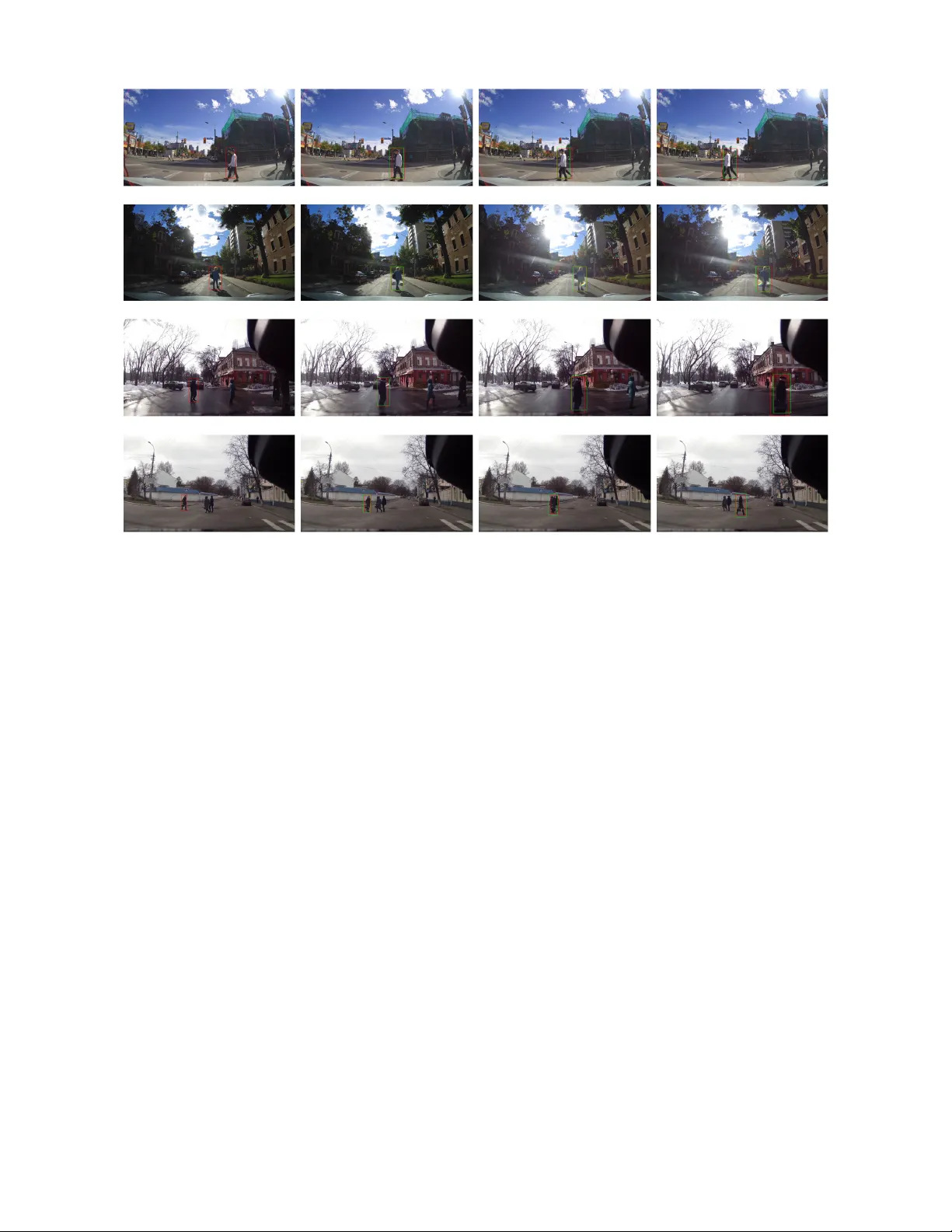
T rajMamba: An Ego-Motion-Guided Mamba Model f or P edestrian T rajectory Pr ediction from an Egocentric P erspecti ve Y usheng Peng 1 , Gaofeng Zhang 2 and Liping Zheng 2 ∗ Abstract — Future trajectory prediction of a tracked pedes- trian from an egocentric perspectiv e is a key task in areas such as autonomous driving and robot na vigation. The challenge of this task lies in the complex dynamic relati ve motion between the ego-camera and the tracked pedestrian. T o address this challenge, we propose an ego-motion-guided trajectory prediction network based on the Mamba model. Firstly , two Mamba models are used as encoders to extract pedestrian motion and ego-motion featur es fr om pedestrian movement and ego-vehicle movement, respectiv ely . Then, an ego-motion- guided Mamba decoder that explicitly models the relative motion between the pedestrian and the vehicle by integrating pedestrian motion featur es as historical context with ego-motion features as guiding cues to capture decoded features. Finally , the future trajectory is generated from the decoded features corresponding to the future timestamps. Extensive experiments demonstrate the effectiveness of the proposed model, which achieves state-of-the-art performance on the PIE and J AAD datasets. I . I N T RO D U C T I O N Predicting future trajectories of pedestrians is a key aspect of pedestrian behavior analysis, which is essential for ensur- ing the safe driving of autonomous vehicles and the secure navigation of mobile robots in dynamic crowd en vironments. Most research [1], [2] model and analyze pedestrian move- ment from a bird’ s-eye view to predict the future trajectories of pedestrians. This type of method is only suitable for third- person perspective videos captured by surveillance cameras or drones. Autonomous vehicles and mobile robots typically perceiv e their surroundings from a first-person perspective. Specifically , these ego cameras usually move in tandem with the terminal agent. Ne vertheless, the dual motion of the ego camera and the tracked pedestrian poses significant challenges in predicting the pedestrian’ s future trajectory from the egocentric perspective. The core objectiv e of first-person perspecti ve pedestrian trajectory prediction is to accurately forecast the future bounding box sequence of the target pedestrian within the ego-camera coordinate system. The primary challenge stems from the fact that the apparent motion observed in the image *This work was supported in part by the National Natural Science Foundation of China under Grant 62372152, in part by the Fundamen- tal Research Funds for the Central Universities of China under Grant JZ2023HGQB0481, and in part by China Postdoctoral Science Foundation under Grant 2023M740961 1 Y usheng Peng is with the School of Computer Science and Information Engineering, Hefei Uni versity of T echnology , Hefei 230601, China (e-mail: wisionpeng@hfut.edu.cn). 2 Gaofeng Zhang and Liping Zheng are with the School of Soft- ware, Hefei University of T echnology , Hefei 230601, China (e-mail: g.zhang@hfut.edu.cn, zhenglp@hfut.edu.cn). ∗ Corresponding author is the result of the superimposed projection of both the pedestrian’ s intrinsic motion and the carrier’ s (vehicle or camera) motion onto the two-dimensional imaging plane. Consequently , the prediction accuracy heavily relies on the effecti ve modeling of the relativ e motion between these two sources. Most existing approaches tackle this challenge through feature-level fusion strategies, where pedestrian mo- tion and vehicle ego-motion are combined in the latent space using early or late fusion techniques, and subsequently fed into a decoder for end-to-end prediction. For example, methods [3], [4] employ LSTM networks as encoders to extract pedestrian motion features and v ehicle ego-motion features separately , and then concatenate these two feature types as input to the decoder LSTM. Similarly , method [5] adopts Transformer to replace LSTM for both encoding and decoding. Meanwhile, method [6] concatenates the two types of features at the embedding le vel and processes them through a Transformer to obtain fused encoded representa- tions, which are then decoded to generate future trajectories. In all these approaches, the two types of motion features are integrated into a unified representation during the encoding stage, lea ving the decoder to generate future predictions. This technical paradigm results in a rather ambiguous modeling of the relative motion relationship between the two motion sources, making it dif ficult to explicitly analyze ho w e go- motion dynamically regulates pedestrian movement. T o address these limitations, we propose T rajMamba, a nov el ego-motion-guided framew ork for egocentric pedes- trian trajectory prediction. Specifically , we first employ two Mamba encoders to extract pedestrian motion features and ego-motion features, respecti vely . An ego-motion-guided Mamba decoder is then designed, which takes pedestrian motion features as historical context and ego-motion features as future guiding cues. By lev eraging Mamba’ s sequential modeling capacity , the decoder explicitly captures the dy- namic modulation mechanism of ego-motion on pedestrian mov ement to infer future motion features. Finally , these decoded features are mapped to future trajectories via a prediction head. The main contributions of this work are as follows: • W e propose TrajMamba, a novel ego-motion-guided framew ork based on the Mamba architecture, for pre- dicting future pedestrian trajectories from an egocentric perspectiv e. • W e design an ego-motion-guided Mamba decoder that explicitly models the relati ve motion between the pedes- trian and the camera by integrating pedestrian motion features as historical context with ego-motion features as guiding cues for future prediction. • Extensiv e experiments on the PIE and J AAD datasets demonstrate that T rajMamba outperforms baseline methods on the ADE, FDE, ARB, and FRB metrics. I I . R E L A T E D W O R K A. P edestrian T rajectory Pr ediction Current methods for predicting pedestrian trajectories are classified into those based on the bird’ s eye perspective and those based on the egocentric perspectiv e. Bird’ s-eye perspectiv e-based methods focuses on predicting the 2D coordinates of pedestrians’ future locations in bird’ s eye videos captured by surveillance cameras or drones. As a typical sequence prediction task, many works [7], [8] em- ploy the recurrent neural networks (RNNs) or its v ariants (LSTM and GR U) to capture temporal dependencies of pedestrian’ s movement, and utilize pooling mechanism [9] or graph neural networks [10] to model spatial interactions among pedestrians. Recent works [11], [12] have utilized T ransformers to replace networks such as LSTM, lev eraging their attention mechanisms to model temporal dependencies of pedestrian movement and spatial interactions. Addition- ally , some researchers [13], [14] integrate recently popular diffusion models and introduce new architectures to predict pedestrian trajectories. Moreov er , some works [15], [16] lev erage the visual information to improve the prediction performance. On the other hand, egocentric perspective-based meth- ods focus on predicting future bounding boxes of tracked pedestrians from egocentric videos captured by vehicle- mounted or wearable cameras. Inspired by bird’ s-eye view future localization methods, some researchers [17], [18], [19] use LSTM or GR U to process the bounding boxes of tracked pedestrians to model their motion dynamics and predict the bounding boxes of future locations. Furthermore, the researchers [20], [21] thoroughly inv estigate pedestrian behavior attributes, incorporating pose or beha vior labels as auxiliary information in their models, which enhances the accuracy of future localization. Moreover , some methods [22], [5] also incorporate scene semantics to more accurately predict the future locations of pedestrians in diverse en vi- ronments. The egocentric vie w is unique in that the camera itself is in motion, presenting ne w challenges for predicting a pedestrian’ s future location. T o tackle this, researchers [23], [4] extract the camera’ s ego-motion features using the vehicle’ s trav el data or the camera’ s IMU signals. By combining the pedestrian’ s motion with the camera’ s e go- motion, they enhance the accuracy of future localization predictions. Different from the above works, we innov atively introduce the Mamba model for pedestrian motion modeling and ego-motion modeling, which improv es the efficienc y while maintaining the modeling ability . B. State Space Models Recently , state-space models (SSMs) [24], [25] have gar - nered significant attention due to their excellent performance in sequence modeling and inference. Mamba [26] introduces a selecti ve state space model architecture that integrates time- varying parameters into the SSM framew ork and proposes a hardware-aw are algorithm to enhance the efficienc y of training and inference processes. Furthermore, Mamba-2 [27] refines this by linking SSMs to attention v ariants, achie ving 2-8x speedup and performance comparable to transformers. SSMs and Mamba models are widely and successfully used in many tasks. For instance, Zhu et al. [28] introduce a new generic vision backbone called V ision Mamba (V im), which incorporates bidirectional Mamba blocks. V im le verages po- sition embeddings to mark image sequences and compresses visual representations using bidirectional state-space models. Similarly , Park et al. [29] introduce V ideoMamba for video analysis, which tackles the unique challenge of integrating non-sequential spatial with sequential temporal information in video processing through spatio-temporal forward and backward SSM. T ang et al.[30] propose a novel spatial- temporal graph Mamba (STG-Mamba) for the music-guided dance video synthesis task, i.e., to translate the input music to a dance video. He et al. [31] propose a decomposed spatio- temporal Mamba (DST -Mamba) for traffic prediction. Zhang et al. [32] introduce a Mamba-based point cloud network named Point Cloud Mamba, which incorporates se veral nov el techniques to help Mamba better model point cloud data. Inspired by these, we explore a novel application of the Mamba model for pedestrian trajectory prediction from an egocentric perspecti ve. I I I . M E T H O D A. Overview Our goal is to forecast the future bounding boxes of pedestrians from an egocentric perspectiv e. In this section, we propose a nov el ego-motion-guided Mamba model named T rajMamba. As shown in Fig. 1, the proposed T rajMamba model includes four modules: pedestrian motion encoder (PME), ego-motion encoder (EME), ego-motion guide de- coder (EMGD), and future trajectory generator (FTG) mod- ule. Firstly , the pedestrian motion features and the ego- motion features are extracted through the PME and EME modules, respectively . Then, the pedestrian’ s motion features and ego-motion features are sent to the EMGD module to output the decoded features by modeling the relati ve motion relationship between the pedestrian and the ego-v ehicle. Finally , the decoded features of future timestamps are then used to generate future trajectory through the FTG module. B. Pr oblem F ormulation Suppose that the past bounding boxes of the tracked pedestrian at current frame t are denoted as a sequence B past = ( B T − m , · · · , B T ) , and its future bounding boxes are denoted as a sequence B f uture = ( B T , · · · , B T + n ) , where B t = ( x t , y t , w t , h t ) , and m and n are the lengths of past and future timestamps. The mov ement information of the ego-vehicle is represented as V past = ( v T − m , · · · , v T ) . Our goal is to predict the future bounding boxes ˜ B f uture = ( ˜ B T , · · · , ˜ B T + n ) of the tracked pedestrian from its past Fig. 1: Overvie w of the proposed T rajMamba. bounding box es B past and the ego-vehicle’ s past movement information V past . C. Input and Output Repr esentation Existing approaches to pedestrian motion representation can be categorized into two paradigms: one utilizes the center point coordinates with bounding box width and height [19], [33], while the other employs the top-left and bottom- right corner coordinates [5], [34]. Both paradigms typically maintain consistent input-output representations. Recently , differentiated representation strategies have emerged. For ex- ample, method [22] inputs corner coordinates and velocities but outputs re gressed corner-based bounding box es. Method [35] inputs center coordinates with velocity and acceleration, yet outputs only the predicted center coordinates. Moti vated by this, we propose a dif ferentiated motion representation method. Specifically , giv en a pedestrian’ s historical bounding box sequence, we compute the center point displacement (velocity) and scale variation between adjacent frames as follows: v x t = x t − x t − 1 , v y t = y t − y t − 1 (1) ∆ w = w t − w t − 1 , ∆ h = h t − h t − 1 (2) Based on this, the motion state of the pedestrian at time step t is constructed as M t = ( x t , y t , w t , h t , v x t , v y t , ∆ w , ∆ h ) . On the other hand, inspired by the constant velocity assumption in [36], we introduce the Constant V elocity and Constant Scaling (CV -CS) assumption. The key innov ation lies in predicting residuals relativ e to a physically motiv ated reference trajectory , which not only eases network optimiza- tion but also injects valuable prior knowledge into the learn- ing process. Specifically , based on the CV -CS assumption, pedestrian motion approximately maintains constant velocity and constant scale over short time intervals. Therefore, we compute the average velocity ( ¯ v x , ¯ v y ) and average scale variation rate ( ¯ h, ¯ h ) using the last five frames of historical observations. According to this assumption, the reference bounding box at an y future time step t + τ can be inferred: ˆ x t + τ = x T + ¯ v x · τ , ˆ y t + τ = y T + ¯ v y · τ (3) ˆ w t + τ = w T · (1 + ¯ w ) τ , ˆ h t + τ = h t · (1 + ¯ h ) τ (4) W e define the residual of fset ∆ T + τ of the ground-truth future bounding box B T + τ relativ e to the reference ˆ B T + τ . The network is tasked with predicting this offset, denoted as ˆ ∆ T + τ . Finally , the predicted bounding box ˜ B T + τ is obtained by adding the predicted offset ˆ ∆ T + τ to the reference ˆ B T + τ . This method reformulates the prediction target into a residual form, which not only preserves the physical prior of the CV -CS assumption b ut also allows the network to flexibly correct deviations from actual motion. Consequently , it achiev es more accurate trajectory prediction in complex dynamic scenarios. D. P edestrian Motion Encoder T o precisely predict the future trajectory of the tracked pedestrian, it is of vital importance to initially model and ana- lyze their past movement dynamics and patterns so as to cap- ture the underlying principles of their behavior . For a pedes- trian’ s past bounding boxes B past , we begin by calculat- ing the motion state M t = ( x t , y t , w t , h t , v x t , v y t , ∆ w , ∆ h ) . Then, we utilize a multilayer perceptron (MLP) as the embedder layer to transform the motion state se- quence { M T − m , · · · , M T } into embedding features E pm ∈ R ( T − m ) × D . The D is the dimension of each embedding feature. Existing methods al ways employ LSTM [37], GRU [38], or Transformer [5] model as the encoder to capture motion features. Different from the pre vious methods, we use the Mamba model as the encoder , aiming to effecti vely extract motion features and improv e ef ficiency by taking advantage of its linear time series modeling ability and efficient long sequence processing performance. The encode operation of the Mamba model is formulated as follo ws: F pm = M amba ( E pm ) (5) E. Ego-Motion Encoder Modeling the motion of the ego camera is key to under- standing the motion dynamics of the tracked pedestrian in an egocentric perspectiv e. Existing works [39], [40], [41] utilize CNNs to implicitly capture e go-motion features from image streams. Other works usually use LSTMs [17], [3] or T ransformers [42], [5] to model the mov ement information of ego vehicles to capture ego motion features. Inspired by this, we use a Mamba model to extract the motion features of ego vehicles. Specifically , given the speed or state information v t of the vehicle at t timestamp, an MLP layer is used as an embedder to transform this information into an embedded feature e t and obtain the embedded feature sequence E em = { e t − m , ..., e t } of past m timestamps. Then, a Mamba model is used as an encoder to transform the embedded features E em into ego-motion features F em through sequential modeling. The encode operation of the Mamba model is formulated as follo ws: F em = M amba ( E em ) (6) F . Ego-Motion-Guided Decoder Existing methods primarily integrate pedestrian motion and vehicle ego-motion into a unified encoded feature through early [6], late [3], [18], or cross [44], [45] fusion strategies, and then generate future trajectories by decoding this fused representation. Although such schemes achieve collaborativ e modeling of the two motion sources, they struggle to explicitly analyze the dynamic modulation mech- anism of e go-motion on pedestrian movement. T o ov ercome the limitation of implicit fusion, we introduce an explicit modeling framework. In this framework, pedestrian motion features are treated as historical context, and ego-motion features are lev eraged as explicit conditional cues for fu- ture prediction. By employing sequential modeling within the decoder , the network explicitly learns how ego-motion dynamically modulates pedestrian mov ement. This allows for accurate inference of future pedestrian states from the egocentric vie wpoint. Giv en the superior performance of the Mamba model over GR U, LSTM, and Transformer networks in various sequence prediction tasks, we adopt it as our decoder . In our design, pedestrian motion features serve as the historical context for the decoder, while the vehicle’ s motion features at the last observed timestamp ( T ) are used as explicit conditional guidance for the future prediction horizon. By lev eraging the structured modeling mechanism of the Mamba network, our approach e xplicitly learns ho w ego-motion dynamically mod- ulates pedestrian mov ement. This enables ef fectiv e inference of future pedestrian states from an egocentric perspecti ve, ultimately outputting the decoded features for future time steps: F de = M amba ( F in ) (7) where the input feature sequence F in is composed of features sequence F m and T pred copies of the e go-motion feature at timestamp T p r ed . Through the decoding operation, a set of decoded features F de that represent the future motion of the pedestrian is captured. G. Future T rajectory Gener ator The decoder Mamba model captures a set of decoded fea- tures F t : t + n de that represent the future motion of a pedestrian. Next, an MLP acts as a generator to map the decoded features of future timestamps into a set of future trajectories. The future trajectory generator is formulated as follo ws: ˆ F f uture = M LP ( F t : t + n de ) (8) I V . E X P E R I M E N T A. Datasets and Metrics W e conduct experiments to train and ev aluate the pre- diction performance of the proposed model on the widely used benchmark datasets, namely J AAD [46] and PIE [43]. J AAD is a dataset for studying joint attention in the conte xt of autonomous driving, which is widely used in trajectory prediction from egocentric views and crossing intention prediction research. T o this end, J AAD dataset pro vides a richly annotated collection of 346 short video clips (5-10 sec long) extracted from ov er 240 hours of driving footage. PIE is a dataset for studying pedestrian behavior in traffic, which contains over 6 hours of footage recorded in typical traffic scenes with on-board camera. It also provides accurate vehicle information from OBD sensor (vehicle speed, head- ing direction and GPS coordinates) synchronized with video footage. Follo wing the benchmark protocol, the datasets are randomly split into training (50%), validation (10%), and test (40%) sets. Similar to existing works [3], [22], [5], we assess the performance of trajectory prediction by using four metrics: A verage Displacement Error (ADE), Final Displacement Error (FDE), A verage Root Mean Square Error (ARB), and Final Root Mean Square Error (FRB). ADE and FDE measure the displacement error of center point coordinates between the predicted bounding boxes and the ground truth bounding boxes, and ARB and FRB measure the mean square error between the predicted bounding boxes and the coordinates of the groundtruth bounding boxes. B. Experimental Setup W e train and ev aluate the T rajMamba model on an Nvidia GTX 4080 GPU with CUDA 11.6 and PyT orch 2.0.0. The dimensions of pedestrian motion features and ego-motion features are set to 256. The past and future timestamps are set to 15 (0.5s) and 45 (1.5s). W e use the Adam optimizer with an initial learning rate of 0.0001 and smooth L 1 loss as the loss function. In particular , for the PIE dataset, the vehicle speed is used to represent the vehicle’ s movement information to capture ego-motion features, while in the J AAD dataset, the vehicle beha viors (0: stopped, 1: moving slow , 2: moving fast, 3: decelerating, and 4: accelerating) are used as the mov ement information. C. Quantitative Evaluation W e ev aluated the proposed TrajMamba model against eight existing methods, including FOL [40], FPL [39], B- LSTM [17], and two variations of the methods in the PIE dataset [43], BiPed [3], PedFormer[22], and two general models BiT rap [37] and SGNet [38], PEvT [41], MTN [42], and the model proposed by Zhang et al. [5]. The experimental results between T rajMamba and baseline methods on the PIE and J AAD datasets are presented in T able I. For 1s prediction (upper part), TrajMamba consistently outperforms all methods. Notably , it surpasses the previ- ous best model PedFormer by 40.98%/ 44.02%/ 24.03%/ 32.91% on ADE/ FDE/ ARB/ FRB on PIE, and achie ves T ABLE I: Performance of the proposed TrajMamba and other existing models on the PIE and J AAD datasets. Models Publications Y ears PIE J AAD ADE ↓ FDE ↓ ARB ↓ FRB ↓ ADE ↓ FDE ↓ ARB ↓ FRB ↓ Observation frames: 15 (0.5s) Prediction frames: 30 (1.0s) FOL [40] ICRA 2019 73.87 164.53 78.16 143.49 61.39 126.97 70.12 129.17 FPL [39] CVPR 2018 56.66 132.23 / / 42.24 86.13 / / B-LSTM [17] CVPR 2018 27.09 66.74 37.41 75.87 28.36 70.22 39.14 79.66 PIE traj [43] ICCV 2019 21.82 53.63 27.16 55.39 23.49 50.18 30.40 57.17 PIE full [43] ICCV 2019 19.50 45.27 24.40 49.09 22.83 49.44 29.52 55.43 BiPed [3] ICCV 2021 15.21 35.03 19.62 39.12 20.58 46.85 27.98 55.07 PedFormer [22] ICRA 2023 13.08 30.35 15.27 32.79 17.89 41.63 24.56 48.82 BiT rap [37] RAL 2021 8.83 18.52 12.61 22.97 19.02 39.28 22.57 40.88 SGNet [38] RAL 2022 8.35 17.83 12.32 22.58 14.90 30.88 19.19 34.80 Ours / / 7.72 16.99 11.60 22.00 13.90 30.76 18.04 34.79 Observation frames: 15 (0.5s) Prediction frames: 45 (1.5s) PEvT [41] CVPR 2021 19.15 45.98 / / 21.08 49.08 / / MTN [42] IJCAI 2021 18.89 45.50 / / 20.90 48.55 / / Zhang et al. [5] TIP 2024 17.41 44.92 / / 17.92 41.33 / / Ours / / 13.01 31.08 20.63 41.79 23.39 55.11 32.06 63.65 T ABLE II: Ablation results on input and output representa- tion. Input Output ADE FDE ARB FRB PIE L T -BR L T -BR 8.72 18.69 24.68 27.88 xywh xywh 13.64 24.84 51.50 78.76 L T -BR + v L T -BR 8.58 18.20 13.15 24.16 xywh+v+s CV -CS-Of fset 7.72 16.99 11.60 22.00 J AAD L T -BR L T -BR 17.27 35.17 23.24 41.95 xywh xywh 26.66 42.12 52.21 79.19 L T -BR + v L T -BR 15.93 32.76 20.74 38.15 xywh+v+s CV -CS-Of fset 13.90 30.76 18.04 34.79 22.30%/ 26.11%/ 26.55%/ 28.74% improv ements on J AAD. Against general approaches BiT rap and SGNet, TrajMamba yields gains of 12.57%/ 8.26%/ 8.01%/ 4.22% and 7.54%/ 4.71%/ 5.84%/ 2.57% on PIE, and 26.92%/ 21.69%/ 20.07%/ 14.90% and 6.71%/ 0.39%/ 5.99%/ 0.03% on J AAD, respec- tiv ely . For 1.5s prediction (lower part), TrajMamba achie ves best performance on PIE but lags behind PEvT , MTN, and Zhang et al. ’ s method on J AAD. This discrepancy likely stems from differences in scene characteristics and vehicle motion representations (speed vs. behavior labels) between datasets. D. Ablation Study The ablation study on input-output representation: T o ev aluate the ef fectiv eness of the proposed input-output representation, we conducted an ablation study , with results reported in T able II. In the table, L T -BR denotes the coordi- nates of the top-left and bottom-right corners of the bounding box; xywh represents the center coordinates along with the width and height; v indicates the velocity along x and y di- rections; s refers to the scale variation on weight and height; and CV -CS-Of fset corresponds to the residual of fset derived from the constant velocity and constant scale assumption. Experiment results demonstrate that incorporating veloc- ity information significantly improves prediction accuracy , highlighting the critical role of encoding motion dynamics. Furthermore, the representation that jointly encodes position, velocity , and scale variation—combined with the of fset out- put derived from the CV -CS assumption—further enhances trajectory smoothness and physical plausibility , providing a more robust and interpretable motion feature foundation for the model. The effect of ego-motion-guided decoder: T o v erify the effecti veness of the proposed ego-motion-guided decoder , we conducted multiple sets of comparativ e experiments, with results summarized in T able III. For each dataset, we designed two cate gories of ablation experiments. The first category follows the classic architecture: pedestrian motion features and ego-motion features are e xtracted separately by encoders, then fused and processed by a decoder to generate future trajectories. The second category corresponds to our proposed architecture, where pedestrian motion features and ego-motion features are extracted separately and then fed into the designed ego-motion-guided decoder to generate future trajectories . Specifically , within each category , we employ LSTM, GR U, Transformer , and Mamba as the en- coder/decoder backbones for comprehensi ve comparison. From the results presented in the table, it can be observed that for the same base model (with the exception of LSTM), the variant constructed with our proposed ego-motion-guided decoding mechanism (EMGD) consistently achiev es more accurate predictions than the classic post-fusion decoding mechanism (PFD). This improvement arises because tradi- tional methods provide a fused motion representation that mixes pedestrian motion with ego-motion during decoding, leading to ambiguity and making it difficult for the model to disentangle the relativ e motion relationship between the pedestrian and the vehicle. In contrast, our proposed ego- motion-guided decoder takes pedestrian motion features as T ABLE III: Ablation Results on Ego-motion-guided de- coder . (PFD: post-fusion decoding mechanism, EMGD: ego- motion-guided decoding mechanism) Model ADE FDE ARB FRB Flops P arams PIE PFD LSTM 7.98 17.82 12.14 23.29 128.27G 3.16M GR U 7.97 17.98 12.25 23.72 100.68G 2.51M Transformer 7.94 17.86 12.25 23.52 87.48G 2.31M Mamba 7.91 17.87 11.99 23.19 30.11G 1.32M EMGD LSTM 8.14 18.26 12.34 23.57 63.64G 1.78M GR U 7.97 17.87 12.13 23.28 49.34G 1.39M Transformer 7.72 17.13 11.84 22.51 6.35G 0.20M Mamba 7.72 16.99 11.6 22 6.35G 0.20M J AAD PFD LSTM 15.66 35.37 20.16 39.07 220.99G 3.16M GR U 15.19 34.51 19.71 38.29 173.46G 2.51M Transformer 17.12 37.87 21.04 39.34 150.71G 2.31M Mamba 14.34 32.43 18.37 35.63 51.86G 1.32M EMGD LSTM 14.86 32.91 19.28 36.76 196.82G 1.78M GR U 14.46 31.91 18.76 35.74 85.00G 1.39M Transformer 14.05 31.38 18.23 35.44 10.94G 0.20M Mamba 13.9 30.76 18.04 34.79 10.94G 0.20M historical conte xt and e go-motion features as conditioning information for future steps, explicitly guiding the decoder to capture the dynamic regulatory mechanism of ego-motion on pedestrian motion. This enables more accurate inference of pedestrian motion states from an e go-centric perspectiv e. On the other hand, across all comparati ve experiments, models utilizing Mamba as the backbone network consis- tently achieve the smallest parameter counts and lowest computational costs, regardless of the decoding mechanism employed. Furthermore, models built with the proposed ego-motion-guided decoding (EMGD) mechanism generally exhibit fewer parameters and reduced computational require- ments. The effect of Mamba encoder: T o further inv estigate the critical role of the Mamba network in motion fea- ture extraction, we design targeted ablation experiments. In previous works, LSTM, GR U, and T ransformer have been the three most prev alent sequence models for extracting pedestrian motion features and vehicle ego-motion features. In contrast, our proposed T rajMamba model adopts Mamba as the encoder to extract both types of motion features. Ac- cordingly , we design four experimental configurations: with the Mamba network fixed as the decoder, we employ LSTM, GR U, T ransformer , and Mamba as the encoders, respec- tiv ely . Ablation studies are conducted on both the PIE and J AAD datasets, with the results presented in T able IV. The experimental results demonstrate that using Mamba as the encoder achie ves significantly better prediction performance (i.e., lo wer errors) across the four metrics of ADE, FDE, ARB, and FRB compared to the other three models. This indicates that the structured state-space design of the Mamba model is more effecti ve than recurrent neural networks and attention-based Transformer networks in e xtracting motion features through temporal encoding. The effect of Mamba decoder: T o further validate the critical role of Mamba as a ego-motion-guided decoder, we T ABLE IV: Ablation Results on Encoder . Encoder Decoder ADE FDE ARB FRB PIE LSTM Mamba 8.13 18.23 12.28 23.58 GR U Mamba 7.87 17.41 11.89 22.67 T ransformer Mamba 7.81 17.46 11.84 22.67 Mamba Mamba 7.72 16.99 11.60 22.00 J AAD LSTM Mamba 14.49 32.29 18.93 36.32 GR U Mamba 14.00 31.13 18.16 35.00 T ransformer Mamba 14.38 32.37 18.88 36.89 Mamba Mamba 13.90 30.76 18.04 34.79 T ABLE V: Ablation Results on Decoder . Encoder Decoder ADE FDE ARB FRB PIE Mamba LSTM 8.05 18.01 12.56 24.03 Mamba GRU 7.98 17.90 12.33 23.59 Mamba Transformer 7.72 17.33 11.90 22.87 Mamba Mamba 7.72 16.99 11.60 22.00 J AAD Mamba LSTM 14.54 32.44 18.95 36.40 Mamba GRU 14.75 32.65 18.97 36.15 Mamba Transformer 14.06 31.58 18.31 35.42 Mamba Mamba 13.90 30.76 18.04 34.79 designed additional ablation experiments. Specifically , we fixed Mamba as the encoder and varied the decoder archi- tecture, employing LSTM, GR U, T ransformer , and Mamba as decoders, respectively . The experimental results are pre- sented in T able V. The results demonstrate that Mamba consistently achiev es the best prediction performance as the decoder on both datasets, followed by Transformer as the second-best. These results demonstrate that Mamba is effecti ve not only as a motion encoder b ut also as a decoder for modeling the regulatory mechanism of ego-motion on pedestrian mov ement. E. Qualitative Evaluation In this section, we visually demonstrate the effecti ve- ness of the proposed TrajMamba model through qualitativ e ev aluation results. Some visualization results of prediction samples of T rajMamba on the PIE and J AAD datasets are shown in Figure 2. The first column shows the position of the pedestrian in the last observed frame, and the second to fourth columns, respectiv ely , sho w the future positions at 0.5s, 1.0s, and 1.5s. The top two rows are samples from the PIE dataset, and the bottom two rows are from the J AAD dataset. These visualization results indicate that TrajMamba can ef fectiv ely model the motion state of pedestrians and ego-motion and accurately predict the future trajectory of the tracked pedestrian from the e gocentric perspectiv e. 0s +0.5s +1.0s +1.5s Fig. 2: Pedestrian trajectory prediction qualitative samples on the PIE and J AAD datasets. Ground truth positions in red, predictions in green. Best vie wed in colour . V . C O N C L U S I O N W e propose a novel Mamba-based model called T ra- jMamba to predict the future trajectory of the tracked pedestrian from an egocentric perspectiv e. T rajMamba in- nov ativ ely employs the Mamba model to extract pedestrian motion features and the ego-motion of the ego-camera. Fur - thermore, an ego-motion-guided Mamba model is proposed to jointly model the relative relationship between pedestrian mov ement and camera movement through sequential model- ing and effecti vely infer the future mov ement of pedestrians, thereby accurately predicting the future trajectory of pedestri- ans from the perspectiv e of ego-motion. Experimental results on PIE and J AAD datasets validate the effecti veness and excellent performance of T rajMamba. Currently , we hav e not yet considered the mutual influence among pedestrians in crowds. Therefore, in future work, the prediction per- formance of the T rajMamba model will be improved by modeling pedestrian interaction. R E F E R E N C E S [1] H. W ang, W . Zhi, G. Batista, and R. Chandra, “Pedestrian trajectory prediction using dynamics-based deep learning, ” in IEEE International Confer ence on Robotics and Automation, ICRA 2024, Y ok ohama, J apan, May 13-17, 2024 . IEEE, 2024, pp. 15 068–15 075. [2] W . Lin, X. Zeng, C. Pang, J. T eng, and J. Liu, “Dyhgdat: Dynamic hypergraph dual attention network for multi-agent trajectory predic- tion, ” in IEEE International Confer ence on Robotics and A utomation, ICRA 2024, Y ok ohama, J apan, May 13-17, 2024 . IEEE, 2024, pp. 16 662–16 668. [3] A. Rasouli, M. Rohani, and J. Luo, “Bifold and semantic reasoning for pedestrian behavior prediction, ” in 2021 IEEE/CVF International Confer ence on Computer V ision, ICCV 2021, Montreal, QC, Canada, October 10-17, 2021 . IEEE, 2021, pp. 15 580–15 590. [Online]. A vailable: https://doi.org/10.1109/ICCV48922.2021.01531 [4] Y . Feng, T . Zhang, A. P . Sah, L. Han, and Z. Zhang, “Using Ap- pearance to Predict Pedestrian T rajectories through Disparity-Guided Attention and Con volutional LSTM, ” IEEE T ransactions on V ehicular T echnolo gy , vol. 70, no. 8, pp. 7480–7494, 2021. [5] Z. Zhang, Z. Ding, and R. Tian, “Decouple ego-view motions for predicting pedestrian trajectory and intention, ” IEEE T rans. Image Pr ocess. , vol. 33, pp. 4716–4727, 2024. [6] H. Damirchi, M. Greenspan, and A. Etemad, “Context-A ware Pedes- trian Trajectory Prediction with Multimodal T ransformer, ” in 2023 IEEE International Confer ence on Image Processing (ICIP) . IEEE, 2023, pp. 2535–2539. [7] X. Chen, F . Luo, F . Zhao, and Q. Y e, “Goal-Guided and Interaction- A ware State Refinement Graph Attention Network for Multi-Agent T rajectory Prediction, ” IEEE Robotics and A utomation Letters , v ol. 9, no. 1, pp. 57–64, 2024. [8] X. Zhou, X. Chen, and J. Y ang, “Edge-enhanced heterogeneous graph transformer with priority-based feature aggregation for multi-agent trajectory prediction, ” IEEE T rans. Intell. T ransp. Syst. , vol. 26, no. 2, pp. 2266–2281, 2025. [9] R. Liang, Y . Li, X. Li, Y . T ang, J. Zhou, and W . Zou, “T emporal Pyramid Network for Pedestrian T rajectory Prediction with Multi- Supervision, ” in Proceedings of the AAAI Conference on Artificial Intelligence , vol. 35, 2021, pp. 2029–2037. [10] D. W ang, H. Liu, N. W ang, Y . W ang, H. W ang, and S. McLoone, “SEEM: A Sequence Entropy Energy-Based Model for Pedestrian T rajectory All-Then-One Prediction, ” IEEE T ransactions on P attern Analysis and Machine Intelligence , vol. 45, no. 1, pp. 1070–1086, 2023. [11] X. Zhou, X. Chen, and J. Y ang, “Heterogeneous hypergraph trans- former network with cross-modal future interaction for multi-agent trajectory prediction, ” Engineering Applications of Artificial Intelli- gence , vol. 144, no. September 2024, p. 110125, 2025. [12] X. Chen, H. Zhang, F . Deng, J. Liang, and J. Y ang, “Stochastic Non- Autoregressi ve Transformer -Based Multi-Modal Pedestrian T rajectory Prediction for Intelligent V ehicles, ” IEEE T ransactions on Intelligent T ransportation Systems , vol. 25, no. 5, pp. 3561–3574, 2024. [13] W . Mao, C. Xu, Q. Zhu, S. Chen, and Y . W ang, “Leapfrog Diffusion Model for Stochastic Trajectory Prediction, ” in Proceedings of 2023 IEEE/CVF Conference on Computer V ision and P attern Recognition (CVPR) . IEEE, 2023, pp. 5517–5526. [14] W . W u and X. Deng, “Motion Latent Diffusion for Stochastic T rajectory Prediction, ” in Pr oceedings of 2024 IEEE International Confer ence on Acoustics, Speech and Signal Processing (ICASSP) . IEEE, 2024, pp. 6665–6669. [15] K. Guo, W . Liu, and J. Pan, “End-to-End Trajectory Distribution Prediction Based on Occupancy Grid Maps, ” in Pr oceedings of 2022 IEEE/CVF Conference on Computer V ision and P attern Recognition (CVPR) , vol. 2022-June. IEEE, 2022, pp. 2232–2241. [16] C. Zhang, G. Zhang, Z. Zheng, and D. Lu, “Group-ptp: A pedestrian trajectory prediction method based on group features, ” IEEE T rans. Multim. , vol. 27, pp. 3527–3541, 2025. [17] A. Bhattacharyya, M. Fritz, and B. Schiele, “Long-term on-board prediction of people in traf fic scenes under uncertainty , ” in 2018 IEEE/CVF Conference on Computer V ision and P attern Recognition , 2018, pp. 4194–4202. [18] R. Quan, L. Zhu, Y . W u, and Y . Y ang, “Holistic LSTM for Pedes- trian T rajectory Prediction, ” IEEE T ransactions on Image Pr ocessing , vol. 30, pp. 3229–3239, 2021. [19] M. Huynh and G. Alaghband, “Online Adaptive T emporal Memory with Certainty Estimation for Human Trajectory Prediction, ” in Pr o- ceedings of 2023 IEEE/CVF W inter Conference on Applications of Computer V ision (W ACV) . IEEE, 2023, pp. 940–949. [20] S. Malla, B. Dariush, and C. Choi, “TIT AN: Future Forecast Using Action Priors, ” in Proceedings of 2020 IEEE/CVF Conference on Computer V ision and P attern Recognition (CVPR) . IEEE, 2020, pp. 11 183–11 193. [21] P . Czech, M. Braun, U. Kreßel, and B. Y ang, “On-Board Pedestrian T rajectory Prediction Using Behavioral Features, ” in Proceedings of 2022 21st IEEE International Confer ence on Machine Learning and Applications (ICMLA) . IEEE, 2022, pp. 437–443. [22] A. Rasouli and I. Kotseruba, “PedF ormer: Pedestrian Beha vior Pre- diction via Cross-Modal Attention Modulation and Gated Multitask Learning, ” in Pr oceedings of 2023 IEEE International Confer ence on Robotics and Automation (ICRA) . IEEE, 2023, pp. 9844–9851. [23] J. Qiu, F . P .-W . Lo, X. Gu, Y . Sun, S. Jiang, and B. Lo, “Indoor Future Person Localization from an Egocentric V earable Camera, ” in Pr oceedings of 2021 IEEE/RSJ International Confer ence on Intelligent Robots and Systems (IROS) . IEEE, 2021, pp. 8586–8592. [24] A. Gu, K. Goel, and C. R ´ e, “Efficiently modeling long sequences with structured state spaces, ” in The T enth International Confer ence on Learning Repr esentations, ICLR 2022, V irtual Event, April 25-29, 2022 . OpenRevie w .net, 2022. [25] A. Gupta, A. Gu, and J. Berant, “Diagonal state spaces are as effecti ve as structured state spaces, ” in Advances in Neur al Information Pr ocessing Systems 35: Annual Conference on Neural Information Pr ocessing Systems 2022, NeurIPS 2022 , 2022. [26] A. Gu and T . Dao, “Mamba: Linear-T ime Sequence Modeling with Selectiv e State Spaces, ” arXiv preprint , pp. 1–37, 2023. [27] T . Dao and A. Gu, “Transformers are ssms: Generalized models and efficient algorithms through structured state space duality , ” in F orty- first International Confer ence on Machine Learning, ICML 2024, V ienna, Austria, J uly 21-27, 2024 . OpenRe view .net, 2024. [28] L. Zhu, B. Liao, Q. Zhang, X. W ang, W . Liu, and X. W ang, “V ision mamba: Efficient visual representation learning with bidirectional state space model, ” in F orty-first International Confer ence on Machine Learning, ICML 2024, V ienna, Austria, July 21-27, 2024 . Open- Revie w .net, 2024. [29] J. Park, H. Kim, K. Ko, M. Kim, and C. Kim, “V ideomamba: Spatio-temporal selectiv e state space model, ” in Pr oceedings of 18th Eur opean Conference on Computer V ision , vol. 15083. Springer , 2024, pp. 1–18. [30] H. T ang, L. Shao, Z. Zhang, L. V an Gool, and N. Sebe, “Spatial- temporal graph mamba for music-guided dance video synthesis, ” IEEE T ransactions on P attern Analysis and Mac hine Intelligence , vol. Early Access, pp. 1–11, 2025. [31] S. He, J. Ji, and M. Lei, “Decomposed spatio-temporal mamba for long-term traf fic prediction, ” in AAAI-25, Sponsor ed by the Association for the Advancement of Artificial Intellig ence, F ebruary 25 - Mar ch 4, 2025, Philadelphia, P A, USA , T . W alsh, J. Shah, and Z. Kolter , Eds. AAAI Press, 2025, pp. 11 772–11 780. [32] T . Zhang, H. Y uan, L. Qi, J. Zhang, Q. Zhou, S. Ji, S. Y an, and X. Li, “Point cloud mamba: Point cloud learning via state space model, ” in AAAI-25, Sponsored by the Association for the Advancement of Artificial Intelligence, F ebruary 25 - Marc h 4, 2025, Philadelphia, P A, USA . AAAI Press, 2025, pp. 10 121–10 130. [33] J. W . Changzhi Y ang, Huihui Panand, “Interact , Plan , and Go : T ransformers with Social Intentions for Trajectory Prediction, ” IEEE T ransactions on Consumer Electronics , vol. 71, no. 4, pp. 10 283 – 10 293, 2025. [34] C. Hu, R. Niu, Y . Lin, B. Y ang, H. Chen, B. Zhao, and X. Zhang, “Probabilistic T rajectory Prediction of V ulnerable Road User Using Multimodal Inputs, ” IEEE T ransactions on Intelligent T ransportation Systems , vol. 26, no. 2, pp. 2679–2689, 2025. [35] H. Liu, C. Liu, F . Chang, Y . Lu, and M. Liu, “Egocentric V ulnerable Road Users T rajectory Prediction W ith Incomplete Observation, ” IEEE T ransactions on Intelligent T ransportation Systems , vol. 25, no. 10, pp. 13 694–13 705, 2024. [36] O. Styles, A. Ross, and V . Sanchez, “F orecasting pedestrian trajec- tory with machine-annotated training data, ” in 2019 IEEE Intelligent V ehicles Symposium (IV) . IEEE, 2019, pp. 716–721. [37] Y . Y ao, E. M. Atkins, M. Johnson-Roberson, R. V asudev an, and X. Du, “Bitrap: Bi-directional pedestrian trajectory prediction with multi- modal goal estimation, ” IEEE Robotics Autom. Lett. , vol. 6, no. 2, pp. 1463–1470, 2021. [38] C. W ang, Y . W ang, M. Xu, and D. J. Crandall, “Stepwise goal-driv en networks for trajectory prediction, ” IEEE Robotics Autom. Lett. , vol. 7, no. 2, pp. 2716–2723, 2022. [39] T . Y agi, K. Mangalam, R. Y onetani, and Y . Sato, “Future person localization in first-person videos, ” in 2018 IEEE/CVF Conference on Computer V ision and P attern Recognition , 2018, pp. 7593–7602. [40] Y . Y ao, M. Xu, C. Choi, D. J. Crandall, E. M. Atkins, and B. Dariush, “Egocentric vision-based future vehicle localization for intelligent driving assistance systems, ” in International Confer ence on Robotics and Automation, ICRA 2019, Montreal, QC, Canada, May 20-24, 2019 . IEEE, 2019, pp. 9711–9717. [41] L. Neumann and A. V edaldi, “Pedestrian and ego-v ehicle trajectory prediction from monocular camera, ” in IEEE Confer ence on Computer V ision and P attern Recognition, CVPR 2021, virtual, June 19-25, 2021 . Computer V ision Foundation / IEEE, 2021, pp. 10 204–10 212. [42] Z. Y in, R. Liu, Z. Xiong, and Z. Y uan, “Multimodal transformer networks for pedestrian trajectory prediction, ” in Pr oceedings of the Thirtieth International J oint Confer ence on Artificial Intelligence, IJCAI 2021, V irtual Event / Montreal, Canada, 19-27 A ugust 2021 , Z. Zhou, Ed. ijcai.org, 2021, pp. 1259–1265. [Online]. A vailable: https://doi.org/10.24963/ijcai.2021/174 [43] A. Rasouli, I. Kotseruba, T . Kunic, and J. K. Tsotsos, “PIE: A large-scale dataset and models for pedestrian intention estimation and trajectory prediction, ” in 2019 IEEE/CVF International Conference on Computer V ision, ICCV 2019, Seoul, Kor ea (South), October 27 - November 2, 2019 . IEEE, 2019, pp. 6261–6270. [44] Z. Su, G. Huang, S. Zhang, and W . Hua, “Crossmodal transformer based generativ e framework for pedestrian trajectory prediction, ” in 2022 International Confer ence on Robotics and Automation, ICRA 2022, Philadelphia, P A, USA, May 23-27, 2022 . IEEE, 2022, pp. 2337–2343. [45] A. Rasouli, “ A novel benchmarking paradigm and a scale- and motion-aware model for e gocentric pedestrian trajectory prediction, ” in IEEE International Conference on Robotics and Automation, ICRA 2024, Y okohama, J apan, May 13- 17, 2024 . IEEE, 2024, pp. 5630–5636. [Online]. A vailable: https://doi.org/10.1109/ICRA57147.2024.10610614 [46] A. Rasouli, I. K otseruba, and J. K. Tsotsos, “ Are the y going to cross? A benchmark dataset and baseline for pedestrian crosswalk behavior, ” in 2017 IEEE International Conference on Computer V ision W orkshops, ICCV W orkshops 2017, V enice , Italy , October 22-29, 2017 . IEEE Computer Society , 2017, pp. 206–213.
Original Paper
Loading high-quality paper...
Comments & Academic Discussion
Loading comments...
Leave a Comment