Robust path-following control for articulated heavy-duty vehicles
Path following and lateral stability are crucial issues for autonomous vehicles. Moreover, these problems increase in complexity when handling articulated heavy-duty vehicles due to their poor manoeuvrability, large sizes and mass variation. In addit…
Authors: Filipe Marques Barbosa, Lucas Barbosa Marcos, Maira Martins da Silva
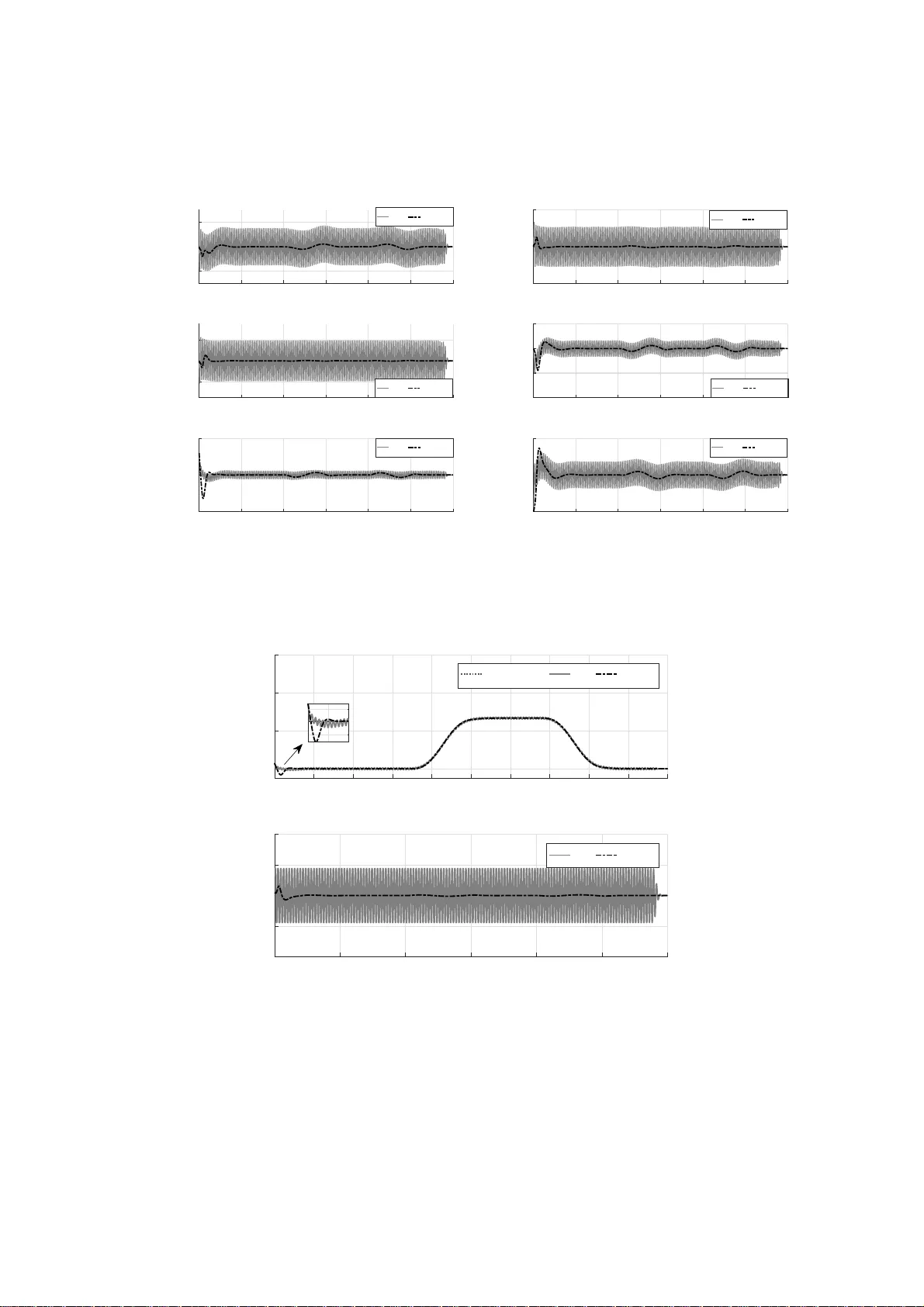
c 2019 This man uscript v ersion is made a v ailable under the CC-BY -NC-ND 4.0 l icense http://c reativecomm ons.org/licenses/by- n c- n d/4.0/ Robust path-foll o wing con trol for articula ted hea vy-dut y vehicles Filipe Marques Barb osa a , Lucas Bar bo sa Marcos a , Maíra Martins da Silv a b , Marco Henrique T err a a , V aldir Grassi Junior a, ∗ a Dep artment of Ele ctric al and Computer Engine ering, São Carlos Scho ol of Engine ering, Universit y of São Paulo , São Carlos, Br azil b Dep artment of Me c hanic al Engine ering, São Carlos Scho ol of Engineering, University of São Paulo, São Carlos, Br azil Abstract Path following and lateral sta bility a re crucial issues for autonomous vehicles. Moreov er, these problems increase in complexity w hen ha ndling articulated heavy-dut y v ehicles due to their p o or mano euvrability , large sizes and mass v a r iation. In addition, uncertainties on ma ss may hav e the po tential to significantly decrease the per formance of the system, even to the point of destabilising it. These parametric v ar ia tions m ust b e ta ken into account during the design of the controller. How ev er, robust control tec hniques usually require offline adjustmen t of a uxiliary tuning parameters, whic h is not practical, leading to sub-optimal op eration. Hence, this pap er presents an approa ch to path-following and latera l con trol for autonomous articulated hea vy-duty vehicles sub ject to para metr ic uncertainties by using a robust recursive reg ulator. The main adv a ntage of the pr op osed co nt roller is that it do es not dep end on the o ffline adjustment of tuning para meters. Parametric uncer ta in ties w ere a ssumed to b e on the payload, and an H ∞ controller was used fo r p er formance compariso n. The per fo r mance of b oth co n troller s is ev aluated in a do uble lane- change mano euvre. Simulation res ults showed that the pr op osed metho d had b e tter p er formance in terms of robustness, lateral stabilit y , driving smo othness and safet y , which demonstrates that it is a very promising control technique for practical applications. K eywor ds: articulated vehicle; path fo llowing; lateral control; robust control; heavy-dut y vehicle 1. Introduction The adv ant age s of autonomous vehicles are well-established in the academic litera ture. F or example, reducing the n umber o f a ccident s; ea sing the transp or tation of elderly and disabled p eople [ 1 ]; offering mo r e profitable means of tr ansp ortation to industries and more efficient transpo rtation metho ds to the military [ 2 , 3 ]; improving ride comfort for passengers [ 4 ]; increasing road utilisation [ 5 ], etc. Now adays, heavy lo ad vehicles are resp onsible fo r m uc h o f cargo transp ortation. The use of articulated heavy vehicles has b een increasing due to their eco no mic adv an tages [ 6 ], freight transp or tation efficiency [ 7 ] and the growing demand for high capa cit y tra nsp ort vehicles [ 8 ]. F urthermore, the same technologies used for autonomous car s can also be addressed to a rticulated heavy-dut y v ehicles [ 9 ], additionally increasing pro ductivity and reducing car go transp ortation costs [ 10 ]. In the literature, different control techniques hav e b een used to solve the path-following problem for autonomous vehicles. Alcala et al. [ 1 1 ] used a Ly apunov-based tec hnique with linear quadratic regulator - linear matrix inequality (LQR-LMI) tuning to solv e the problem of guidance in an autonomo us v ehicle. Ji et al. [ 12 ] prop osed a robust steering controller based on a bac kstepping v ariable structured control to ∗ Corresp ondence to: Departmen t of Electrical and Computer Engineering, São Carlos Sch o ol of Engineering, Uni v ersity of São Paulo, A v. T rabalhador São-carlense 400, 13566-590, São Carlos, SP , Brazil Email addr esses: marquesfilip eb@usp.br (Filip e Marques Barb osa), lucasbmar cos@usp.br (Lucas Barb osa Marcos), mairams@ sc.usp.br (Maíra Martins da Silv a), terra@sc. usp.br (Marco Henrique T erra), vgrassi@us p.br (V aldir Grassi Junior) DOI: https:// doi.org/10. 1016/j.conengprac.2019.01.017 maint ain the y aw sta bilit y and minimise the latera l error. Mitra ji et al. [ 13 ] designed and implemented an adaptive Second Order Sliding Mo de Co nt rol for a four wheels Skid-Steered Mobile Rob ot. The ob jective was to follow a predefined tra jectory in the presence of disturbance and parametric uncertainties. Ch u et al. [ 14 ] applied an active disturbance rejection cont rol to a steering controller design with the aim to guarantee the lane k eeping of the vehicle in the presence of uncertainties and external disturbance. Lastly , Hu et al. [ 15 ] prese nted an H ∞ output-feedback cont rol strategy ba sed o n the mixe d genetic alg orithms and linear matrix inequality to p erfor m the pa th following o f autonomous ground vehicles. In addition, some authors hav e propo sed the use o f an activ e trailer steering system to improv e path following and attitude con trol o f ar ticulated vehicles [ 7 , 1 6 , 17 ]. F or instance, different vehicle co nditions hav e been considered by Guan et al. [ 17 ] for deriving a model predictiv e control strategy . Regarding au- tonomous a rticulated vehicles, some control design strategies have b een exploited in the literature. Y uan et al. [ 18 ] pro p osed a lateral-longitudinal control scheme using automatic steering strategies to a void jackknif- ing, considering input limitations. Mic hałek [ 19 ] present ed a highly scalable no nlinea r cascade-like cont rol to s olve the path-following problem for articulated rob otic vehicles equipp ed with a rbitrary num be r of off- axle hitched tra ilers. With resp ect to the path-following problem for ar ticulated vehicles, a n active steering controller of the tr a ctor and trailer ba s ed on LQR was designed b y Kim et al. [ 16 ], whilst a no vel sliding mo de cont roller was prop o sed b y Nayl et al. [ 2 0 ]. Howev er, the autonomous con trol of articulated heavy- dut y vehicles remains an issue. As pa yload may b e muc h g reater than vehicle weigh t itself [ 6 ], mass is a critical parameter in vehicle dynamics and those vehicles are especia lly affected by mass v ariations. Hence, a cont rol tec hnique that ov ercomes the para metric uncer taint ies in the vehicle mo del is necessary , and it ensures system stabilit y and p erformance ob jectiv es for a range of para meter v alues [ 6 ]. This leads to the need of robust controllers desig ned to withstand mass v ariations. Kati et al. [ 6 ] prop osed a n H ∞ controller to deal with uncertainties on payload of the vehicle. Howev er, as the H ∞ controller depends on the offline adjustment of the a uxiliary par a meter γ , this results in sub- optimal controller o p er ation due to the mass v ariations . The H ∞ controller is furthermore robust, but it canno t ensure smo o thness for steering control applications. In fact, the low er the γ v alue, the more optimalit y c o ndition the controller reaches. On the other hand, it cannot guarantee driving smo othness as there is no pa rameter to dea l with this. Consequent ly , a mixed H 2 / H ∞ controller is used in the litera ture, where smo othness, and robustness and optimisation are resp ectively handled [ 21 ]. In order to address the sub- o ptimalit y problem, the con tribution o f this pap er is a nov el approa ch for the lateral control of an autonomous articula ted heavy-duty vehicle, based on a Robust Linear Qua dratic Reg ulator (RLQR) presented in [ 22 ] and [ 23 ]. The main adv an tage of the prop osed con troller is that it does no t requir e any auxiliary tuning parameters, since b oth smo o thness a nd robustness a re already foreseen thro ugh a c e r tain pena lt y pa rameter µ , whic h v anishes in the limit when it tends to infinity . This feature maint ains the optimalit y for the full range of par ametric uncertaint ies. This is additionally useful for o nline applications. A con tinu ous-time model for the a rticulated vehicle in state-spa ce form is present ed. Then, the mo del is discretised in order to apply dis c r ete RLQ control for solv ing a pa th-following problem. Since H ∞ control is widely us ed for path-tra cking problems [ 15 ] a nd for robustifying the control strategy in automotive applications [ 24 , 25 ], a standar d H ∞ controller is also applied to the same plant for the sake of co mpa rison. Uncertainties on vehicle mass are introduced, then the pe r formance o f b o th c o ntrollers is compared in different cases. Simulation tests ev aluate robustness, steering b ehaviour, truck displacement error and orientation er r or. The RLQR ensure s stability for a r ange o f p ossible payloads. On the o ther ha nd, the H ∞ controller is dependent on the auxiliar y parameter γ . There fo r e, it ca nnot maintain go o d p er formance (or even stability) for a wide ra nge of payloads, unless γ is adjusted offline [ 22 ]. The pap er is organised as follo ws: Section 2 pr esents both the mo del of a hea vy a rticulated vehicle in contin uous-time state-space for m and a path-following mo del, which are pro p erly put together to mak e a single mo del; Section 3 exhibits the RLQR, s howing how it is der ived from a quadr atic co st function and a robust regularis e d leas t squares problem; Section 4 shows a nd discusses the applica tion of the RLQ R and its results compared to an H ∞ controller; Section 5 brings the conclusions. 2 2. System mo dell ing With the aim to ma ke the articulated heavy-dut y vehicle follow a desire d path, it is not only nece s sary to minimise the lateral offset and heading erro r, but also ensure the vehicle stability . Therefore, the s y stem mo delling m ust take in to account the path following and dynamic v ariables. This section in tro duces the vehicle mo del for s im ulations and control design. 2.1. Path-f ol lowing mo del In order to solve the path-following problem, the lateral con troller aims to reduce latera l displacement and or ient ation angle error s of the towing vehicle. Therefore, the path-following model a do pted her e is based on the e q uations pr e s ent ed by Skjetne and F o ssen [ 26 ]. Fig. 1 shows the schematic diag ram of path-following mo del for an articulated v ehicle, wher e ˙ y 1 is tra ctor lateral velocity and v is tractor lo ng itudinal velocity . The lateral displacemen t of the vehicle to a given reference path is the distance ρ from tractor cen tre of gravit y to the closest p oint D on the desired pa th. The tractor orientation erro r is defined a s θ = ψ 1 − ψ des , where ψ 1 and ψ des are the curr e n t and desired orientation a ng les of the tra c tor , r esp ectively . Figure 1: Sc hematic diagram for path-foll o wing mo del. Based on Serret-F renet equations [ 26 ], the path-following mo del of the autonomous ground vehicle is expressed as ˙ ρ = v sin θ + ˙ y 1 cos θ ˙ θ = ˙ ψ . (1) The displacemen t error ρ c a n b e rew r itten in the linear form by assuming that the o r ien tation error θ is small, as follows ˙ ρ = v θ + ˙ y 1 . (2) 2.2. A rticulate d vehicle mo del Single-track mo dels are widely used in literature [ 6 , 7 , 11 , 12 ] to describe the vehicle la teral behaviour without muc h mo delling and para metrisation effor t [ 27 ]. These assume that the v ehicle ca n b e describ ed by only one equiv a lent track in ea ch axle, linked by the vehicle b o dy . Consequently , it only takes in to account the plana r mov ement of the v ehicle, disr egarding roll and pitc h effects. The nonholonomic linear mo del adopted here is based o n bicycle mo del presen ted by v an de Molengr aft-Luijten et al. [ 28 ]. 3 Fig. 2 s hows the fre e b o dy diagram of a vehicle with one articula tion, where the following assumptions are adopted: • Differences betw een left and rig ht track are ignor e d; • V ehicle velo city para meter is co nstant; • The mass of each unit is a ssumed to be concent rated at the centre of gravity; • La teral tyre forces a re prop ortiona l to the t yre slip angles; • Ther e is no load tra nsfer. Figure 2: Articulated v ehicle single-track model. T a ble 1 details the parameters of the articulated vehicle shown in Fig . 2 . Note that hitch po in t ma y b e po sitioned behind the towing vehicle r ear axle (e.g. truck-full tr ailers wher e h 1 > b 1 and d 1 > 0) or in fro nt of it (e.g. tractor -semitrailers wher e h 1 < b 1 and d 1 < 0). 4 T able 1: Description of vehicle parameters Parameter Meaning Unit a 1 Distance from the front axle to the tractor centre of gravit y m a 2 Distance from the coupling p oint to the trailer cent re of g ravit y m b 1 Distance from the trac to r rear axle to the tractor centre of gravit y m b 2 Distance from the trailer axle to the trailer cen tre of g r avit y m l 1 T r actor wheelbase m l 2 T r ailer wheelbase m d 1 The distance b etw een the tractor rear axle a nd the co upling po int m h 1 The distance b etw een coupling point and the tra ctor cen tre of gravit y m l ∗ 1 The distance b etw een the tractor front a xle and the coupling p oint m v F or ward velocity m/s ˙ y 1 Lateral V elo city m/s m 1 T r actor mass k g m 2 T r ailer mass k g J 1 T r actor moment of inertia k g m 2 J 2 T r ailer momen t of inertia k g m 2 ψ 1 T r actor ya w rad ψ 2 T r ailer ya w rad α Steering angle rad φ Articulation a ng le rad In order to improve the path follo wing, lateral displacement ρ and or ient ations error θ must b e as small as possible. In a ddition, it is necessary to ens ur e vehicle stabilit y . Hence, the lateral velo city ˙ y 1 , ya w r ate ˙ ψ 1 , articulation angle rate ˙ φ and ar ticulation a ngle φ mu st b e w ell controlled. The motion equation of the articulated v ehicle can b e expre ss ed a s M ˙ x = Ax + B α, (3) with the state vector defined as x = [ ˙ y 1 , ˙ ψ 1 , ˙ φ, φ, ρ, θ ] T . Therefore, the state-space description o f the path- following mo del for the a rticulated heavy-dut y vehicle is written as m 1 + m 2 − m 2 ( h 1 + a 2 ) − m 2 a 2 0 0 0 − m 2 h 1 J 1 + m 2 h 1 ( h 1 + a 2 ) m 2 h 1 a 2 0 0 0 − m 2 a 2 J 2 + m 2 a 2 ( h 1 + a 2 ) J 2 + m 2 a 2 2 0 0 0 0 0 0 1 0 0 0 0 0 0 1 0 0 0 0 0 0 1 ˙ x = − c 1 − c 2 − c 3 v c 3 ( h 1 + l 2 ) − a 1 c 1 + b 1 c 2 − ( m 1 + m 2 ) v 2 v c 3 l 2 v c 3 0 0 c 3 h 1 − a 1 c 1 + b 1 c 2 v m 2 h 1 v 2 − a 2 1 c 1 − b 2 1 c 2 − c 3 h 1 ( h 1 + l 2 ) v − c 3 h 1 l 2 v − c 3 h 1 0 0 c 3 l 2 v m 2 a 2 v 2 − c 3 l 2 ( h 1 + l 2 ) v − c 3 l 2 2 v − c 3 l 2 0 0 0 0 1 0 0 0 1 0 0 0 0 v 0 1 0 0 0 0 x + c 1 a 1 c 1 0 0 0 0 α, (4) where the vehicle steering angle α is the con trol input, c 1 , c 2 and c 3 are the cor nering stiffness of the tr a ctor front axle, trac to r rear axle and trailer axle, resp ectively . Many studies consider constant cornering stiffness. How ever, this hypothesis is not c onsidered in this work since these co efficients ma y v ar y according to several vehicle parameters. In fact, F a ncher demonstrated 5 in [ 29 ] (as cited in [ 30 ]) that the r elation b et ween the t yre corner ing stiffness and the v ertical load forces ar e approximately linear for truc k tyres. The co efficient of prop ortiona lity is given by a normalised cor nering stiffness f j , a nd the co rnering stiffness c j scales linearly with the v ertical load force of the axle F z j . Therefore, the cornering stiffness parameter s a re calculated as: c j = f j F z j with j = 1 , . . . , p , (5) where p is the num b er of axles in the vehicle, j = 1 corr esp onds to the tra ctor front ax le, j = 2 to the tractor rear axle and j = 3 to the tr a iler axle. The vertical forc e in eac h axle can b e ca lculated as F z 1 = m 1 g b 1 l 1 − m 2 g b 2 d 1 l 2 l 1 F z 2 = m 1 g a 1 l 1 + m 2 g b 2 l ∗ 1 l 2 l 1 F z 3 = m 2 g a 2 l 2 , (6) where g is the gravitational acceleration. Moreover, Houben [ 31 ] (as cited in [ 28 ]) observed that the nor- malised cornering stiffness of tr ailer tyres, drive a nd steer a re approximately the sa me. Therefo r e, it is assumed f 1 ≈ f 2 ≈ f 3 . Nevertheless, a discrete sta te- space representation of the sys tem is nec e s sary in order to p erform the robust recursive control for time-v ar ying linear systems sub ject to parametric uncertaint ies. Hence, the System ( 4 ) is discretised by using the T ustin metho d. 3. R obust recursiv e regulator The g oal o f the Robust Linear Q uadratic Regulato r (RLQR) is to minimise a given cos t function sub ject to the maximum influence o f parametric uncertainties. It is made by implemen ting an o ptimal feedbac k law in the form u i = K i x i , where K i is the feedback ga in. This section describ es the robust recursive reg ulator presented by T err a et al. in [ 22 ] and Cer ri et al. in [ 23 ]. 3.1. Pr oblem formulation Consider the following discr ete-time linear system sub ject to parametric uncertain ties x i +1 = ( F i + δ F i ) x i + ( G i + δ G i ) u i , (7) where i = 0 , . . . , N , x i ∈ R n is the state vector, u i ∈ R m is the control input, a nd F i ∈ R n × n and G i ∈ R n × m are known nomina l model matrices. Uncertaint y matrices δ F i and δ G i represent par ametric uncertainties mo delled as δ F i δ G i = H i ∆ i E F i E G i , (8) where i = 0 , . . . , N ; H i ∈ R n × p ; E F i ∈ R l × n and E G i ∈ R l × m are kno wn matrices; and ∆ i ∈ R p × l is a n arbitrary matrix such that || ∆ || ≤ 1. In order to o btain the Robust Linea r Quadratic Regulator, the following o ptimisation problem must be solved [ 22 ]: min x i +1 ,u i max δF i ,δ G i ¯ J µ i ( x i +1 , u i , δ F i , δ G i ) , (9) where ¯ J µ i is the cost function ¯ J µ i ( x i +1 , u i , δ F i , δ G i ) = x i +1 u i T P r i +1 0 0 R i x i +1 u i + Φ T Q i 0 0 µI Φ , (10) 6 with fixed pena lt y pa rameter µ > 0 , weighing matrices Q i ≻ 0, R i ≻ 0, P i +1 ≻ 0 and Φ = 0 0 I − G i − δ G i x i +1 u i − − I F i + δ F i x i . Details on p enalty function ca n be seen in [ 23 ]. Remark. The optimisation pr oblem ( 9 )-( 10 ) is a p articular c ase of the r obust le ast-squar es pr oblem and wil l b e tr e ate d b elow. 3.2. R e gularise d le ast squar es Consider the least-s quare minimisatio n problem defined by min x ∈ R m { J ( x ) } , (11) where J ( x ) is a regular ised quadratic functional J ( x ) = k x k 2 Q + k Ax − b k 2 W = x T Qx + ( Ax − b ) T W ( Ax − b ) , (12) with Q ∈ R m × m (regularisa tion ma trix) and W ∈ R m × n symmetric positive definite, A ∈ R n × n and b ∈ R n known, and x ∈ R m the unknown vector. Lemma 3.1. The optimal solution for the pr oblem ( 11 )-( 12 ) is x ∗ = Q + A T W A − 1 A T W b. Pr o of. See [ 32 ]. 3.3. R obust r e gularise d le ast-squar es pr oblem In the reg ularised least-sq uares problem esta blished in ( 11 )-( 12 ), now supp ose that the matrix A a nd the vector b ar e under influence o f uncertainties δ A and δb , resp ectively . Consider the min-max optimisation problem defined in [ 33 ] in the form: min x max δA, δb { J ( x, δ A, δ b ) } , (13) with J ( x, δ A, δ b ) giv en by J ( x, δ A, δ b ) = k x k 2 Q + k ( A + δ A ) x − ( b + δ b ) k 2 W , (14) and the uncertainties δ A and δ b mo delled as δ A δ b = H ∆ E A E b , (15) with A , b , H , E A , E b , Q a nd W known matrices, ∆ a contraction arbitrar y matrix ( k ∆ k ≤ 1) a nd x an unknown vector. The optimal solution for the pr oblem ( 13 )-( 15 ) is given b elow. See demonstration details in [ 33 ], where a ge ner al result is prop osed. Lemma 3.2. The optimisation pr oblem ( 13 )-( 15 ) has a unique solution x ∗ = ˆ Q + A T ˆ W A − 1 A T ˆ W b + ˆ λE T A E b , with ˆ Q and ˆ W define d as ˆ Q := Q + ˆ λE T A E A , ˆ W := W + W H ( ˆ λI − H T W H ) † H T W . 7 The non- ne gative sc alar p ar ameter obtai ne d fr om the minimisation pr oblem ˆ λ = ar g min λ ≥k H T W H k { Γ( λ ) } , wher e Γ( λ ) := k x ( λ ) k 2 Q + λ k E A x ( λ ) − E b k 2 + k Ax ( λ ) − b k 2 W ( λ ) with Q ( λ ) := Q + λE T A E A , ˜ Q ( λ ) := Q ( λ ) + A T W ( λ ) A, W ( λ ) := W + W H ( λI − H T W H ) † H T W , x ( λ ) := ˜ Q ( λ ) − 1 A T W ( λ ) b + λE T A E b . Pr o of. See [ 33 ] F or this type of pr oblem, it is appropriate to redefine Lemma 3.2 in terms of a n arr ay of matrices . The following lemma shows an optimal solution for the problem ( 13 )-( 15 ) in an alternative s tructure to this fundamen tal theorem. Lemma 3.3. Su pp ose Q ≻ 0 and W ≻ 0 . The solution x ∗ for t he pr oblem ( 13 )-( 15 ) c an b e re written as x ∗ J ( x ∗ ) = 0 0 0 b 0 E b I 0 T Q − 1 0 0 I 0 ˆ W − 1 0 A 0 0 ˆ λ − 1 I E A I A T E T A 0 − 1 0 b E b 0 , with ˆ W and ˆ λ as in L emma 3.2 . Pr o of. See [ 23 ]. 3.4. R obust Line ar Quadr atic Re gulator The o ptimisation problem ( 9 )-( 10 ) is solved ba sed on the solution of a general robust regularised least- squares problem [ 22 ]. Back to the solution presented in Lemma 3 .2 , with µ > 0, the RLQ R has an optimal op eration po int for eac h step k of the algo rithm. When suitable ident ifications of ( 9 )-( 10 ) with ( 13 )-( 15 ) ar e carried out, the reg ula risation of the robust reg ulator is rea ched thank s to minimisation o ver both x i +1 ( µ ) and u i ( µ ) [ 22 ]: Q ← P i +1 0 0 R i , x ← x i +1 ( µ ) u k ( µ ) , W ← Q i 0 0 µI , A ← 0 0 I − G i , δ A ← 0 0 0 − δ G i , ∆ ← ∆ i , b ← − I F i x i , δ b ← 0 δ F i x i , H ← 0 H i , E A ← 0 − E G i , E b ← E F i x i , (16) The follo wing theorem shows a framework given in terms o f an ar ray of matrices with the pur po se o f calculating the optimal cost function, co ntrol input and state tra jectory . Theorem 3.1. F or e ach µ > 0 in the optimisa tion pr oblem ( 9 )-( 10 ), the optimal solution is given by x ∗ i +1 ( µ ) u ∗ i ( µ ) ˜ J µ i ( x ∗ i +1 ( µ ) , u ∗ i ( µ )) = I 0 0 0 I 0 0 0 x i ( µ ) T T L i,µ K i,µ P i,µ x i , (17) 8 wher e the close d-lo op system matrix L i and the fe e db ack gain K i r esult fr om the r e cursion L i K i P i = 0 0 − I F i 0 0 0 0 0 0 0 I 0 0 0 0 I 0 Ξ − 1 0 0 − I F i 0 0 , (18) with Ξ = P − 1 i +1 0 0 0 I 0 0 R − 1 i 0 0 0 I 0 0 Q − 1 i 0 0 0 0 0 0 Σ i µ, ˆ λ i I −G i I 0 0 I T 0 0 0 I 0 −G T 0 0 , Σ i = µ − 1 I − ˆ λ − 1 i H i H T i 0 0 ˆ λ − 1 i I , I = I 0 , G i = G i E G i , F i = F i E F i , wher e P i +1 is the solution of the asso ciate d Ric c ati Equation and λ i > k µH T i H i k [ 34 ]. F urt hermor e, alter- natively one has P i,µ = L T i,µ P i +1 L i,µ + K i,µ R i K i,µ + Q i + ( I L i,µ − G i K i,µ − F i ) T Σ − 1 i,µ ( I L i,µ − G i K i,µ − F i ) ≻ 0 . (19) Pr o of. It follo ws from Lemma 3.3 , identifications p erfor med in ( 16 ) and results shown in [ 23 ]. Algorithm 1 shows the Robust Linear Q uadratic Regulator obtained with Lemma 3.2 . The parameter µ is a sso ciated with system robustness. It is resp o nsible for ensuring the RLQR re g ularisation and v alidit y of the equality ( 7 ). F or max im um robustness, µ → ∞ and conse q uen tly Σ i → 0. Algorithm 1: The Ro bust Linear Quadratic Regula tor Uncertain mo del: Consider the mo del ( 7 )-( 8 ) and criterion ( 9 )-( 10 ) with known F i , G i , E F i , E G i , Q i ≻ 0, and R i ≻ 0 for a ll i . Initial conditions : Define x 0 and P i,N 0. Step 1: (Backwar d) F or all i = N − 1 , . . . , 0, compute L i K i P i = 0 0 0 0 0 0 0 0 − I 0 0 F i 0 0 E F i I 0 0 0 I 0 T P − 1 i +1 0 0 0 0 I 0 0 R − 1 i 0 0 0 0 I 0 0 Q − 1 i 0 0 0 0 0 0 0 0 0 I − G i 0 0 0 0 0 0 − E G i I 0 0 I 0 0 0 0 I 0 − G T i − E T G i 0 0 − 1 0 0 − I F i E F i 0 0 . Step 2: (F orwar d) F or each i = 0 , ..., N − 1, obtain x ∗ i +1 u ∗ i = L i K i x ∗ i , with the total co st given by J ∗ r = x T 0 P 0 x 0 . 9 F or each itera tion of ( 1 9 ), the matrix P i,µ is finite and I L i,µ − G i K i,µ − F i → 0, a s shown in [ 22 ]. Therefore, L i, ∞ = F i + G i K i, ∞ E F i + E G i K i, ∞ = 0 , (20) and a sufficient co ndition that satisfy ( 20 ) is rank E F i E G i = r ank E G i . (21) Conv ergence and sta bilit y analyses of the RLQR are made through direct iden tifications with the standard optimal r egulator problem for sys tems not subject to uncertain ties. It resembles the standard LQR where the stabilit y is direc tly rela ted with the p ositiveness of the Riccati equatio n solution [ 22 ]. More details o n conv ergence a nd stabilit y ana lysis can be found in [ 22 ]. 4. N umerical results and discussion F or the co nt roller v alidation, the RLQR w as pe r formed and compar ed with the H ∞ controller in v arious op erational conditions. The Matlab/Sim ulink simulation softw are was used for this purp ose. Simulations consist of minimising the lateral displacemen t and orientation er rors. A double lane-change mano euvre w as per formed during 30 seconds w ith the sampling per io d being 0.01 seconds and the nominal pa yload subject to uncertainties. Fig. 3 shows the scenario of studied c ases, wher e ε is the tractor width. F urthermor e, T a ble 2 shows the vehicle para meters and the necessar y infor mation to calculate it, o btained from websites for commercial v ehicles 1 and towing implemen t 2 manuf acturer s . F or all cases , the initial conditions are the same for b oth controllers, those being x 0 = [0 , 0 , 0 , 0 , 0 . 3 , − 0 . 1 ] T , the pena lt y pa rameter µ = 1 0 8 , H = 1 1 1 1 1 1 , E F = 6 . 8572 × 10 − 5 − 8 . 620 1 × 10 − 5 − 2 . 144 0 × 10 − 5 − 10 . 49 24 × 1 0 − 5 0 − 666 . 6 6667 × 10 − 5 T and E G = − 666 . 6 6667 × 10 − 5 − 666 . 6 6667 × 10 − 5 T . The methodo lo gy used to calcula te the uncertaint y matrices is describ e d in Appendix A . The uncertaint y par ameters were c hosen as vectors, this implies that the condition of existence of the controller ( 21 ) is satisfied, reg ardless of the numerical v alues of the uncer taint y para meters. Figure 3: Double lane change scenario. 1 h ttps://www.scania.com 2 h ttp://www.librelato.com.br 10 T able 2: V ehicle parameters v alues Parameter V alue a 1 1 . 734 m a 2 4 . 8 m b 1 2 . 415 m b 2 3 . 2 m l 1 4 . 149 m l 2 8 . 0 m d 1 − 0 . 29 m h 1 2 . 125 m l ∗ 1 3 . 859 m ε 2 . 6 m v 16 . 667 m/s m 1 8909 k g m 2 9370 k g Pa yload 2400 0 k g J 1 41566 k g m 2 J 2 40436 0 k g m 2 c 1 34515 5 N / rad c 2 92712 6 N / rad c 3 11580 08 N /r ad The normalised cornering stiffness was applied in all c a ses studied here as it is a s atisfactory r e pr esentation for most applicatio ns and co nditions [ 30 ]. Thus, it was calculated as a function of vertical load b y assuming f = f 1 = f 2 = f 3 = 5 . 7 3 rad − 1 . In addition, the maximum steering angle (0 . 44 r ad ) was taken int o account in n umerical results. The linear system m ust be rewr itten in or der to co mpare the H ∞ control and the robust recursive regulator presented in this pa pe r . Th us, the robust co nt rol design considering the H ∞ method discussed by Hassib et al. [ 35 ] was used. Its eq uations, ident ifications and form ulation are given in App endix B . Fig. 4 g ives the blo ck diagrams for b oth c ontrol tec hniques, where e i is the error b etw een the reference and o utput, and x r ef is the reference state v ector. Since we aim to minimise the state v ar iable errors, the control law is u i = K i e i . Bo th e i and x r ef are obtained when a reference con trol s ig nal is applied to the lateral mo del of the vehicle. + - (a) RLQR block diagram. + - (b) H ∞ con trol system blo ck diagram. Figure 4: Block diagrams for Robust Linear Quadratic Regulator and H ∞ con trol systems. 4.1. System r esp onse The articulated heavy vehicle b ehaviour was ev aluated with numerical results by tak ing a given refer e nce path. F o r this purpose, the lateral velocity , y aw rate, a rticulation angle r ate, a rticulation a ngle, lateral displacement and orientation error of the vehicle w ere observed. Moreo ver, controller ev aluation was done 11 through graphic ana lysis, and by ado pting maximum steering r ate and L 2 norm of the error as p erforma nce criteria. T a ble 3 a nd T able 4 show maximum steering r ate, payload v ar iations, and L 2 norm of la teral displace - men t and orientation err ors for b oth per formed con troller s, resp ectively . Pa yload v alues for every ev aluated case w ere chosen for the b est illustration of the influence o f mass v ariation. T able 3: Ev aluated cases for b oth con trollers Case Pa yload max k ˙ α RLQR k max k ˙ α H ∞ k 1 1 00% 0.3432 rad/s 4.3750 rad/s 2 2 34% 0.4130 rad/s 8.4404 rad/s 3 2 37% 0.4164 rad/s 9.2350 rad/s 4 0% 0.3333 rad/s 4.5959 rad/s T able 4: L 2 norm of the lateral displ acement and orient ation errors k ρ k L 2 k θ k L 2 Case RLQR H ∞ RLQR H ∞ 1 0.3727 0.2004 0.14 81 0.0692 2 0.3886 0.1651 0.13 31 0.0793 3 0.3882 0.4055 0.13 28 0.2594 4 0.3217 0.2348 0.13 58 0.0778 The no minal payload was applied, a nd the weigh t matrices Q and R were adjusted so that the max im um steering rate w as ma x k ˙ u k RLQR ≈ 0 . 3 432 rad/ s . In addition, the direct counterpart weight matrices R c and Q c hav e the sa me v alues adjusted in Q a nd R , resp ectively . Mo reov er, the robustness parameter γ w as adjusted to the low est poss ible v a lue that ensures H ∞ controller existence. Hence, for ev ery case: γ = 143 50 , Q = R c = 1 0 0 0 0 0 0 1 0 0 0 0 0 0 1 0 0 0 0 0 0 1 0 0 0 0 0 0 2 5000 0 0 0 0 0 0 100 and R = Q c = 67070 0 0 67070 . Graphics of numerical r esults for each ev aluated case and their cas e des criptions follows. Case 1 Considering nominal payload, Fig. 5 and Fig. 6 show the system state v ariables, the g lo bal p osition of tractor centre of ma ss and steering angle p erfor med b y b oth co ntrollers. 12 0 5 10 15 20 25 30 -1 0 1 ˙ y 1 (m/s) Latera l V elo ci ty ( ˙ y 1 ) H ∞ RLQR 0 5 10 15 20 25 30 -0.5 0 0.5 ˙ ψ (rad/s) Y aw r ate ( ˙ ψ ) H ∞ RLQR 0 5 10 15 20 25 30 -0.5 0 0.5 ˙ φ ( rad/s) Articu lation angle rate ( ˙ φ ) H ∞ RLQR 0 5 10 15 20 25 30 -0.2 -0.1 0 0.1 φ ( rad) Articu lation Angle ( φ ) H ∞ RLQR 0 5 10 15 20 25 30 Time (s) -0.5 0 0.5 ρ ( m) Displa ceme nt er ror ( ρ ) H ∞ RLQR 0 5 10 15 20 25 30 Time (s) -0.1 0 0.1 θ (r ad) Orientation e rror ( θ ) H ∞ RLQR Figure 5: System state v ariables for case 1. 0 50 100 150 200 250 300 350 400 450 500 X (m) 0 2 4 6 Y (m) Global P osition Reference H ∞ RLQR 20 40 -0.2 0 0.2 0 5 10 15 20 25 30 Time (s) -1 -0.5 0 0.5 1 α (rad) Con trol input α H ∞ RLQR Figure 6: Global p osition of the tractor centre of mass and steering angle for case 1. Case 2 Considering 234% of o verload ov er the payload nominal v alue, Fig. 7 and Fig. 8 show the sys tem state v ariables, the global p osition of tra ctor centre of mas s and steering angle p erformed b y both controllers. 13 0 5 10 15 20 25 30 -2 0 2 ˙ y 1 (m/s) Latera l V elo ci ty ( ˙ y 1 ) H ∞ RLQR 0 5 10 15 20 25 30 -1 0 1 2 ˙ ψ (rad/s) Y aw r ate ( ˙ ψ ) H ∞ RLQR 0 5 10 15 20 25 30 -5 0 5 ˙ φ ( rad/s) Articu lation angle rate ( ˙ φ ) H ∞ RLQR 0 5 10 15 20 25 30 -0.2 -0.1 0 0.1 φ ( rad) Articu lation Angle ( φ ) H ∞ RLQR 0 5 10 15 20 25 30 Time (s) -0.5 0 0.5 ρ ( m) Displa ceme nt er ror ( ρ ) H ∞ RLQR 0 5 10 15 20 25 30 Time (s) -0.1 0 0.1 θ (r ad) Orientation e rror ( θ ) H ∞ RLQR Figure 7: System state v ariables for case 2. 0 50 100 150 200 250 300 350 400 450 500 X (m) 0 2 4 6 Y (m) Global P osition Reference H ∞ RLQR 20 40 -0.2 0 0.2 0 5 10 15 20 25 30 Time (s) -1 -0.5 0 0.5 1 α (rad) Con trol input α H ∞ RLQR Figure 8: Global p osition of the tractor centre of mass and steering angle for case 2. Case 3 Considering 237% of ov erload o ver the payload nominal v alue, Fig. 9 and Fig. 1 0 sho w the system state v ariables, the global p osition of tra ctor centre of mas s and steering angle p erformed b y both controllers. 14 0 5 10 15 20 25 30 -2 0 2 ˙ y 1 (m/s) Latera l V elo ci ty ( ˙ y 1 ) H ∞ RLQR 0 5 10 15 20 25 30 -2 0 2 ˙ ψ (rad/s) Y aw r ate ( ˙ ψ ) H ∞ RLQR 0 5 10 15 20 25 30 -2 0 2 ˙ φ ( rad/s) Articu lation angle rate ( ˙ φ ) H ∞ RLQR 0 5 10 15 20 25 30 -0.4 -0.2 0 0.2 φ ( rad) Articu lation Angle ( φ ) H ∞ RLQR 0 5 10 15 20 25 30 Time (s) -0.5 0 0.5 ρ ( m) Displa ceme nt er ror ( ρ ) H ∞ RLQR 0 5 10 15 20 25 30 Time (s) -0.1 0 0.1 θ (r ad) Orientation e rror ( θ ) H ∞ RLQR Figure 9: System state v ariables for case 3. 0 50 100 150 200 250 300 350 400 450 500 X (m) 0 2 4 6 Y (m) Glo bal P osi tion Reference H ∞ RLQR 20 40 -0.2 0 0.2 0 5 10 15 20 25 30 Tim e (s) -1 -0.5 0 0.5 1 α (ra d) Control inpu t α H ∞ RLQR Figure 10: Global p osition of the tractor centre of m ass and steering angle f or case 3. Case 4 Lastly , considering a vehi cle without payload, Fig. 11 and Fig. 12 show the system state v ar iables, the global p osition of the tractor cen tre of mass and steering ang le per formed by b o th con troller. 15 0 5 10 15 20 25 30 -1 0 1 ˙ y 1 (m/s) Latera l V elo ci ty ( ˙ y 1 ) H ∞ RLQR 0 5 10 15 20 25 30 -0.2 0 0.2 0.4 ˙ ψ (rad/s) Y aw r ate ( ˙ ψ ) H ∞ RLQR 0 5 10 15 20 25 30 -0.2 0 0.2 0.4 ˙ φ ( rad/s) Articu lation angle rate ( ˙ φ ) H ∞ RLQR 0 5 10 15 20 25 30 -0.1 -0.05 0 0.05 φ ( rad) Articu lation Angle ( φ ) H ∞ RLQR 0 5 10 15 20 25 30 Time (s) -0.5 0 0.5 ρ ( m) Displa ceme nt er ror ( ρ ) H ∞ RLQR 0 5 10 15 20 25 30 Time (s) -0.1 0 0.1 θ (r ad) Orientation e rror ( θ ) H ∞ RLQR Figure 11: Syste m state v ariables for case 4. 0 50 100 150 200 250 300 350 400 450 500 X (m) 0 2 4 6 Y (m) Global P osition Reference H ∞ RLQR 20 40 -0.2 0 0.2 0 5 10 15 20 25 30 Time (s) -1 -0.5 0 0.5 1 α (rad) Con trol input α H ∞ RLQR Figure 12: Global p osition of the tractor centre of m ass and steering angle f or case 4. 4.2. Discussion The main goal of these ev alua ted cases was to show how the Robust Recursive Regulator deals with uncertainties in articula ted heavy vehicles. Results demonstrate that the RLQR p erformance is less a ffected 16 b y payload mass v aria tion than H ∞ controller. It is v erified in T able 4 , wher e the L 2 norm of the la ter al displacement a nd orientation er rors of the robust recur sive reg ulator are less affected b y mass uncertainties than H ∞ controller. Moreov er, T a ble 3 shows that, in the pr esence of uncertain ties, the max k ˙ u H ∞ k is sev erely influenced by parametric v a r iations while max k ˙ u RLQR k is m uch less affected. This is significant, since high steering angle rates mea n a brupt driving, which may not b e p ossible for the mechanical system of the vehicle, representing a safety limitation to the H ∞ controller. As shown in Fig. 5 , Fig. 7 , Fig. 9 and Fig. 11 , the perfor med results for tractor lateral v elo city ˙ y 1 , tractor ya w rate ˙ ψ , articulation angle rate ˙ φ and articulation angle φ demonstrate that the robust recursive regulator dea ls better with vehicle la teral dynamic b ehaviour since its p erformance is muc h less affected by mass v ariations. F urthermore, the r esults obtained in T a ble 3 and T able 4 are shown in Fig. 5 - 12 , confirming that the RLQR is still more robust, more stable, smo other and safer than H ∞ in the presence of payload v ar iations. F or b etter p erfo r mance of the H ∞ controller, the parameter γ needs to b e a djusted offline for each particular pa yload. This is very inefficien t for prac tical applications given the wide mas s v ariation in heavy-dut y vehicles. The adv antage of the RLQR is that it do es not requir e offline adjustmen t of a uxiliary parameters since the pena lt y parameter µ ensures smo othness and robustness, maintaining the o ptimalit y and go o d p erformance for ea ch ev alua ted case. 5. Co nclusions The Robust Linear Quadratic Regulator has b een a pplied to per fo rm the lateral control of a n a utonomous articulated heavy-dut y vehicle sub ject to parametric uncertaint ies. Considering uncertaint y in the towed mass, RLQR co ntroller p erfo rmance w as better in terms of robustness, lateral s tabilit y , driving smoo thness and safety when compared to the H ∞ robust control tec hnique. Thus, the robust recurs ive regulato r was demonstrated a s a profitable control technique to deal with para metric uncertainties in such vehicle systems. The RLQ co ntroller pe r forms well for a wide range o f payloads, while the p erfo rmance of the H ∞ controller is significantly affected by higher payloads, g iven a constant γ . Nevertheless, vertical and ro ll sta bility canno t be guaranteed b eca us e a mo del-base d co n trol design that only consider s planar motion was used. The robust r ecursive re gulator could b e explo ited in non-articulated and multi-articulated vehicles in order to perfor m the path-following and la teral co ntrol. F or future work, the articulated vehicle system will be extended to three-dimensions representation and exp erimental results will b e obtained. 6. Ac knowledgemen ts The authors would lik e to thank the Co ordenaçã o de Aperfeiçoamento de Pessoal de Nív el Superio r - Brasil - CAPES (Finance Co de 001), São Paulo Rese a rch F oundation (F APESP , grant #201 4/50 8 51-0 ) a nd V ale S.A. for the financial suppor t. References [1] N . W u, W. Huang, Z. Song, X. W u, Q. Zhang, S. Y ao, Ada ptive dynamic pr eview control for autonomous vehicle tra jectory following with D D P b a s e d p a t h p l a n n e r , in: 2015 IEEE Inte lligent V ehicles Symp osium (IV), IEEE, 2015, pp. 1012–1017. doi:10.1 109/ivs.201 5.7225817 . URL https:// doi.org/10. 1109/ivs.2015.7225817 [2] M . F u, K. Zhang, Y. Y ang, H. Zh u, M. W ang, Collisi on-free and kinematically feasible path planning along a r ef er ence path for autonomous v e h i c l e , in: 2015 IEEE Inte lligent V ehicles Symp osium (IV), IEEE, 2015, pp. 907–912. doi:10.1 109/ivs.201 5.7225800 . URL https:// doi.org/10. 1109/ivs.2015.7225800 [3] J. Shin, J. Huh, Y. Park, Asymptotically stable path following for l ateral motion of an unmanned ground vehicle , Control Engineering Practice 40 (2015) 102–112. doi:10.1 016/j.conen gprac.2015.03.006 . URL https:// doi.org/10. 1016/j.conengprac.2015.03.006 [4] C. M. Filho, M. H. T err a, D. F. W olf, Safe optimization of hi gh wa y traffic with robust mo del pr edictive con trol-based co oper ative adaptive c r u i s e c o n t r o l , IEEE T r ansactions on In telligent T ransp ortation Systems 18 (11) (2017) 3193–320 3. doi:10.1 109/tits.20 17.2679098 . URL https:// doi.org/10. 1109/tits.2017.2679098 [5] J. E. A. Di as, G. A. S. Pereira, R. M. P alhares, Longitudinal mo del identifica tion and ve lo city cont rol of an autonomous car , IEEE T r ansactions on In telligent T ransp ortation Systems (2014) 1–11 doi:10.1 109/tits.20 14.2341491 . URL https:// doi.org/10. 1109/tits.2014.2341491 17 [6] M . S. Kati, H. K öroğlu, J. F redriksson, Robust lateral control of an a-double combination via H ∞ and generalized H 2 static output feedbac k , IF AC-P apersOnLi ne 49 (11) (2016) 305–311. doi:10.1 016/j.ifaco l.2016.08.046 . URL https:// doi.org/10. 1016/j.ifacol.2016.08.046 [7] B. A. Jujnovic h, D. Ceb on, P ath-following steering con trol for articulated vehicles , Journal of Dynamic Systems, Mea- suremen t, and Control 135 (3) (2013) 031006. doi:10.1 115/1.40233 96 . URL https:// doi.org/10. 1115/1.4023396 [8] M . M. Islam, L. Laine, B. Jac obson, Impro ve safet y by optimal steering control of a conv erter dol ly using particle swarm optimization for lo w - s p e e d m a n e u v e r s , in: 2015 IEEE 18th Inte rnational Conference on In telli gen t T ransp ortation Systems, IEEE, 2015, pp. 2370 –2377. doi:10.1 109/itsc.20 15.383 . URL https:// doi.org/10. 1109/itsc.2015.383 [9] D . J. F agnan t, K. Koc ke lman, Preparing a nation for autonomous ve hicles: opportunities, barrier s and poli cy recommendations , T ransp ortation Research Part A: Po licy and Pr actice 77 (2015) 167–181. doi:10.1 016/j.tra.2 015.04.003 . URL https:// doi.org/10. 1016/j.tra.2015.04.003 [10] H. Noorv and, G. Karnati, B. S. Underwoo d, Aut onomous veh icles , T ransp ortation Research Record: Journal of the T ransp ortation Research Board 2640 (2017) 21–28. doi:10.3 141/2640- 03 . URL https:// doi.org/10. 3141/2640- 03 [11] E. Alcala, V. Puig, J. Quev edo, T. Escobet, R. Comasoliv as, Auto nomous vehicle con trol using a kinematic lyapun ov-based tec hnique with L Q R - L M I t u n i n g , Con trol Engineering Pr actice 73 (2018) 1–12. doi:10.1 016/j.conen gprac.2017.12.004 . URL https:// doi.org/10. 1016/j.conengprac.2017.12.004 [12] X. Ji, X. He, C. Lv, Y. Liu, J. W u, Adaptiv e-neural-net work-based r obust lateral motion control f or autonomous v ehicle at driving li mits , Con trol Engineering Pr actice 76 (2018) 41–53. doi:10.1 016/j.conen gprac.2018.04.007 . URL https:// doi.org/10. 1016/j.conengprac.2018.04.007 [13] I. Matra ji, A. Al-Durra, A. Har y ono, K. Al-W ahedi, M. Ab ou-Khousa, T ra jectory tracking control of skid-steered m obile rob ot b ased on ada p t i v e s e c o n d o r d e r s l i d i n g m o d e c o n t r o l , Con trol Engineering Pr actice 72 (2018) 167–176. doi:10.1 016/j.conen gprac.2017.11.009 . URL https:// doi.org/10. 1016/j.conengprac.2017.11.009 [14] Z. Ch u, Y. Sun, C. W u, N. Sepehri, A ctiv e disturbance rejection control applied to automated steering for lane keeping in autonomous ve hic l e s , Con trol Engineering Pr actice 74 (2018) 13–21. doi:10.1 016/j.conen gprac.2018.02.002 . URL https:// doi.org/10. 1016/j.conengprac.2018.02.002 [15] C. Hu, H. Jing, R. W ang, F. Y an, M. Chadli, Robust H ∞ output-feedba ck cont rol for path foll o wing of autonomous ground ve hicles , Mec hanical Systems and Signal Pro cessing 70-71 (2016) 414–427. doi:10.1 016/j.ymssp .2015.09.017 . URL https:// doi.org/10. 1016/j.ymssp.2015.09.017 [16] K. -i. Kim, H. Guan, B. W ang, R. Guo, F. Liang, A ctive s teering cont rol strategy for articulated vehicles , F r on tiers of Information T echnology & Electronic Engineering 17 (6) (2016) 576–586. doi:10.1 631/FITEE.1 500211 . URL https:// doi.org/10. 1631/FITEE.1500211 [17] H. Guan, K. Kim, B. W ang, Comprehensive path and attitude con trol of articulated vehicles for v arying vehicle conditions , In ternational Journal of Heavy V ehicle Systems 24 (1) (2017) 65. doi:10.1 504/ijhvs.2 017.080961 . URL https:// doi.org/10. 1504/ijhvs.2017.080961 [18] H. Y uan, H. Zhu, Anti-jac kknife reverse trac king con trol of articulated vehicles in the presence of actuator s aturation , V ehicle System Dynamics 54 (10) (2016) 1428–1447. arXiv:ht tps://doi.o rg/10.1080/00423114.2016.1208251 , doi:10.1 080/0042311 4.2016.1208251 . URL https:// doi.org/10. 1080/00423114.2016.1208251 [19] M. M. Micha łek, A highly scalable path-foll o wing controller for n-trailer s with off-axle hitching , Con trol Engineering Practice 29 (2014) 61–73. doi:10.1 016/j.conen gprac.2014.04.001 . URL https:// doi.org/10. 1016/j.conengprac.2014.04.001 [20] T. Nay l, G. Nikolak opoulos, T. Gustafsson, D. Kominiak, R. Nyb erg, D esi gn and experi men tal ev aluation of a no vel sli ding mo de c ontroller f o r a n a r t i c u l a t e d v e h i c l e , Robotics and Auton omous Systems 103 (2018) 213–221. doi:10.1 016/j.robot .2018.01.006 . URL https:// doi.org/10. 1016/j.robot.2018.01.006 [21] C. Scherer, Mixed h 2/h ∞ con trol , i n: T rends in Con trol, Springer London, 1995, pp. 173–216. doi:10.1 007/978- 1- 4471- 3061- 1_8 . URL https:// doi.org/10. 1007/978- 1- 4471- 3061- 1_8 [22] M. H. T erra, J. P . Cerri, J. Y. Ishihara, Optimal robust linear quadratic regulator for systems subj ect to uncertainties , IEEE T r ansactions on Au tomatic Cont rol 59 (9) (2014) 2586–2591. doi:10.1 109/tac.201 4.2309282 . URL https:// doi.org/10. 1109/tac.2014.2309282 [23] J. P . Cerri, M. H. T err a, J. Y. Ishihara, Recursiv e robust r egulator for discrete-time state-space systems , in: 2009 Ameri- can Control Conference, IEEE, 2009, pp. 3077–3082 . doi:10.1 109/acc.200 9.5160553 . URL https:// doi.org/10. 1109/acc.2009.5160553 [24] C. Li, H. Jing, R. W ang, N. Chen, V ehicle lateral motion r egulation under unreliable comm unication links based on robust H ∞ output-feedb a c k c o n t r o l s c h e m a , Mec hanical Systems and Signal Pro cessing 104 (2018) 171 – 187. doi:http s://doi.org /10.1016/j.ymssp.2017.09.012 . URL http://w ww.scienced irect.com/science/article/pii/S0888327017304892 [25] W. Zhao, H. Zhang, Y. Li, Di splacemen t and f orce coupling con trol design for automotive active front steering s ystem , Mec hanical Systems and Signal Pro cessing 106 (2018) 76 – 93. doi:http s://doi.org /10.1016/j.ymssp.2017.12.037 . URL http://w ww.scienced irect.com/science/article/pii/S0888327017306751 [26] R. Skjetne, T. F ossen, Nonlinear maneuve ring and cont rol of ships , in: MTS/IEEE Oceans 2001. An Ocean Odyssey . Conference Proceedings (IEEE Cat. No.01CH37295), V ol. 3, Marine T echno l. Soc, 2001, pp. 1808– 1815. doi:10.1 109/oceans. 2001.968121 . 18 URL https://doi .org/10.1109/oceans.2001.968121 [27] D. Schramm, M. Hiller, R. Bardini, V ehicle Dynamics , Springer Berlin H ei delb erg, 2018. doi:10.1 007/978- 3- 662- 54483- 9 . URL https:// doi.org/10. 1007/978- 3- 662- 54483- 9 [28] M. F. v an de M ol engraft-Luijten, I. J. Besselink, R. M. V ersch uren, H. Nijmeijer, Analysis of the lateral dynamic b eha viour of articulated commercial vehicles , V ehicle System Dynamics 50 (sup1) (2012) 169–189. doi:10.1 080/0042311 4.2012.676650 . URL https:// doi.org/10. 1080/00423114.2012.676650 [29] P . S. F anc her, Dir ectional dynamics considerations f or multi-articulated, multi-axled hea vy ve hicles , in: SAE T echnical Pa p er Series, SAE In ternational, 1989, pp. 630–640. doi:10.4 271/892499 . URL https:// doi.org/10. 4271/892499 [30] M. Luijten, Lateral dynamic b ehav iour of articulated commercial vehicles, Eindhov en Univ ersity of T echnology . [31] L. Houben, Analysis of truck steering b ehaviour using a mult i-b o dy model, Master’s thesis, Eindho ven Universit y of T ec hnology , DCT 343. [32] T. Kailath, A. H. Say ed, B. Hassibi, Li near Estimation, Prentice Hall, New Jersey , 2000. [33] A. H. Sa y ed, V. H. Nascim ento, Design cri teria for uncertain m o dels with s tr uctured and unstructured uncertain ties , in: Robustness i n ident ification and control, Spri nger London, 1999, pp. 159–173. doi:10.1 007/bfb0109 867 . URL https:// doi.org/10. 1007/bfb0109867 [34] A. Sa y ed, A framework for state-space estimation with uncertain mo dels , IEEE T ransactions on Aut omatic Con trol 46 (7) (2001) 998–1013. doi:10.1 109/9.93505 4 . URL https:// doi.org/10. 1109/9.935054 [35] B. Hassibi, A. H. Say ed, T. Kailath, Indefin ite-Quadratic Es timation and Con trol , So ciet y for Industrial and A pplied Mathematics, 1999. doi:10.1 137/1.97816 11970760 . URL https:// doi.org/10. 1137/1.9781611970760 App endix A. Uncertain ties matrices In order to estimate the uncertainties matrices E F , E G and H in ( 8 ), we c o nsidered the inertia un- certainties for deriving a robust control strategy b y adopting maxim um and minimum v alues of payload, which re s ults in m p max and m p min , res pectively . Setting these v alues of mass, the maxim um v ariations of the matrices F and G are calcula ted as: Γ F = F m p min − F m p max (A.1) where F m p min and F m p max are the discretised state-space matrices when m p max and m p min are applied to the state-space system ( 4 ). Th us, we afterwards selected the row in Γ F that is mos t a ffected by mass v ariations, here the fifth row. In this work, m p min and m p min v alues corresp o nd to the unloa ded and 100% of ov erloa d vehicle oper a tion. Consequently , this ra nge of uncertaint y may imply in large E F and E G v alues , deno ted as E F 100% and E G 100% . The s election of these v a lues during the control design gua r antees the ro bustness s tabilit y for any condition, satisfying the mass v ariability . How ever, it jeo pardises the p er formance of the nomina l case. Therefor e, low er E F and E G v alues w ere considered to o vercome this problem. This choice is capable of enhancing the robustness of the prop o s al without jeopardising the system per formance. Thu s, the matrices E F i and E G i are obtained as follows: E F i = 1 1 1 1 1 0 . 1 T arg Γ F 5 , 1 ( | Γ F 5 , 1 | ) 0 0 0 0 0 0 arg Γ F 5 , 2 ( | Γ F 5 , 2 | ) 0 0 0 0 0 0 arg Γ F 5 , 3 ( | Γ F 5 , 3 | ) 0 0 0 0 0 0 arg Γ F 5 , 4 ( | Γ F 5 , 4 | ) 0 0 0 0 0 0 arg Γ F 5 , 5 ( | Γ F 5 , 5 | ) 0 0 0 0 0 0 ar g Γ F 5 , 6 ( | Γ F 5 , 6 | ) (A.2) 19 E G i = 0 . 1 0 . 1 T arg Γ F 5 ,j { max ( | Γ F 5 ,j | ) } 0 0 arg Γ F 5 ,j { max ( | Γ F 5 ,j | ) } (A.3) and H i = [1 , 1 , 1 , 1 , 1 , 1 ] T . This wa y , the uncertain ties matrices are obtained through Eq. 8 δ F i δ G i = H i ∆ i E F i E G i , where ∆ i is a scala r represented by the mass v ariation. App endix B. H ∞ con trol The robust control design considering H ∞ method ment ioned in [ 35 ] is used for the fo llowing linear system x i +1 = F i x i + G 1 ,i w i + G 2 ,i u i , i = 0 , ..., N , (B.1) where x i is the sta te vector, u i is the control input a nd w i is the disturbance. In its sub-optimal formulation, this tec hnique is ba sed on finding a control s trategy where for every x 0 and { w i } N i =0 , x ∗ T N +1 P c N +1 x ∗ N +1 + P N i =0 ( u ∗ T i Q c i u ∗ i + x ∗ T i R c i x ∗ i ) x ∗ T 0 Q − 1 0 x ∗ 0 + P N i =0 ( w ∗ T i Q w i w ∗ i ) < γ 2 , (B.2) for a s uita ble γ > 0, where P c N +1 , Q c i , R c i , Π 0 and Q w i are no n-negative definite weighing matrices . Such ma - trices are as so ciated with the final sta te, co ntrol input, state, initial state and disturbance, resp ectively . The recursive solution of this pr oblem is formulated in terms of backw ards Riccati equation and the v erificatio n of some existence conditions is necess ary . T o p erfor m the cont rol using this tec hnique, uncerta in system ( 7 )-( 8 ) must b e rewr itten as the sys tem ( B.1 ). Hence, the following immediate iden tifications are co ns idered F i ← F i , G 2 ,i ← G i x i ← x i , u i ← u i , G 1 ,i ← H i , w i ← ∆ i E F i E G i x i u i , P c N +1 ← P N +1 , Q c i ← R i , R c i ← Q i , Q w i ← I , Π 0 ← I . (B.3) In order to use the system ( B.1 ) as the uncertain system ( 7 )-( 8 ), some algebr aic manipulations are necessary . Considering R c G,i − 1 = Q c i + G T 2 ,i P c N +1 G 2 ,i , the control s ig nal is obtained from [ 35 ] as u i = − R c G,i − 1 G T 2 ,i P c N +1 F i x i − R c G,i − 1 G T 2 ,i P c N +1 G 1 ,i w i = ( − R c G,i − 1 G T 2 ,i P c N +1 )( F i x i + G 1 ,i w i ) . (B.4) F ro m iden tifications made in ( B.3 ) substitutions can b e made in G 1 ,i and w i u i = ( − R c G,i − 1 G T 2 ,i P c N +1 )(( F i + H i ∆ E F i ) x i + H i ∆ E G i u i − 1 ) = − R c G,i − 1 G T 2 ,i P c N +1 ( F i + δ F i ) x i − R c G,i − 1 G T 2 ,i P c N +1 H i ∆ E G i u i − 1 , and adding G 2 in b oth sides of the equation the ( B.4 ) b ecomes u i = − R c G,i − 1 G T 2 ,i P c N +1 ( F i + δ F i ) x i − R c G,i − 1 G T 2 ,i P c N +1 ( G 2 ,i + H i ∆ E G i ) u i − 1 + R c G,i − 1 G T 2 ,i P c N +1 G 2 ,i u i − 1 = − R c G,i − 1 G T 2 ,i P c N +1 ( F i + δ F i ) x i − R c G,i − 1 G T 2 ,i P c N +1 ( G 2 ,i + δ G 2 ,i ) u i − 1 + R c G,i − 1 G T 2 ,i P c N +1 G 2 ,i u i − 1 . (B.5) Considering the sampling p erio d sufficiently small so that x i ≈ x i − 1 , the ( B.5 ) can b e rewritten as u i : = − R c G,i − 1 G T 2 ,i P c N +1 (( F i + δ F i ) x i − 1 + ( G 2 ,i + δ G 2 ,i ) u i − 1 ) + R c G − 1 G T 2 P c N +1 G 2 ,i u i − 1 . 20 Hence, as u i − 1 = z i , the system ( B.1 ) can be rewritten as system ( 7 )-( 8 ) x i +1 = ( F i + δ F i ) x i + ( G 2 ,i + δ G 2 ,i ) u i δ F i δ G i = H i ∆ i E F i E G i , where u i = − R c G,i − 1 G T 2 ,i P c N +1 x i + R c G,i − 1 G T 2 ,i P c N +1 G 2 ,i z i . (B.6) See details in [ 35 ]. 21
Original Paper
Loading high-quality paper...
Comments & Academic Discussion
Loading comments...
Leave a Comment