Analytical modeling and analysis of interleaving on correlated wireless channels
Interleaving is a mechanism universally used in wireless access technologies to alleviate the effect of channel correlation. In spite of its wide adoption, to the best of our knowledge, there are no analytical models proposed so far. In this paper we…
Authors: Dmitri Moltchanov, Pavel Kustarev, Yevgeni Kucharyavy
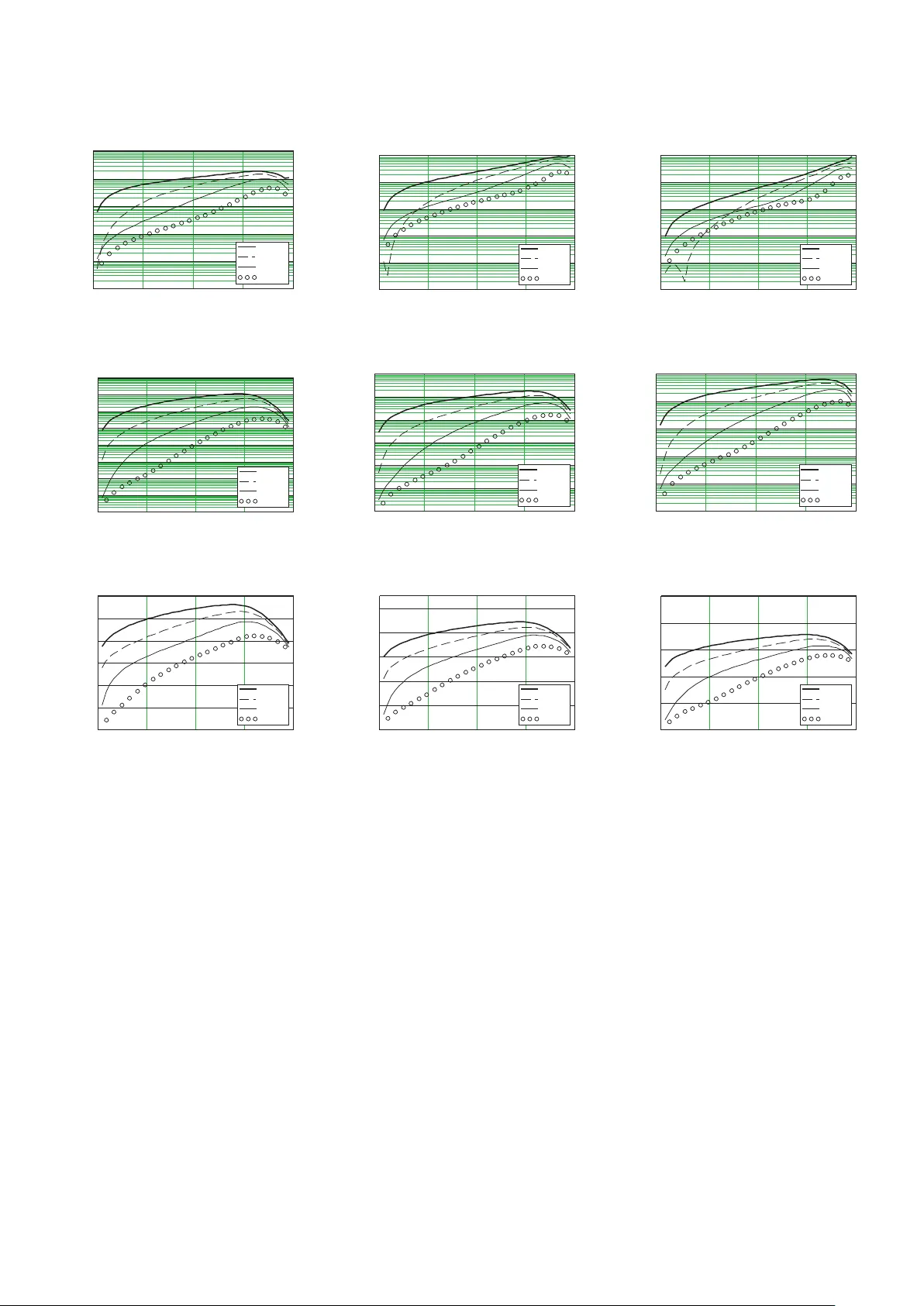
Analytical mo deling and analysis of in terlea ving on correlated wireless c hannels Dmitri Moltc hanov a,c, ∗ , P av el Kustarev b , Y evgeni Kuc harya vy a,d a Dep artment of Ele ctr onics and Communic ations Engine ering, T amp er e University of T e chnolo gy, T amp er e, Finland b Dep artment of Emb e dde d Systems, ITMO University, St.-Petersbur g, Russia c Pe oples F riendship University of Russia (R UDN University) 6 Miklukho-Maklaya St, Moscow, 117198, R ussian F e deration d Scho ol of Business Informatics F aculty of business and management National R ese ar ch University Higher Scho ol of Ec onomics, Mosc ow, Russia Abstract In terleaving is a mechanism universally used in wireless access technologies to alleviate the effect of c hannel correlation. In spite of its wide adoption, to the b est of our knowledge, there are no analytical mo dels proposed so far. In this pap er w e fill this void proposing three different models of interlea ving. Tw o of these mo dels are based on numerical algorithms while one of them allows for closed-form expression for pack et error probability . Although we use blo c k co des with hard decoding to sp ecify the models our modeling principles are applicable to all forw ard error correction co des as long as there exists a functional relationship (p ossibly , probabilistic) b etw een the num ber of incorrectly received bits in a co deword and the co dew ord error probabilit y . W e ev aluate accuracy of our mo dels sho wing that the worst case prediction is limited b y 50% across a wide range of input parameters. Finally , we study the effect of in terleaving in detail demonstrating how it v aries with channel correlation, bit error rate and error correction capability . Numerical results rep orted in this paper allo ws to iden tify the optimal v alue of the in terleaving depth that need to b e used for a channel with a giv en degree of correlation. The reference implementations of the models are av ailable [1]. Keywor ds: wireless c hannels, p er-source p erformance analysis, cross-lay er, wireless backhauling, mm-wa v es 1. In tro duction In spite of significant progress in hardware design and asso ciated signal pro cessing algorithms made ov er the last decades wireless c hannels still remain prone to transmis- sion errors. The reason is that reliability and hardware complexit y is often traded for additional capacity at the air in terface. F orward error correction (FEC) co des along with retransmission techniques are supposed to b e resp on- sible for concealing residual errors. FEC codes are no wa- da ys used in most mo dern wireless access tec hnologies. It is well do cumented that FEC co des show their b est p erformance when bit errors happ en at random without an y sort of dep endence b et ween them. On the other hand, wireless channels are known to exhibit a high degree of correlation manifesting itself in clipping of bit errors. Al- though there are codes that may tolerate a certain de- gree of error clipping (e.g. Reed-Solomon co des) correlated c hannel statistics lead to their sub-optimal p erformance. ∗ Corresponding Author. Email addr esses: dmitri.moltchanov@tut.fi (Dmitri Moltchano v), kustarev@lmt.ifmo.ru (Pa vel Kustarev), yk@cs.tut.fi (Y evgeni Kuchary a vy) In spite of universal usage of interlea ving, to the b est of our knowledge there are no analytical mo dels captur- ing its p erformance. The reason is tw ofold. First, most studies of wireless c hannel p erformance ha ve b een carried out assuming that the correlation in the bit error pro cess is effectively remo ved using interlea ving. In those in v esti- gations, where the correlation in the bit error pro cess has b een explicitly assumed, no in terleaving functionalit y was considered. System level sim ulators that are widely used no wada ys to ev aluate p erformance of wireless access tec h- nologies ma y include in terleaving as a basic blo c k at the ph ysical lay er. How ev er, interlea ving is still implemented in rather unguided manner, i.e. the in terleaving depth is set to some default v alue. Due to these reasons, interlea v- ing is regarded as one of the features of wireless c hannels prohibiting their detailed cross-la yer analytical studies. In this pap er we will fill this void prop osing three analytical mo dels for interlea ving ha ving differen t degree of complex- it y and accuracy . Our models are suitable for an y FEC co des with hard deco ding that can correct k bits (sym- b ols) in a co dew ord of length n . This is the case for blo ck co des suc h as BCH and RS co des. Minor mo difications Pr eprint submitte d to Computer Communic ations January 31, 2018 are required for co des with soft decoding, e.g. RS or turb o co des. Nevertheless, the mo dels are applicable as long as there is relationship, p ossibly probabilistic, b et ween the n umber of incorrectly receiv ed bits in a co deword and the co dew ord error probabilit y . The rest of the pap er is organized as follows. In Sec- tion 2 we highlight the imp ortance of accurate mo deling of interlea ving process and introduce the system mo del we w ork with. F urther, in Section 3, three mo dels for inter- lea ving ha ving differen t degree of complexit y and accuracy are introduced. W e assess accuracy of the mo dels in Sec- tion 4. The effect of in terleaving is analyzed in detail in Section 5. Conclusions are given in the last section. 2. System Mo del The notation used in the pap er is provided in T able 1. T able 1: Notation used in the pap er. P arameter Definition ∆ t Time to transmit a single bit I Number of co dewords n Length of the co dew ords in bits k Number of data bits in a co dew ords l Number of data bits that can b e corrected M Number of interlea ved codeblo cks in a pack et c ( i ) j Bit j of co deword i { S ( u ) } Bit error pro cess α, β T ransition probabilities of bit error pro cess c Lag-1 NACF of the bit error pro cess p E Bit error probability p I Interlea v ed co deblock error probability p Pac ket error probability p C Codeword error probability c C Lag-1 NACF of the co deword error pro cess ν 00 , ν 11 Probability of correct/incorrect first t w o co dew ords f 1 (1) , f 2 (1) Bit error probability is states 1 and 2 D T ransition matrix of the bit error pro cess D (1) , D (0) T ransition matrices with and without error A (0) , A (1) Supplementary matrices, A (0) + A (1) = 1 I 1 I Identit y matrix D ( i, n ) nI -steps matrix with i incorrect bits D ( i, j, n ) nI -steps matrix with i and j incorrect bits ~ h Initial state probability vector ~ v T ransitions rates from transient to absorbing state P Rate matrix of the absorbing chain Q Rate matrix of transient states q ij T ransition rate b et ween state i and j ~ 0 Zero vector of appropriate size T Time till absorption F T ( k ) CDF of time till absorption in k steps ~ π C Stationary distribution of the co dew ord pro cess D C (0) T ransition matrix of co deword pro cess with error α C , β C T ransition probabilities of co deword error pro cess Φ( x ) Error function µ, σ Mean and v ariance of p I estimate ˆ p Estimate of the pack et error probability N Number of exp eriments γ Confidence probability I L Indicator of the pack et loss even t 2.1. Wir eless channel mo del In this study , to make the model universally applicable w e abstract the c hannel organization mec hanisms assum- ing the bit error statistics as the input to the mo del. W e consider the bit error pro cess as a co v ariance sta- tionary binary process, where 1 and 0 denote incorrect and correct bit reception, resp ectiv ely . Consider a discrete- time en vironmen t with constant slot duration ∆ t corre- sp onding to the amoun t of time required to transmit a single bit ov er a wireless channel. W e model the bit error pro cess using the discrete-time Marko v mo dulated pro- cess with irreducible ap eriodic Marko v c hain { S ( u ) , u = 0 , 1 , . . . } , S ( u ) ∈ { 0 , 1 } . When at most single ev ent is al- lo wed to o ccur in a slot this pro cess is known as switched Bernoulli pro cess (SBP). T o parameterize a cov ariance sta- tionary binary pro cess only mean v alue and lag-1 normal- ized auto correlation (NA CF) co efficient ha ve to b e cap- tured. It was sho wn in [2] that there is a sp ecial case of SBP called in terrupted Bernoulli pro cess (IBP) exactly matc hing mean and lag-1 NACF v alue. It is given by ( α = (1 − c ) p E β = (1 − c )(1 − p E ) ( f 1 (1) = 0 f 2 (1) = 1 , (1) where f 1 (1) and f 2 (1) are bit error probabilities in states 1 and 2, resp ectively , α and β are transition probabilities from state 1 to state 2 and from state 2 to state 1, resp ec- tiv ely , c is the lag-1 NACF v alue of bit error observ ations, p E is the BER. Letting D b e transition probability matrix and defining the follo wing matrices A (0) = 1 0 0 0 , A (1) = 0 0 0 1 (2) the mo del is describ ed by tw o matrices D (0) = D × A (0) and D (1) = D × A (1) describing transitions b et ween states of the mo del with correct and incorrect reception of a bit. Since A (0) + A (1) = 1 I , where 1 I is the iden tity matrix. Note that the c hannel model in troduced abov e ma y not exactly capture correlation prop erties of v arious propaga- tion environmen ts. How ever, in practical situations, exact b eha vior of NA CF is not known. The prop osed mo del pro vide the so-called ”first-order” approximation of corre- lated channel b eha vior. A special adv antage of the mo del is that it can be easily tuned to explore the qualitativ e and quan titative effects of correlation. Still the extension of the mo del to the case of general finite-state Marko v chain (FSMC, [3]) is straightforw ard. Indeed, irresp ective of the n umber of states used to represen t the bit error pro cess and probabilities of bit errors in each state w e can alw ays par- tition D in to D (0) and D (1) such that D = D (0) + D (1). Finally , if wireless c hannels conditions exhibit piecewise stationary b ehavior as was rep orted in a num ber of stud- ies (see e.g. [4, 5]), this mo del may represent statistical c haracteristics of cov ariance stationary parts. In this case, (1) is interpreted as a mo del for a limited duration of time during which mean v alue and NACF of bit error observ a- tions remain constan t. 2 2.2. Interle aving pr o c ess Assume that data are encoded in to I , I > 0, codewords of the same length n . W e denote these co dewords by c ( i ) , i = 1 , 2 , . . . where bit j of i th co dew ord is c ( i ) j . Without in terleaving these bits would hav e b een sent as c (1) 1 , c (1) 2 , . . . , c (1) n , . . . , c ( I ) 1 , . . . , c ( I ) n , (3) and in case of a deep channel fade w e may incorrectly receiv e a significan t amount of bits b elonging to the same co dew ord. This may ev en tually lead to inability to deco de this co deword even when the ov erall ”av erage” channel qualit y is acceptable. Let us no w in tro duce interlea ving of depth I , I > 1. According to the concept, w e first combine I co dewords in to a matrix of size n × I , where eac h codeword represen ts a ro w, i.e. c (1) 1 c (1) 2 c (1) 3 . . . c (1) n c (2) 1 c (2) 2 c (2) 3 . . . c (2) n . . . . . . . . . . . . . . . c ( I ) 1 c ( I ) 2 c (2) 3 . . . c ( I ) n (4) Giv en the matrix (4), w e p erform its column-wise trans- mission, i.e. column n is transmitted first with c (1) 1 b eing the first bit sent, then column n − 1 starting with c (1) 2 , etc. The transmitted sequence of bits lo oks as c (1) 1 , c (2) 1 , . . . , c ( I ) 1 , . . . , c (1) n , c (2) n , . . . , c ( I ) n . (5) Observing (5) w e see that those bits that go back-to- bac k in a co dew ord are transmitted I bits apart. The in terleaving procedure tries to ensure that adjacent bits in a co dew ord are not similarly affected b y the current c hannel conditions of a c hannel. Th us, interlea ving tries to reduce the memory of a channel. The parameter I is called the interlea ving depth. The reverse op eration is p erformed at the receiving end. When interlea ving of depth I > 1 is used the length of a pack et is M I n bits, where M is the num b er of interlea v- ing blocks. When the pro duct I n is not small (i.e., more than few tens) a go o d approximation of the pac ket error probabilit y is obtained by p = 1 − (1 − p I ) M , (6) where p I is the probabilit y of incorrect reception of I in- terlea ved co deblo c k. Thus, it is sufficient to estimate the probabilit y of correct reception of an interlea ving blo c k consisting of I codewords. Applying (6) we shrink the memory of the channel mo del at I n . Since I n is often large, this effect is negligible in practical applications. In this pap er we study in terleaving using pack et error probabilit y as the main metric of interest. W e define the pac ket error probabilit y as the probabilit y that at least one co dew ord is incorrectly decoded. Although our models are dev elop ed using Bose-Ho cquenghem-Chaudh uri (BCH) FEC co des as an example, they can b e extended to the case of an y type of FEC code. F or those co des ha ving no closed- form expression for codeword error probability (e.g. con- v olutional, turb o or low-densit y parity chec k co des) it can b e obtained via simulation studies. A BCH co de is rep- resen ted b y a triplet ( n, k , l ), where n is the size of the co dew ord, k is the num b er of data bits in a co deword, l is the num ber of incorrectly received bits that can b e cor- rected. A co dew ord is correctly deco ded when the num ber of bit errors is less or equal to l . 2.3. R elate d work There hav e been sev eral attempts to mo del the in ter- lea ving mechanism in the past, see e.g., [6, 7, 8, 9, 10, 11] for a brief accoun t of studies. The authors in [6] the au- thors dev elop an optimal interlea ving sc heme for con volu- tional codes when the error burst size, kno wn in adv ance, is greater than the allo wed interlea ving depth. In [7] the au- thors prop osed to combine the functionality of FEC co des and interlea v er into a single mo dule. The mo dification allo ws to dynamically change the interlea ving depth and strength of the FEC to dynamically adapt to changing wireless c hannel conditions. The p erformance of the pro- p osed scheme has b een ev aluated using the computer sim- ulations. An optimal in terleaving scheme for transmission of audio information o ver the wireless channels has b een dev elop ed in [8]. The simulation approac h has b een cho- sen for performance assessmen t. The study in [9] analyze in terleaving as a part of the signal space div ersity con- cept for wireless c hannel, where they deriv ed a closed form expression for the upp er bound of bit error rate M -ary phase shift keying in Rayleigh fading c hannel. A compre- hensiv e analytical mo del for delay analysis of FEC co des with in terleaving ov er fading channels has b een prop osed in [10, 11]. The bit error pro cess w as assumed to follo w FSMC. As the ma jor emphasis of the work w as on delay induced by the in terleaving pro cedure no results on the in terleav ed co deblock and pack et error probabilities ha ve b een provided. Summarizing the related w ork w e conclude that the in- terlea ving studies p erformed so far introduced significant simplifications to the wireless channel b ehavior or relied on the sim ulation studies to derive p erformance metrics of interest or concentrated on simple b ounds on optimal in terleaving depth. Is spite of the universal use of the in- terlea ving mec hanism, the simple y et accurate interlea ving mo del is still missing. 3. In terlea ving Mo del 3.1. Appr o ach at the glanc e The core idea of the mo dels sp ecified below consists in translating the memory of the bit error mo del to the in ter- lea ved co deblo c k error probability . such that the Marko v 3 structure of the mo del is preserved. This is done by for- m ulating a new absorbing Marko v process describing the dynamics of the co dew ord transmission pro cess b y explic- itly trac king the n umber of incorrectly receiv ed bits in suc- cessiv e codewords. T o determine the interlea v ed co deblo c k error probabilit y w e need to estimate the join t distribution of the num b er of incorrectly received bit in first tw o co de- w ords parameterizing the mo del and then estimate the ab- sorption time. As b oth steps are computationally inten- siv e, we further formulate t w o simplified mo dels. The first simplified mo del address the problem of absorption time estimation by defining a tw o-state Marko v chain whose parameter are directly deriv ed from the join t distribution of the num b er of incorrectly receiv ed bits in the first tw o co dew ords. F or this mo del the in terleav ed co dew ord error probabilit y is pro vided in closed-form. The last mo del as- sumes that the correlation b etw een co dew ords is the same as correlation b et ween individual bits removing the need for calculating the join t distribution. 3.2. Absorbing Markov chain mo del W e represent the pro cess of transmission of co dewords in an interlea v ed co deblock using an absorbing Marko v c hain { S ( u 0 ) , u 0 = 0 , 1 , . . . } with the state-space S ( u 0 ) ∈ { 0 , 1 , . . . , l , l + 1 } , where states 0 , 1 , . . . , l corresp onds to the correct reception of a co dew ord, while state l + 1 ag- gregates those states resulting in incorrect reception of a codeword. W e start with the initial state distribution ~ h = ( h 0 , h 1 , ..., h l +1 ) and observe the pro cess for exactly I steps. As one may observ e, the probability of absorption in no more than I steps is the interlea ved co deblock error probabilit y , p I . The canonical form of the absorbing Marko v c hain is [12] P = Q ~ v ~ 0 T 1 (7) where Q is l × l matrix whose elemen ts, q ij , i, j = 0 , 1 , . . . , l , define transition probabilities b et ween transien t states of the absorbing Marko v chain, ~ 0 T is the vector of zeros, and ~ v = ( v 0 , v 1 , . . . , v l ) is the v ector containing transitions b e- t ween transien t and absorbing states. Introducing ~ e as a v ector of ones of size l , and noticing that the sum of all ro ws in (7) must b e 1 we hav e that ~ v + Q ~ e = ~ e, (8) implying that the mo del is completely characterized b y Q . F or a Marko v c hain defined in (7)-(8) we are in terested in the probability of absorption in no more than I steps. W e compute it as follo ws. Recall, that the time till absorp- tion is a discrete distribution of phase-t yp e ov er the set of p ositiv e in tegers [13]. This distribution is also the first pas- sage time distribution to the state l + 1. Let T denote the random v ariable describing the time till absorption. The cum ulative distribution function (CDF) of the n umber of transitions till absorption is giv en by F T ( k ) = P r { T ≤ k } = 1 − ~ hQ k ~ e, (9) where ~ h is the initial state probabilit y vector. Letting k = I in (9) gives us the probabilit y we are lo oking for. W e need three parameters to sp ecify the mo del: ma- trix Q , describing transition probabilities b et ween tran- sien t states, ~ v , describing transitions b etw een transient and absorbing states and the initial state probability vec- tor, ~ h . Both Q and ~ v can b e obtained by estimating tw o- dimensional distribution of the num b er of incorrectly re- ceiv ed bits received in the first and second co dew ords. The idea of the numerical algorithm is that bits of the first and second co dew ords are transmitted bac k-to-back ov er the wireless c hannel and these pairs of bits are separated by I − 2 transmission slots as shown in Fig. 1. t st eady-stat e D I D I -2 D ( i ) D ( j ) c 1 (1) D I -2 c 1 (2) c 2 (1) D ( i ) D ( j ) D I c 2 (2) c 2 ( I ) c 1 ( I ) ... ... Figure 1: Estimating tw o-dimensional distribution. b et w een states of the bit error mo del asso ciated with i and j , i, j = 0 , 1 incorrectly receiv ed bit in the first and second slots, resp ectiv ely . W e hav e D ( i, j ) = D ( i ) D ( j ). Let the set of matrices D ( i, j, n ) contain nI -step condi- tional transition probabilities of the bit error pro cess asso- ciated with with i , j , i, j = 0 , 1 , . . . , n , incorrectly received bits in the first and second co dew ord, resp ectively . W e get D ( i, j, n ) recursively as D ( i, j, n ) = 1 X k =0 1 X k =0 D ( i − k , j − l, k − 1) D ( i ) D ( j ) . (10) No w, we can estimate probabilities of transitions as q ij = ~ π D ( i, j, n ) ~ e, i, j = 0 , 1 , . . . , l . v i = n X j = l +1 ~ π D ( i, j, n ) ~ e, i = 0 , 1 , . . . , l . (11) where ~ π is the steady-state distribution of the bit error pro cess, ~ e is the vector of ones of appropriate size. The only thing left is to compute the elements of the initial state probability v ector ~ h . According to the defi- nition h i , i = 0 , 1 , . . . , l , is the probabilit y that there are exactly i incorrectly receiv ed bits in a first co deword. T o get elements ~ h it is sufficient to know one-dimensional dis- tribution of the num ber of incorrectly receiv ed bits in a co dew ord. This distribution can b e obtained from tw o- dimensional distribution q ij b y summing up ov er all j . 4 3.3. Two-state Markov chain mo del The mo del introduced in the previous section consists of tw o successive steps. W e first estimate tw o-dimensional distribution of the num b er of errors in first tw o co dewords and then apply an absorbing Marko v chain to mo del the pro cess of successive reception of I co dew ords. F urther, w e need to compute the interlea v ed co deblo c k error prob- abilit y , p I , b y taking an l × l matrix Q into a p ow er of I . When the error correction capabilit y l and interlea v- ing depth I are b oth rather large this incurs an additional computational o verhead. Once tw o-dimensional distribution of incorrectly re- ceiv ed bits in first t wo co dew ords is obtained we can define a new discrete-time tw o-step Mark o v chain { S C ( u 0 ) , u 0 = 0 , 1 , . . . } , S C ( u 0 ) ∈ { 0 , 1 } modeling the pro cess of code- w ord reception, where 0 denotes a correctly rec eiv ed co de- w ord while 1 implies incorrect reception. Note that a new in terv al duration is exactly n times that of the bit error pro cess, where n is the length of a co deword. Having tw o- dimensional distribution q ij , i, j = 0 , 1 , . . . , n one can esti- mate both the co dew ord error probabilit y and lag-1 NACF v alue as p C = l X i =0 n X j =0 q ij , c C = P 1 i =0 P 1 j =0 ( i − p C )( j − p c ) ν ij p C − p 2 C , (12) where in the denominator of the latter expression we used a well-kno wn prop erty of binary pro cesses. Here, ν ij , i = 0 , 1, is the probability of outcome of first t wo co dew ords transmissions that can b e estimated using q ij as ν 00 = l X i =0 l X j =0 q ij , ν 11 = n X i = l +1 n X j = l +1 q ij , (13) and ν 01 = 1 − ν 00 , ν 10 = 1 − ν 11 . The in terleav ed co deblo c k error probability , p I , is p I = ~ π C [ D C (0)] I ~ e, (14) where ~ π C is the steady-state probabilit y vector of the co de- w ord error pro cess, D C (0) is the matrix ha ving transitions b et w een states with correct reception of a co deword. The transition matrix D C (0) can be found similarly D (0) of the bit error pro cess using (1) and (2). Note that (14) is easier to compute compared to find- ing the first passage time in absorbing Marko v c hain as steady-state probabilities of the mo del as well as eigen vec- tors and eigenv alues of the transition probability matrix are a v ailable in closed form as ~ π C = ( α C / ( α C + β C ) , β C / ( α C + β C )) . (15) Replacing the absorbing Marko v c hain mo del, where w e used transitions b etw een states of the pro cess defined o ver the num ber of incorrectly received errors in a co de- w ord, by the tw o-state Marko v chain we lo ose in accuracy of the mo del. P articularly , this pro cedure deteriorates the memory structure of the original model. Still, if the loss in accuracy is not drastic, the gain we p otentially get av oid- ing estimation of first passage time distribution can b e a deciding factor for c ho osing this mo del, especially for large v alues of I and l . 3.4. Simple two-state Markov chain mo del Both mo dels introduced ab o v e in volv e estimation of t wo-dimensional distribution. F or large v alues of n , say n > 1000, w e need to estimate a matrix containing 10 E 6 elemen ts. F or practical applications we would like to hav e an easy-to-compute approximation, preferably providing closed form expression, that is developed b elow. The ma- jor assumption is that for any I > 1 the correlation b e- t ween outcomes of co dew ords reception is likely similar to that b et w een individual bit transmissions. T o parameterize the co dew ord error pro cess w e need the co dew ord error probability and the lag-1 NA CF v alue. The latter is readily a v ailable. Although the co deword error probability can b e obtained from tw o-dimensional distribution of the n umber of errors in t wo adjacent co de- w ords w e a void this step estimating the num ber of errors in a single co dew ord directly . Let D ( j, n ), j = 0 , 1 , . . . , n , b e the set of matrices describing transitions of a channel mo del with exactly j errors in a bit pattern of length n . Starting from D ( j, 1) = D I − 1 ( j ), j = 0 , 1, where D I − 1 ( j ) is defined as D I − 1 ( j ) = D ( j ) D I − 1 , j = 0 , 1, we estimate these matrices recursiv ely using D ( j, i ) = 1 X k =0 D ( j − k , i − 1) D I − 1 ( k ) , i = 1 , 2 , . . . , n − 1 , D ( j, n ) = 1 X k =0 D ( j − k , n − 1) D ( k ) , (16) leading to the follo wing co dew ord error probability p C = 1 − ~ π C l X j =0 D ( j, n ) ~ e. (17) Once p C is found w e use apply (14) to estimate p I . Recall that the num ber of visits to a state of a tw o-state Mark ov c hain can b e found using closed-form as shown in [14] reducing the complexit y of the mo del further. 3.5. F e asible extensions In this pap er we use BCH codes as an example. Ho w- ev er, our mo del can b e extended to the case of other blo ck co des with hard deco ding. F or example, consider Reed- Solomon (RS) co des. As opp osed to BCH co des RS codes op erates o ver sym b ols with each symbols consisting of 2d bits. An RS co de is defined as ( n, k ), where n is the length of the co deword, k is the n um b er of error correcting 5 bits, while the difference ( n − k ) represents the n umber of data sym b ols. The correction capability of any RS co de is b ( n − k ) / 2 c symbols. A symbol is incorrectly received if there is at least one bit error in this symbol. It is easy to see that RS co des are inherently more resistan t to corre- lation as it do es not matter how many bits are incorrectly receiv ed in a single symbol. In practice d = 3, resulting in the sym b ol length of eigh t bits is used. Adapting the prop osed approach to the case of RS code is in tuitiv ely simple. The only difference is that w e need to define the sym b ol error pro cess b y firstly estimating ma- trices describing transitions b etw een states of the c hannel mo del with i , i = 0 , 1 , . . . , 2 d , incorrectly received bits and then relating them to the matrices describing correct and incorrect reception of a symbol. Then, we pro ceed simi- larly to BCH co des. The proposed approach can also be extended to the case of co des with soft deco ding for which there is no deterministic relationship b etw een the n umber of errors o ccurring in a co dew ord and the outcome of a co dew ord transmission (e.g. conv olutional or turbo codes). F or these co des the relationship takes probabilistic form and can b e obtained via sim ulations for any finite code length. Know- ing the probabilities of i , i = 0 , 1 , . . . , n , errors in a co de- w ord of size n and the probabilit y of incorrect reception of a codeword conditioned on i errors, we can estimate the probability of incorrect reception of a codeword. The difference compared to BCH or RS codes is that it might b e non-negligible for an y n umber of bit errors. Then, we pro ceed similarly to the BCH case describ ed ab o ve. 4. Comparison of mo dels The purp ose of this section is to ev aluate the accuracy of the prop osed mo del. W e do it by comparing the results obtained using our mo del with those derived with simu- lations of the pac ket transmission pro cess. W e use the follo wing short notation to refer to the defined mo dels: • mo del 1: tw o-dimensional distribution, t w o-state MC; • mo del 2: one-dimensional distribution, tw o-state MC; • mo del 3: tw o-dimensional distribution, absorbing MC. 4.1. Simulations and data analysis The simulator is written in C and implements the fol- lo wing simple algorithm for simulating interlea ving of BCH co dew ords. T o generate the bit error sequence with a pre- defined bit error probability and lag-1 NACF v alue we use discrete autoregressive mo del of order one, DAR(1). Note that D AR(1) and Mark ov mo del we used to represent the bit error pro cess in this pap er are sto chastically equiv a- len t. The reason for using D AR(1) is that the pro cess is giv en by a recursion which is more conv enien t for sim u- lation studies. In our simulations w e count the num ber of bits and once it reac hes nI w e estimate the num b er of errors in each co dew ord. Let I L b e the loss indicator of the pack et. If all the co dew ords are received correctly this in terleav ed co deblock is marked as received correctly . W e then pro ceed with the next in terleav ed co deblock. If all v co deblocks b elonging to a pac ket are received correctly then this pac ket is marked as correctly receiv ed and as- so ciated with indicator v alue is I L = 0. Otherwise, it is incorrectly received and the asso ciated v alue of loss indi- cator is set to 1. In order to obtain reliable statistics in all our exp erimen ts w e simulated for N = 100000 pac kets. The metric of in terest is the pack et error probability , p , i.e. the probability that at least one interlea v ed co deblo c k out of I M is received incorrectly . Observe that the pack et error probability is actually the mean of the loss indica- tor of a pack et I L . Thus, we can replace the problem of estimating the probability of an even t b y the problem of estimation of the mean of the loss pro cess represented by a binary sequence of 1s and 0s. The unbiased, consisten t and effective p oin t estimate of the pack et loss probabil- it y , ˆ p , is obtained by av eraging the v alues of all obtained indicators. In addition to the p oin t estimate of the pack et error probabilit y we are in terested in interv al estimates as they allo w to make reliable conclusions ab out deviations of our mo dels from the actual p erformance. There are a n um- b er of wa ys how to obtain the in terv al estimate for our data. Here, we briefly explain the approach w e use. When the num b er of exp erimen ts N (simulated pack ets) is large while the p oin t estimate of the pack et error probabilit y is not extremely small or very close to 1 the distribution of the p oin t estimate ˆ p is approximately Normal. The fol- lo wing holds for a Normal distribution with mean µ and standard deviation σ P r {| X − µ | < c } = 2Φ( C /σ ) = γ , (18) where Φ( · ) is the error function, C is some p ositiv e con- stan t, and γ is the confidence probabilit y . Observing that µ = p and σ = p p (1 − p ) / N from 2Φ( C /σ ) w e see that t = σ √ N / p p (1 − p ) leading to c = t p p (1 − p ) / N and we ma y rewrite (18) as P r {| X − p | < t p p (1 − p ) / N } = 2Φ( t ) = γ . (19) Th us, the following holds with probability γ | ˆ p − p | < t p p (1 − p ) / N , (20) whose solutions are p 1 = ˆ p ± t p ˆ p (1 − ˆ p ) / N , (21) where t is found as Φ( t ) = γ / 2. F or comparison purp oses we use BCH codes of length 63 with correction capabilities l = 1 , 3 , 5, corresp onding to k = 57 , 45 , 36 data bits. The results presented here are represen tative implying that our conclusions holds for BCH co des with other co dew ord lengths but similar co de 6 1 10 4 - ´ 5.075 10 3 - ´ 0.01005 0.015025 0.02 1 10 10 - ´ 1 10 8 - ´ 1 10 6 - ´ 1 10 4 - ´ 0.01 1 Model, l =1 Simul at ions, l=1 Model, l =3 Simul at ions, l=3 Model, l =5 Simul at ions, l=5 p , packet loss probabi li t y p E , bit err or proba bil it y (a) c = 0 . 0 1 10 4 - ´ 5.075 10 3 - ´ 0.01005 0.015025 0.02 1 10 10 - ´ 1 10 8 - ´ 1 10 6 - ´ 1 10 4 - ´ 0.01 1 Model, l =1 Simul at ions, l=1 Model, l =3 Simul at ions, l=3 Model, l =5 Simul at ions, l=5 p , packet loss probabi li t y p E , bit err or proba bil it y (b) c = 0 . 3 1 10 4 - ´ 5.075 10 3 - ´ 0. 01005 0. 015025 0. 02 1 10 7 - ´ 1 10 6 - ´ 1 10 5 - ´ 1 10 4 - ´ 1 10 3 - ´ 0.01 0. 1 1 Model, l =1 Simul at ions, l=1 Model, l =3 Simul at ions, l=3 Model, l =5 Simul at ions, l=5 p , packet loss pr obabi li ty p E , bit error probabil i ty (c) c = 0 . 6 1 10 4 - ´ 5.075 10 3 - ´ 0. 01005 0. 015025 0. 02 1 10 7 - ´ 1 10 6 - ´ 1 10 5 - ´ 1 10 4 - ´ 1 10 3 - ´ 0.01 0. 1 1 Model, l =1 Simul at ions, l=1 Model, l =3 Simul at ions, l=3 Model, l =5 Simul at ions, l=5 p , packet loss pr obabi li ty p E , bit error probabil i ty (d) c = 0 . 9 Figure 2: First codeword error probability . rates k /n . The size of a pack et is nI v , where v is the n umber of in terleav ed co deblocks. In order to demonstrate the effect of different in terleaving depths w e need to keep the pac k et size constan t. W e k eep the product v I constant b y choosing the follo wing pairs of ( I , v ): (1 , 16), (2 , 8), (4 , 4), (8 , 2), (16 , 1). With this choice of ( I , v ) the whole pac ket size (including all headers) is alwa ys 63 × 16 = 1008 bits (126 b ytes). W e exclude the cases c = 0 and ( I , v ) = (1 , 16) as they are trivial. 4.2. Identifying the r anges of p ar ameters of inter est 4.2.1. First c o dewor d err or pr ob ability All the mo dels proposed in this pap er consist of t wo steps. In one of them (mo del 2) w e estimate the first co de- w ord error probability at the first step. In the other tw o, the first step consists in estimation of t wo-dimensional dis- tribution of the num ber of incorrectly received bits in the first tw o codewords. A widely used approac h for verifica- tion of complex mo dels is to c hec k their parts separately . This gives us information as to which part of the mo del pro vides accurate approximation and/or whic h part of the mo del is the source of bias. Here, w e will ev aluate accuracy of the first co dew ord error probabilit y for model 2, while in the next subsection w e will tak e a lo ok at the probabilit y of incorrect reception of the first t wo co dewords. Fig. 2 compares the mo deling results with those ob- tained via sim ulations for different v alues l and c . W e see that our approac h allows to closely approximate this metric implying that the first part of the mo del correctly predicts the first co dew ord error probabilit y . Some devia- tions from the sim ulation data are again seen when the first co dew ord error probability approaches 10 E − 5. How ev er, these deviations are not systematic and rather randomly spread around the line representing the mo deling results. They are attributed to the limited num ber of exp eriments set to N = 10 5 . Comparison of the mo deling results with interv al es- timations (the confidence level set to 0 . 05) for different v alues of c and l shown in Fig. 3 approv es our conclusions. All analytical results are in-b et w een interv als obtained us- ing simulations except for that region, where the pack et error probability falls b elow 10 E − 4. One may also ob- serv e that as the absolute v alue of the BER increases the confidence in terv als gets shorter. As we already discussed 7 ab o v e this is the inheren t feature of our in terv al estimator. 4.2.2. Inc orr e ct r e c eption of first two c o dewor ds Estimation of t w o-dimensional distribution of the n um- b er of incorrectly received bits in the first tw o codewords is the first step for models 1 and 3. W e use it at the second step of the mo deling pro cedure to sp ecify transition prob- abilities of the absorbing Marko v chain. T o ev aluate accu- racy of this step it is sufficient to consider the probability of incorrect reception of at least one of these co dew ords. This gives the probability of the complement of the even t consisting in correct reception of b oth co dew ords. There is a strict functional relationship b et ween this even t and the joint tw o-dimensional distribution of the num b er of incorrectly receiv ed bits in first tw o codewords. The comparison betw een the p oin t estimates obtained via simulations and the mo deling data for probability of incorrect reception of at least one codeword out of the first t wo is sho wn in Fig. 4. W e see that the mo deling results closely match the simulation ones implying that w e make no mistak es at this step. It is important to note that (as w e will see in the next section) such a goo d approximation means that these tw o mo dels correctly predict the proba- bilit y of incorrect reception of a pack et for any pack et size and in terleaving scheme ( I , v ) = (2 , 8). 4.3. Performanc e c omp arison of mo dels Fig. 5 illustrates the relative error of approximation of the pac k et error probabilit y for all three models and differ- en t v alues of c , l and ( I , v ) = (16 , 1) interlea ving scheme. The comparative b eha vior of mo dels is similar to the case ( I , v ) = (2 , 8) for all considered v alues of l and small to medium correlation ( c = 0 . 3 and c = 0 . 6). F or small to medium v alues of c the mo del 2 is the worst one while the mo dels 1 and 3 provide appro ximately similar accuracy . In this range of c these tw o mo dels deviate from empiri- cal results at most by 10% while the prediction according to the mo del 2 deviates by at most 30%. As the lag-1 NA CF grows these conclusions are no longer v alid. First of all, surprisingly , mo del 3 is not the b est for c = 0 . 9 and l = 1 as b oth mo dels 1 and 2 outp erform it b y few p ercen ts. As l grows while c remains set at 0 . 9, the mo del 1 p erforms w orse and worse with deviations reaching t wo orders of magnitude for small v alues of BER and l = 3 , 5. The model 2 con tin ues to outp erform the mo del 1 for l = 3 and is comparable to the model 3 for l = 5. If one should c hose a single mo del for all the v alues of BER, c , and l the mo del 3 is recommended. Another adv antage of mo del 3 is that it do es not allow for extreme bias for the small v alues of BER. How ev er, for all the input v alues there are simpler mo del that p erforms as go o d as (sometimes b etter than) mo del 3. F or c = 0 . 3 , 0 . 6, l = 1 , 3 , 5, this is the model 1 while for c = 0 . 9 this is the mo del 2. An yw ay , for any c hoice of the input parameters there is a mo del allowing to get results deviating from the empirical data b y at most 10%. So far we observed that all the models are highly sen- sitiv e to the v alue of the lag-1 NACF and the choice of the best mo del depends on it. Here, we will study the effect of correlation on accuracy of our mo dels. The rel- ativ e accuracy of all the mo dels for differen t v alues of l and ( I , v ) and fixed v alue of BER ( p = 0 . 01) is sho wn in Fig. 6. First of all, notice that the absolute error is not greater than 40% in the worst possible case. F urther, it is clear that mo del 2 differs from the other tw o. F or small and medium v alues of c this mo del underestimates the pac ket error probability . Moreov er, its absolute devi- ation in most cases is greater compared to other mo dels. On the other hand, mo dels 1 and 3 alwa ys ov erestimate the actual p erformance demonstrating qualitatively sim- ilar b ehavior. The imp ortan t difference is that for large v alues of c ( c > 0 . 9) the mo del 3 clearly outperforms the mo del 1. Recalling that b oth these mo dels are compu- tationally intensiv e incorp orating n umerical estimation of t wo-dimensional distribution we see that from the prac- tical p oint of view mo del 3 is alwa ys preferable. Finally , w e would lik e to note that the accuracy of all the mo d- els for finite v alues of c is almost a conv ex function of c ha ving a p eak at a certain c . The v alue of c maximizing the error is a function of the interlea ving depth I and is indep enden t of l . Ho wev er, these v alues do not coincide for mo dels 2 and 3. As one ma y observe the accuracy of mo del 2 is alwa ys b etter when mo del 3 pro vides the worst p ossible prediction. The best approximation out of these t wo mo dels is shown by thick lines in Fig. 6. Concluding this section w e claim that mo del 3 outp er- forms the other tw o mo dels for all the considered v alues of BER, l , and c when accuracy is the only metric of in- terest. F or most input v alues the results of this mo del deviate b y at most 10% and do es not allo w for extreme bias for small v alues of BER. How ev er, if computational complexit y comes into pla y , for all v alues of input parame- ters there is an alternativ e mo del (either model 1 or mo del 2) p erforming as goo d as mo del 3, while requiring wa y less computational efforts. F or extremely high v alues of lag-1 NA CF mo del and high v alues of l the mo del 2 p erforms comparably to the mo del 3. In o ther cases mo del 1 pro- vides pro vides similar p erformance. 5. Numerical study of interlea ving In this section w e study the effect of interlea ving on the pac ket loss performance of a c hannel. In what follows, all the presented results are based on mo del 3 that is found to provide the most accurate results across all ranges of BER, c , and l . W e are interested in b oth qualitativ e and quan titative effects. 5.1. The effe ct of interle aving First, consider the effect of interlea ving qualitatively , i.e. studying what happ ens when we increase I from 1 to 16 keeping the pack et size constant. Fig. 7 demonstrates 8 1 10 4 - ´ 5.075 10 3 - ´ 0. 01005 0. 015025 0. 02 1 10 6 - ´ 1 10 5 - ´ 1 10 4 - ´ 1 10 3 - ´ 0.01 0. 1 Model, c = 0.6 Simul at ions, c = 0.6 Model, c = 0.9 Simul at ions, c = 0.9 p , packet loss pr obabi li ty p E , bit error probabil i ty (a) l = 3 1 10 4 - ´ 5.075 10 3 - ´ 0. 01005 0. 015025 0. 02 1 10 7 - ´ 1 10 6 - ´ 1 10 5 - ´ 1 10 4 - ´ 1 10 3 - ´ 0.01 Model, c = 0.6 Simul at ions, c = 0.6 Model, c = 0.9 Simul at ions, c = 0.9 p , packet loss pr obabi li ty p E , bit error probabil i ty (b) l = 5 Figure 3: Interv al estimations for first co deword error probability . 1 10 4 - ´ 5. 075 10 3 - ´ 0.01005 0. 015025 0.02 1 10 5 - ´ 1 10 4 - ´ 1 10 3 - ´ 0.01 0.1 1 Mod el, l=1 Simulatio ns, l=1 Mod el, l=3 Simulatio ns, l=3 Pr . of i ncorr ect r ecept ion of at l east one codeword p E , bit err or proba bili ty (a) c = 0 . 6 1 10 4 - ´ 5. 075 10 3 - ´ 0.01005 0. 015025 0.02 1 10 4 - ´ 1 10 3 - ´ 0.01 0.1 1 Mod el, l=1 Simulatio ns, l=1 Mod el, l=3 Simulatio ns, l=3 Pr . of i ncorr ect r ecept ion of at l east one codeword p E , bit err or proba bili ty (b) c = 0 . 9 Figure 4: Incorrect reception of at least one out of tw o first co dewords. the pack et error probabilit y for all the interlea ving depths and sev eral v alues of c and l . W e limit presen tation to only t wo v alues of l as results for higher l are similar. The b est p erformance in terms of the pack et error probability is pro- vided by the maximum p ossible v alue of the interlea ving depth; in our case this is (16 , 1) sc heme. As the correlation increases the difference b et w een the interlea ving schemes gro ws. The reason is that the residual correlation left be- t ween successive bits in a co deword ( R = c I ) is higher for bigger v alues of c and it b ecomes tougher to conceal these errors due to their grouping in a single codeword. F or example, for c = 0 . 3, l = 1, (8 , 2), in terleaving sc heme p erforms as go o d as (16 , 1) sc heme. The reason is that the residual correlation is negligible for I = 8 and I = 16 (0 . 3 8 ≈ 6 . 5 E − 5 and 0 . 3 16 ≈ 4 . 3 E − 9). F or c = 0 . 6 the difference b etw een these tw o schemes is also almost unno- ticeable as the residual correlations are still fairly close to zero, 0 . 6 8 ≈ 0 . 02, 0 . 6 16 ≈ 2 . 8 E − 4. F or c = 0 . 9 it the dif- ference is noticeable as 0 . 9 8 ≈ 0 . 43 whic h is significan tly bigger than 0 . 9 16 ≈ 0 . 18. Similar b eha vior is observed for l = 3. How ev er, as the correction capability increases the difference b ecomes bigger. The aim of in terleaving is to remov e the auto correla- tion from the bit error pro cess of a wireless channel. W e clearly see it observing the results provided in Fig. 7. Ho wev er, we also see that even high v alues of I cannot mak e the channel completely uncorrelated. This is b est exemplified observing Fig. 7(c) and Fig. 7(f ) showing the pac ket loss probabilit y for c = 0 . 9. W e see that for small v alues of BER completely uncorrelated channel out- p erforms a correlated one even for I = 16. The reason is again the residual correlation whic h is non-negligible even for I = 16, 0 . 9 16 ≈ 0 . 18. The difference is as large as one order of magnitude, see Fig. 7(f ). F or large v alues of BER the correlated channel with I = 16 is b etter than that with c = 0 . 0. The correlated c hannel also p erforms b etter in the region of high BER for other v alues of I as w ell. The ab ov emen tioned b ehavior 9 1 10 4 - ´ 5.075 10 3 - ´ 0.01005 0.015025 0.02 1 10 3 - ´ 0.01 0.1 1 10 100 Mode l 1 Mode l 2 Mode l 3 Relati ve error, percent p E , bit e rror proba bilit y (a) l = 1 , c = 0 . 3 1 10 4 - ´ 5.075 10 3 - ´ 0.01005 0.015025 0.02 1 10 100 Mode l 1 Mode l 2 Mode l 3 Relati ve error, percent p E , bit error probabi lit y (b) l = 1 , c = 0 . 6 1 10 4 - ´ 5.075 10 3 - ´ 0. 01005 0.015025 0.02 1 10 100 1 10 3 ´ Mode l 1 Mode l 2 Mode l 3 Relati ve error, percent p E , bit e rror pr obabili t (c) l = 1 , c = 0 . 9 1 10 4 - ´ 5.075 10 3 - ´ 0.01005 0.015025 0.02 1 10 3 - ´ 0.01 0.1 1 10 100 1 10 3 ´ Mode l 1 Mode l 2 Mode l 3 Relati ve error, percent p E , bit e rror proba bilit y (d) l = 3 , c = 0 . 3 1 10 4 - ´ 5.075 10 3 - ´ 0. 01005 0.015025 0.02 0.01 0.1 1 10 100 1 10 3 ´ Mode l 1 Mode l 2 Mode l 3 Relati ve error, percent p E , bit e rror pr obabili ty (e) l = 3 , c = 0 . 6 1 10 4 - ´ 5.075 10 3 - ´ 0.01005 0.015025 0. 02 0.01 0.1 1 10 100 1 10 3 ´ 1 10 4 ´ Model 1 Model 2 Model 3 Relat ive err or , percent p E , bit error proba bili ty (f ) l = 3 , c = 0 . 9 1 10 4 - ´ 5.075 10 3 - ´ 0.01005 0.015025 0. 02 0.1 1 10 100 1 10 3 ´ Model 1 Model 2 Model 3 Relat ive err or , percent p E , bit error proba bili ty (g) l = 5 , c = 0 . 3 1 10 4 - ´ 5.075 10 3 - ´ 0. 01005 0.015025 0.02 0.01 0.1 1 10 100 Model 1 Model 2 Model 3 Relat ive err or , perc ent p E , bit err or probabi li ty (h) l = 5 , c = 0 . 6 1 10 4 - ´ 5.075 10 3 - ´ 0.01005 0.015025 0. 02 1 10 100 1 10 3 ´ 1 10 4 ´ Model 1 Model 2 Model 3 Relat ive err or , percent p E , bit error proba bili ty (i) l = 5 , c = 0 . 9 Figure 5: Comparison of three mo dels for ( I , v ) = (16 , 1). is related to the w a y how correlation is remov ed b y inter- lea ving or, precisely , to the insufficien t interlea ving depth. The reason is that the correlation manifests itself not only in grouping of bit errors but in grouping of correctly re- ceiv ed bits as w ell. In fact, for large v alues of c , I = 16 is insufficien t to completely remov e the correlation b et ween successiv e bits of a single co deword. Since 0 . 9 16 ≈ 0 . 18, bit errors in a co deword still tend to group rather that b e completely uncorrelated. Thus, for small v alues of BER the probability that there will b e more than l errors in a co dew ord is bigger compared to the completely uncor- related case. On the other hand, when BER is high the correction capabilit y of a co de ma y not be sufficien t to cor- rect all the errors in completely uncorrelated case. Ho w- ev er, when memory is high these errors tend to group in a single co dew ord implying that correctly received bits also happ en in batc hes. Since it do es not matter how man y bits are receiv ed in error as long as the co dew ord is incor- rectly received, correlated channel with high lag-1 NACF p erforms b etter for large v alues of BER. When l increases this sp ecial effect fades aw a y . In practice, it rarely hap- p ens that NACF is strictly exp onen tial, thus, allowing us to use simple approximation for the residual correlation R = c I . If the NACF decays slowly than that the residual correlation is bigger and the correlated c hannel starts to p erform b etter than completely uncorrelated one so oner compared to what is shown in Fig. 7. This effect is of the- oretical interest as the absolute v alues of the pac ket error probabilit y in this regime are unacceptable. Note that w e cannot increase the in terleaving depth arbitrarily for a given pack et size and a co deword length. F or our choice of n and v we are limited to I = 16. How- ev er, choosing shorter co dew ords with comparable co de rate k /n we may increase the interlea ving depth and get closer to completely uncorrelated channel b ehavior. F or example, choosing a BCH co de out of n = 31 family we ma y increase the maximum interlea ving to appro ximately 32 instead of 16. Applying the rule of thum b R = c I w e see 10 0 0.2 0.4 0.6 0. 8 1 5 - 0 5 10 15 Model 1 Model 2 Model 3 Best a pproxima tion Relat ive er ror , percent c , la g-1 NA CF value (a) ( I , v ) = (4 , 4) , l = 1 0 0.2 0.4 0.6 0.8 1 10 - 0 10 20 Model 1 Model 2 Model 3 Best a pproxima tion Relat ive er ror , percent c , la g-1 NA CF value (b) ( I , v ) = (8 , 2) , l = 1 0 0.2 0.4 0.6 0.8 1 10 - 0 10 20 30 Mode l 1 Mode l 2 Mode l 3 Best a pp roxim ation Relat ive err or , perc ent c , lag- 1 NA CF val (c) ( I , v ) = (16 , 1) , l = 1 0 0.2 0.4 0.6 0.8 1 20 - 10 - 0 10 20 Mode l 1 Mode l 2 Mode l 3 Best a pp roxima tion Relat ive err or , perc ent c , lag- 1 NA CF value (d) ( I , v ) = (4 , 4) , l = 3 0 0.2 0.4 0.6 0.8 1 40 - 20 - 0 20 40 Model 1 Model 2 Model 3 Best a pproxima tion Relat ive er ror , percent c , la g-1 NA CF value (e) ( I , v ) = (8 , 2) , l = 3 0 0.2 0.4 0.6 0.8 1 60 - 40 - 20 - 0 20 40 Mode l 1 Mode l 2 Mode l 3 Best a pp roxim ation Relat ive err or , perc ent c , lag- 1 NA CF value (f ) ( I , v ) = (16 , 1) , l = 3 0 0.2 0.4 0.6 0.8 1 40 - 20 - 0 20 40 Mode l 1 Mode l 2 Mode l 3 Best a pp roxima tion Relat ive err or , perc ent c , lag- 1 NA CF value (g) ( I , v ) = (4 , 4) , l = 5 0 0.2 0.4 0.6 0.8 1 60 - 40 - 20 - 0 20 40 Mode l 1 Mode l 2 Mode l 3 Best a pp roxima tion Relat ive err or , perc ent c , lag- 1 NA CF value (h) ( I , v ) = (8 , 2) , l = 5 0 0.2 0.4 0.6 0.8 1 100 - 50 - 0 50 Mode l 1 Mode l 2 Mode l 3 Best a ppro xima tion Relat ive err or , perc ent c , lag- 1 NA CF value (i) ( I , v ) = (16 , 1) , l = 5 Figure 6: Relative difference as a function of c for p E = 0 . 01. that the residual correlation b et w een successive bits of the same co dew ord will be approximately 0 . 9 32 = 0 . 034 im- plying that the channel b ecomes almost uncorrelated and appro ximately five times less correlated (0 . 18 / 0 . 034 ≈ 5) compared to n = 63 and I = 16. 5.2. The detaile d r esp onse to lag-1 NACF So far we considered the detailed resp onse of our mo d- els to a wide range of BER v alues for three v alues of lag-1 NA CF. W e see that c and l are the tw o factors affecting the b eha vior of in terleaving schemes ( I , v ). In previous section w e noticed that the increase of the lag-1 NA CF v alue leads to worse p erformance in terms of the pack et loss probabil- it y due to grouping of bit errors in co dewords. How ev er, this may or may not hold for extremely high v alues of c as suc h b eha vior ma y actually lead to b etter performance due to extreme grouping of correctly received bits in the whole pack et. Here, we will study the detailed resp onse of a c hannel to lag-1 NACF. The relative difference betw een different ( I , v ) inter- lea ving schemes and (16 , 1) scheme as a function of c is sho wn in Fig. 8. The working expression is ( a − b ) /b , where a is the v alue corresponding to (16 , 1) sc heme. Simply put, these figures show b y how many p ercen ts ( I , v ) in terleav - ing schemes are worse compared to the maximum p ossi- ble in terleaving depth I = 16. As one may observ e the maxim um difference sometimes approaches four orders of magnitude ( l = 5, p = 0 . 005). Another in teresting obser- v ation is that going from (1 , 16) through (2 , 8), (4 , 4), and (8 , 2) to (16 , 1) scheme increases p erformance by the same 11 1 10 4 - ´ 5.075 10 3 - ´ 0.01005 0.015025 0.02 0 0.2 0.4 0.6 0.8 1 (I,v) = (1,16) (I,v) = (2,8) (I,v) = (4,4) (I,v) = (8,2) (I,v) = (16,1) Simula tions, c = 0.0 p , packet loss probabi li ty p E , bit err or probabi li ty (a) l = 1 , c = 0 . 3 1 10 4 - ´ 5. 075 10 3 - ´ 0.01005 0.015025 0. 02 1 10 3 - ´ 0.01 0.1 1 (I,v) = (1,16) (I,v) = (2,8) (I,v) = (4,4) (I,v) = (8,2) (I,v) = (16,1) Simula tions, c = 0.0 p , packet los s probabi lit y p E , bit error proba bili ty (b) l = 1 , c = 0 . 6 1 10 4 - ´ 5. 075 10 3 - ´ 0.01005 0.015025 0. 02 1 10 3 - ´ 0.01 0.1 1 (I,v) = (1,16) (I,v) = (2,8) (I,v) = (4,4) (I,v) = (8,2) (I,v) = (16,1) Simula tions, c = 0.0 p , packet los s probabi lit y p E , bit error proba bili ty (c) l = 1 , c = 0 . 9 1 10 4 - ´ 5.075 10 3 - ´ 0. 01005 0.015025 0.02 1 10 10 - ´ 1 10 8 - ´ 1 10 6 - ´ 1 10 4 - ´ 0.01 1 (I,v) = (1,16) (I,v) = (2,8) (I,v) = (4,4) (I,v) = (8,2) (I,v) = (16,1) Simula tions, c = 0.0 p , packet l oss pr obabili ty p E , bit error pr obabili ty (d) l = 3 , c = 0 . 3 1 10 4 - ´ 5.075 10 3 - ´ 0.01005 0.015025 0.02 1 10 9 - ´ 1 10 8 - ´ 1 10 7 - ´ 1 10 6 - ´ 1 10 5 - ´ 1 10 4 - ´ 1 10 3 - ´ 0.01 0.1 1 (I,v) = (1, 16) (I,v) = (2, 8) (I,v) = (4, 4) (I,v) = (8, 2) (I,v) = (16 ,1) Simulation s, c = 0. 0 p , packet l oss probabi lit y p E , bit e rror proba bilit y (e) l = 3 , c = 0 . 6 1 10 4 - ´ 5. 075 10 3 - ´ 0.01005 0.015025 0. 02 1 10 5 - ´ 1 10 4 - ´ 1 10 3 - ´ 0.01 0.1 1 (I,v) = (1,16) (I,v) = (2,8) (I,v) = (4,4) (I,v) = (8,2) (I,v) = (16,1) Simula tions, c = 0.0 p , packet los s probabi lit y p E , bit error proba bili ty (f ) l = 3 , c = 0 . 9 Figure 7: The effect of interlea ving depth I . amoun t, i.e. increasing interlea ving depth twice roughly doubles p erformance of a wireless c hannel. F urther, we see that the gain is differen t for v arious v alues of c . The biggest gains are exp erienced at mo derate v alues of c and the gain decreases as lag-1 NACF v alues approac hes 1. It is understandable as for extremely high v alues of c we ei- ther do not exp erience errors at all or they tend to happ en inside a single frame even tually leading to the loss of the whole pac ket. It is also interesting to observe that the effect of correlation is significant even for very small v al- ues of c . All the p erformance curves demonstrated in Fig. 8 start in the same p oin t corresp onding to c = 0 . 0 and then quickly start to deviate from eac h other. Already for c = 0 . 02 they may deviate by as m uch as one order of magnitude. 5.3. Thr oughput The pack et error probabilit y we concen trated on in pre- vious sections is indeed the most imp ortan t metric when deciding up on the choice of the in terleaving depth for a co de with a given error correction capabilit y l . How ev er, the co de rate k /n usually decreases faster than a linear function as the correction capability increases. W e also sa w that the pack et error probability decreases faster than a linear function as l increases. Th us, when choosing an optimal co de rate we need to rely on the achiev able throughput not on the pack et error probabilit y alone. In this subsection we highlight ho w the throughput changes when co des with differen t l are used. The throughput, E [ T ], is defined as the n umber of delivered bits av eraged o ver N pac k et transmissions as N → ∞ and can b e com- puted as 1 − I v k p , where k is the num ber of data bits p er co deword, p is the pac ket error probability , I is the in terleaving depth, and v is the num ber of interlea ving co deblocks p er pack et. Fig. 9 compares the throughput of sev eral codes with increasing correction capabilities for few v alues of ( I , v ) and c . Dep ending on the lag-1 NACF v alue differen t codes need to b e used across the considered range of BER. F or example, for (2 , 8) scheme and c = 0 . 6, going from p E = 0 . 0001 to p E = 0 . 02 we need to change five difference co des. When c go es up to 0 . 9 the choice of the co de b e- comes simpler as (63 , 56 , 1) is the b est ov er the (0 . 0001 − 0 . 01) range of BER while (63 , 36 , 5) is the best for (0 . 01 − 0 . 02) range. The c hoice is obviously differen t as we in- crease the in terleaving depth to (4 , 4) and then to (16 , 1). The analysis carried out in this section highlights sev- eral sp ecial effects. One of them is that for a certain v alue of c stronger FEC co de may p erform w orse com- pared to those having smaller l ev en though it may result in smaller pack et error probabilit y . F ew such examples for ( I , v ) = (16 , 1) interlea ving scheme are shown in Fig. 10. As one may observe FEC co de (63 , 57 , 1) operating o ver the c hannel with c = 0 . 9 is v astly outp erformed b y (63 , 51 , 2) co de op erating ov er the channel with c = 0 . 0 o ver the (0 . 0001 − 0 . 01) range of BER. In terms of through- put the former co de is b etter for the whole range of BER. 12 0 0.25 0.5 0. 75 1 0.01 0.1 1 10 100 1 10 3 ´ vs. (1,16) vs. (2,8) vs. (4,4) vs. (8,2) Relat ive di ffer ence, per cent c , la g-1 NA CF value (a) l = 1 , p = 0 . 005 0 0.25 0. 5 0.75 1 1 10 3 - ´ 0.01 0.1 1 10 100 vs. (1,16) vs. (2,8) vs. (4,4) vs. (8,2) Relat ive di ffer ence, perc ent c , lag- 1 NA CF value (b) l = 1 , p = 0 . 010 0 0.25 0. 5 0.75 1 1 10 3 - ´ 0.01 0.1 1 10 100 vs. (1,16) vs. (2,8) vs. (4,4) vs. (8,2) Relat ive di ffer ence, perc ent c , lag- 1 NA CF value (c) l = 1 , p = 0 . 015 0 0.25 0. 5 0.75 1 1 10 3 - ´ 0.01 0.1 1 10 100 1 10 3 ´ 1 10 4 ´ 1 10 5 ´ vs. (1,16) vs. (2,8) vs. (4,4) vs. (8,2) Relat ive di ffer ence, perc ent c , lag- 1 NA CF value (d) l = 3 , p = 0 . 005 0 0.25 0.5 0. 75 1 0.01 0.1 1 10 100 1 10 3 ´ 1 10 4 ´ vs. (1,16) vs. (2,8) vs. (4,4) vs. (8,2) Relat ive di ffer ence, per cent c , la g-1 NA CF value (e) l = 3 , p = 0 . 010 0 0.25 0.5 0. 75 1 0.01 0.1 1 10 100 1 10 3 ´ vs. (1,16) vs. (2,8) vs. (4,4) vs. (8,2) Relat ive di ffer ence, per cent c , la g-1 NA CF value (f ) l = 3 , p = 0 . 015 0 0.25 0. 5 0.75 1 1 10 5 - ´ 1 10 3 - ´ 0.1 10 1 10 3 ´ 1 10 5 ´ 1 10 7 ´ vs. (1,16) vs. (2,8) vs. (4,4) vs. (8,2) Relat ive di ffer ence, perc ent c , lag- 1 NA CF value (g) l = 5 , p = 0 . 005 0 0.25 0. 5 0.75 1 1 10 4 - ´ 0.01 1 100 1 10 4 ´ 1 10 6 ´ vs. (1,16) vs. (2,8) vs. (4,4) vs. (8,2) Relat ive di ffer ence, perc ent c , lag- 1 NA CF value (h) l = 5 , p = 0 . 010 0 0.25 0. 5 0.75 1 1 10 3 - ´ 0.1 10 1 10 3 ´ 1 10 5 ´ 1 10 7 ´ vs. (1,16) vs. (2,8) vs. (4,4) vs. (8,2) Relat ive di ffer ence, perc ent c , lag- 1 NA CF value (i) l = 5 , p = 0 . 015 Figure 8: Relative difference b et ween ( I , v ) and (16 , 1). 6. Conclusions Motiv ated b y b oth the lack of analytical mo dels for in- terlea ving we prop osed three models characterized by dif- feren t degree of complexity . Another motiv ation b ehind this w ork was to enable interlea ving in cross-lay er p er- formance ev aluation and optimization studies of mo dern and future wireless access technologies. Although we used BCH co de to sp ecify the model w e also discussed exten- sions of the mo del to the case of other co de including b oth blo c k co des and conv olutional ones. W e study p erformance of the all proposed mo dels in de- tails. The mo del based on estimation of tw o-dimensional distribution of the num ber of errors in adjacent codewords and successive application of absorbing Marko v chain pro- vide the b est p ossible results for all ranges of lag-1 NACF v alues, BER, error correction capabilities and in terleaving depths. The deviation of this mo del from the statistical data has a v ery sp ecial form with tw o p eaks. One of these p eaks dep ends on the interlea ving depth I and and hap- p ens when the v alues of lag-1 NACF are close to 1. F or all the considered parameters the w orst observed devia- tion was 20%. How ever, we also observed that that less complex mo dels such as those based on t wo-state Marko v c hains p erform only slightly w orse than the ab o vemen- tioned one. What is more imp ortant is that the simplest mo del based on one-dimensional distribution shows the closest results. This simplest mo del also allo ws for closed form expression for the pac ket error probabilit y making it attractiv e for analytical performance optimization studies. Finally , given a computational pac k age with arbitrary pre- cision arithmetic (e.g. GNU Multiple Precision Arithmetic Library , GNP , used in Mathematica, [15]) our mo del allows to compute pack et error probabilities for an y desirable ar- bitrarily small v alue of BER whic h is hardly p ossible using sim ulation studies. 13 1 10 4 - ´ 5.075 10 3 - ´ 0.01005 0.015025 0. 02 0 200 400 600 800 1 10 3 ´ l = 1 l = 2 l = 3 l = 4 l = 5 E [ T ], t hroughput p E , bit error proba bili ty (a) ( I , v ) = (2 , 8) , c = 0 . 6 1 10 4 - ´ 5.075 10 3 - ´ 0.01005 0.015025 0. 02 0 200 400 600 800 1 10 3 ´ l = 1 l = 2 l = 3 l = 4 l = 5 E [ T ], t hroughput p E , bit error proba bili ty (b) ( I , v ) = (4 , 4) , c = 0 . 6 1 10 4 - ´ 5.075 10 3 - ´ 0.01005 0.015025 0. 02 0 200 400 600 800 1 10 3 ´ l = 1 l = 2 l = 3 l = 4 l = 5 E [ T ], t hroughput p E , bit error proba bili ty (c) ( I , v ) = (16 , 1) , c = 0 . 6 1 10 4 - ´ 5.075 10 3 - ´ 0.01005 0.015025 0. 02 0 200 400 600 800 1 10 3 ´ l = 1 l = 2 l = 3 l = 4 l = 5 E [ T ], t hroughput p E , bit error proba bili ty (d) ( I , v ) = (2 , 8) , c = 0 . 9 1 10 4 - ´ 5.075 10 3 - ´ 0.01005 0.015025 0. 02 200 400 600 800 1 10 3 ´ l = 1 l = 2 l = 3 l = 4 l = 5 E [ T ], t hroughput p E , bit error proba bili ty (e) ( I , v ) = (4 , 4) , c = 0 . 9 1 10 4 - ´ 5.075 10 3 - ´ 0.01005 0.015025 0. 02 200 400 600 800 1 10 3 ´ l = 1 l = 2 l = 3 l = 4 l = 5 E [ T ], t hroughput p E , bit error proba bili ty (f ) ( I , v ) = (16 , 1) , c = 0 . 9 Figure 9: Throughput as a function of BER for different l and c . W e also studied the effect of in terlea ving in detail us- ing the most accurate mo del based on absorbing Marko v c hain. Aside from the common belief that small v alues of interlea ving depth (i.e. up to 5, sa y) are sufficien t for correlated channel we saw that the best p ossible c hoice of I dep ends on the channel memory and should b e chosen carefully . In fact, increasing the interlea ving depth makes the c hannel more and more random. F or the w orking range of BER and big v alues of the lag-1 NACF the advise would b e to use as big v alue of I as p ossible. Such big v alues of I do not affect the complexit y of the system significan tly but allo w for complete remov al of c hannel correlation. How- ev er, one needs to recall that, the v alue of interlea ving depth is often limited by the size of a pac ket to b e trans- mitted. F or extremely large pack et sizes, when we can use rather big v alues of I , the simple rule of th umb w ould b e to estimate the residual v alue of auto correlation R = c I , where c is the lag-1 NACF. The first allo wed v alued of I for whic h R is sufficiently close to zero can b e used. Ac kno wledgement The publication w as supported b y the Ministry of Edu- cation and Science of the Russian F ederation (pro ject No. 2.3397.2017). References References [1] D. Moltchano v, “Source co de of interleaving mo dels,” De- partment of Electronics and Communications, Av ailable at http://www.cs.tut.fi/˜moltc han/bchIn terleavingModels.zip. [2] D. Moltchano v, Y. Koucherya vy , and J. Harju, “Simple, ac- curate and computationally efficient wireless channel mo deling algorithm,” in Pro c. WWIC , Xanthi, Greece, May 2005, pp. 234–245. [3] Q. Zhang and S. Kassam, “Finite-state marko v mo del for rayleigh fading c hannels,” Perf. Eval. , v ol. 47, no. 11, pp. 1688– 1692, Nov. 1999. [4] A. Konrad, B. Zhao, and R. Ludwig, “Markov-based channel model algorithm for wireless net works,” Wir. Netw. , vol. 9, no. 3, pp. 189–199, 2003. [5] D. Moltchano v, “State description of wireless channels using change-point statistical tests,” in Pro c. WWIC , Bern, Switzer- land, May 2006, pp. 275–286. [6] E. Dunscombe and F. Piper, “Optimal interleaving scheme for conv olutional co ding,” Ele ctr onics L etters , v ol. 25, no. 22, pp. 1517–1518, 1989. [7] L.-J. Chen, T. Sun, M. Sanadidi, and M. Gerla, “Improving wireless link throughput via interlea ved fec,” in Computers and Communic ations, 2004. Pr o c e e dings. ISCC 2004. Ninth Inter- national Symp osium on , vol. 1. IEEE, 2004, pp. 539–544. [8] M. A. M. M. El-Bendary , A. E. Abou-El-azm, N. A. El-Fisha wy , F. Shawki, F. E. Abd-ElSamie, M. A. R. El-T okhy , and H. B. Kazemian, “P erformance of the audio signals transmission o ver wireless net works with the channel interlea ving considerations,” EURASIP Journal on Audio, Sp e e ch, and Music Pr o c essing , vol. 2012, no. 1, pp. 1–14, 2012. [9] N. F. Kiy ani, J. H. W eb er, A. G. Za ji´ c, and G. L. St ¨ ub er, “Per- formance analysis of a system using co ordinate interlea ving and constellation rotation in rayleigh fading channels,” in V ehicu- lar T e chnolo gy Confer enc e, 2008. VTC 2008-F al l. IEEE 68th . IEEE, 2008, pp. 1–5. [10] K. Kang, “Probabilistic analysis of data interlea ving for reed- solomon coding in b cmcs,” Wir eless Communic ations, IEEE T r ansactions on , vol. 7, no. 10, pp. 3878–3888, 2008. [11] K. Kang, C. Kim, and K.-J. Park, “A hybrid arc hitecture for delay analysis of in terlea ved fec on mobile platforms,” V ehicular T e chnolo gy, IEEE T ransactions on , vol. 59, no. 4, pp. 2087– 2092, 2010. 14 1 10 4 - ´ 5.075 10 3 - ´ 0.01005 0.015025 0.02 1 10 10 - ´ 1 10 8 - ´ 1 10 6 - ´ 1 10 4 - ´ 0.01 1 l = 1, C = 0.9 l = 2, C = 0.0 l = 2, C = 0.3 l = 2, C = 0.6 l = 2, C = 0.9 p , packet loss probabi li t y p E , bit err or proba bil it y (a) p for l = 1 and l = 2 1 10 4 - ´ 5.075 10 3 - ´ 0. 01005 0. 015025 0.02 0 200 400 600 800 1 10 3 ´ l = 1, C = 0.9 l = 2, C = 0.0 l = 2, C = 0.3 l = 2, C = 0.6 l = 2, C = 0.9 E [ T ], t hroughput p E , bit error probabi l it y (b) Throughput for l = 1 and l = 2 1 10 4 - ´ 5.075 10 3 - ´ 0.01005 0.015025 0.02 1 10 10 - ´ 1 10 8 - ´ 1 10 6 - ´ 1 10 4 - ´ 0.01 1 l = 2, C = 0.9 l = 3, C = 0.0 l = 3, C = 0.3 l = 3, C = 0.6 l = 3, C = 0.9 p , packet loss probabi li t y p E , bit err or proba bil it y (c) p for l = 2 and l = 3 E [ T ], t hroughput 1 10 4 - ´ 5. 075 10 3 - ´ 0. 01005 0.015025 0. 02 400 500 600 700 800 900 l = 2, C = 0.9 l = 3, C = 0.0 l = 3, C = 0.3 l = 3, C = 0.6 l = 3, C = 0.9 p E , bit err or pr obabi li t y (d) Throughput for l = 2 and l = 3 Figure 10: Pac ket error probability and throughput for ( I , v ) = (16 , 1). [12] J. G. Kemeny , J. L. Snell et al. , Finite markov chains . v an Nostrand Princeton, NJ, 1960, vol. 356. [13] C. A. O’cinneide, “Phase-t yp e distributions: open problems and a few prop erties,” Sto chastic Mo dels , vol. 15, no. 4, pp. 731–757, 1999. [14] S. Bhattac hary a and A. Gupta, “Occupation times for t wo-state marko v chains,” Disc. Appl. Math. , v ol. 2, no. 3, pp. 249–250, March 1980. [15] C. library , “Gnu multiple precision arithmetic (gmp),” GNU General Public License, Av ailable at h ttp://gmplib.org/, Acessed on 16.07.2013. 15
Original Paper
Loading high-quality paper...
Comments & Academic Discussion
Loading comments...
Leave a Comment